How to Keep Container Plants Healthy in Pots
Table of Contents
- Choose the Right Container Size and Drainage
- Select the Best Soil for Container Plants
- How Often to Water Container Plants
- How to Fertilize Potted Plants
- Managing Container Plants in Hot Weather
- Monitor Plant Health and Prevent Common Problems
- Maintain Proper Spacing and Air Circulation
- Keep Container Plants Healthy Year-Round
- Frequently Asked Questions
Last Updated: October 12, 2026
Choose the Right Container Size and Drainage
Keeping container plants healthy starts with the right pot: too small chokes roots, too large holds water and causes rot.
Match pot size to plant root systems
Choose a pot 1-2 inches larger in diameter than the root ball, a 4-inch plant moves to a 6-inch pot.
Small herbs and succulents thrive in 4-6 inch pots, petunias and marigolds need 8-10 inch containers, and tomatoes or small shrubs require 12-14 inch pots or bigger.
The University of Minnesota Extension recommends matching container size to the mature plant's root system for optimal growth. This prevents both root-bound conditions and waterlogging.
Verify drainage holes are present
Drainage holes are non-negotiable for healthy container plants, without them, water pools and suffocates roots.
Check your pots before planting. Without drainage, you can drill holes in the bottom, use it as a decorative outer pot with a draining pot inside, or choose a pot with drainage built in.
At Beloit Plastics LLC, our planters come with multiple drainage holes already installed. The American Horticultural Society emphasizes that proper drainage is essential for preventing root rot, the leading cause of potted plant failure.

Pair your pot with a matching saucer to catch excess water, protect surfaces, and let air circulate beneath the pot.
Select the Best Soil for Container Plants
Garden soil doesn't work in pots, it compacts and drains poorly. Use potting mix instead.
Potting mix drains well while holding moisture, and is lighter and airier than garden soil. Most mixes contain peat moss, coconut coir, and perlite or vermiculite.
Leave an inch of space at the top so water soaks in, and firm the mix gently around the roots.
Some gardeners blend 60% potting mix, 30% compost, and 10% perlite to improve water retention and nutrients, a mix that suits most flowering plants and herbs.
How Often to Water Container Plants
Watering is where most container gardeners struggle. Overwatering kills more potted plants than any other mistake, but small pots on hot days dry out fast. The fix isn't a schedule, it's a moisture check.
Use the finger test, then confirm with weight
Don't water on a calendar. Push your finger into the mix up to the second knuckle (1-2 inches). If it feels dry, water until it runs freely from the drainage holes; if cool and moist, wait.
A faster check is pot weight: lift it right after watering, then again two or three days later. A noticeably lighter pot means it's time to water, ideal for small pots and hanging baskets.
A cheap moisture meter helps with large pots, succulents, and gritty mixes. Insert the probe halfway between the stem and the pot wall, not next to the root ball.
Adjust for plant type, not just the calendar
Water needs vary by plant category. Treat these as starting points, then let the soil tell you the rest:
- Succulents and cacti: Let the mix dry completely between waterings, often every 10-14 days indoors, longer in winter.
- Herbs (basil, mint, parsley): Prefer consistently moist but not soggy soil. In summer, a 6-inch pot may need water every 1-2 days.
- Flowering annuals (petunias, marigolds, impatiens): Heavy drinkers in full sun. Expect daily watering in a 10-inch pot during peak summer.
- Foliage plants (pothos, snake plant, ZZ plant): Tolerate drying out more than flowering plants. Snake plants rot easily if kept wet, water every 2-3 weeks indoors.
- Vegetables (tomatoes, peppers): Need steady moisture to set fruit. Irregular watering causes blossom-end rot and cracked fruit. A 12-14 inch pot may need water daily in heat.
Factor in pot material, size, and weather
Two identical plants in different pots dry out at different rates:
- Terracotta and unglazed clay wick moisture through the walls and dry out fastest, often 30-50% faster than glazed or plastic pots.
- Plastic and glazed ceramic hold moisture longer. Watch for overwatering, especially indoors.
- Fabric grow bags dry quickly and are hard to overwater, making them forgiving for beginners.
- Small pots dry faster than large ones because they hold less mix relative to the plant's demand.
Weather matters too. Above 90°F, check soil daily and water morning and possibly late afternoon for small pots in full sun. Wind dries containers faster; below 60°F most plants need water every 3-7 days.
Rain counts. If it rains heavily, skip watering that day. Containers under an awning or balcony overhang get no rain and depend entirely on you.
Watch water quality and drainage
Use room-temperature water, cold water shocks tropical roots. Letting tap water sit overnight lets chlorine dissipate, which matters most for sensitive plants like dracaenas and spider plants.
Very hard tap water can leave a white crust on soil or drainage holes, mineral buildup that raises pH and locks out nutrients. Flush the pot every few months by watering slowly until plenty runs through the drainage holes.
Poor drainage and underwatering look identical, a wilted plant. Check the soil: bone dry means water; soggy and heavy means a drainage problem.
How to Fertilize Potted Plants
Container plants can't reach nutrients in surrounding soil, they depend on you for fertilizer.
Most potted plants need feeding every 2-4 weeks during the growing season. Slow-release pellets feed gradually; liquid fertilizer acts fast but needs more frequent application.
Choose a balanced fertilizer with equal parts nitrogen, phosphorus, and potassium (like 10-10-10). Flowering plants sometimes benefit from higher phosphorus.
Follow package directions, too much fertilizer burns roots. Feed lightly and often rather than in heavy doses.
In fall and winter, most container plants need little or no fertilizer as growth slows. Reduce feeding to once a month or stop until spring.
Managing Container Plants in Hot Weather
Summer heat stresses container plants: pots heat up in direct sun, soil dries faster, and plants wilt even when you think you're watering enough.
Move containers to partial shade during extreme heat, even sun-lovers appreciate afternoon shade. East-facing spots give morning sun with afternoon protection.
Water more frequently in hot weather, checking soil daily. Morning is best, before the heat of the day.
Sample Pack 12-Piece Flower Pot and Saucer Set, (2"–12") →
Mulch with an inch of compost or straw to keep roots cooler and reduce moisture loss, leaving a gap around the stem for air circulation.
Group containers together to shade each other and reduce evaporation.
In extreme heat, move sensitive plants indoors during the hottest part of the day. This prevents wilting and heat stress while still giving them the light they need.
Monitor Plant Health and Prevent Common Problems
Healthy container plants show vigorous growth with firm stems and bright foliage. When something goes wrong, read the symptom and work backward to the cause.
Symptom-to-cause troubleshooting
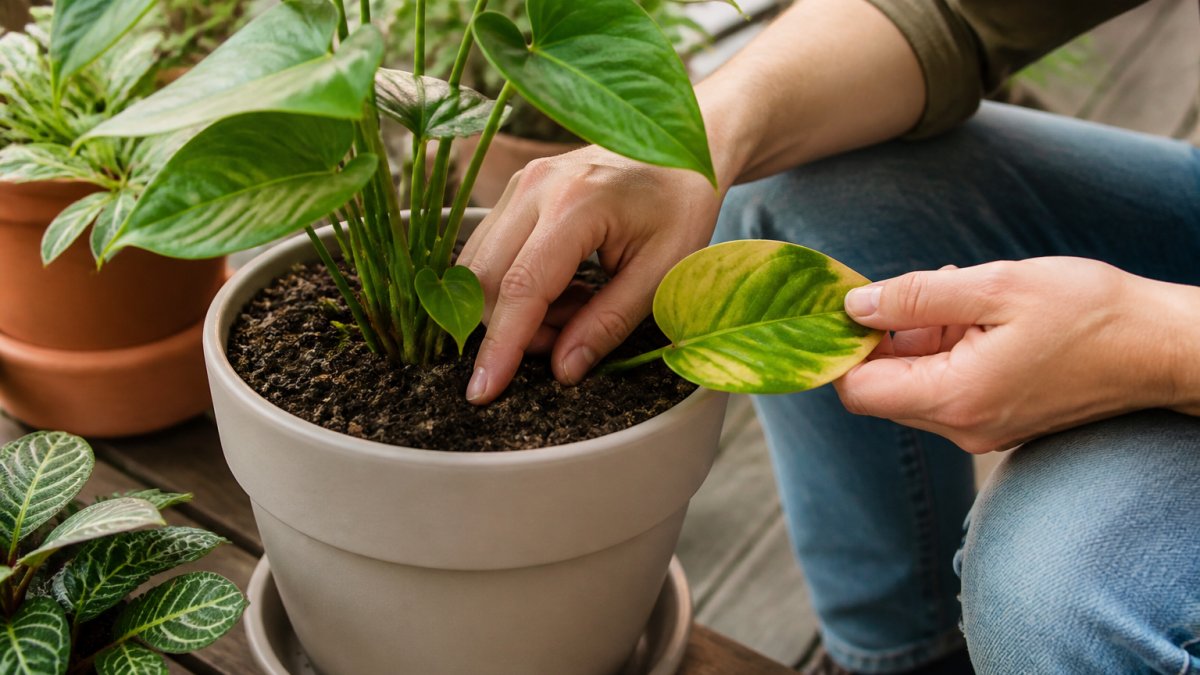
Yellow leaves. Lower leaves yellowing one at a time is normal aging; widespread yellowing is a signal. Check in this order:
- Is the soil consistently wet? Overwatering and poor drainage are the most common cause. Confirm drainage holes aren't blocked and let the top inch dry before watering again.
- Is the plant root-bound? Roots circling the pot can't take up nutrients efficiently, and lower leaves yellow first.
- Has it been more than 3-4 weeks since feeding during the growing season? Nitrogen deficiency shows as uniform yellowing starting with older leaves.
- Is the yellowing between the veins while veins stay green? That points to iron or magnesium deficiency, often triggered by high soil pH from hard water.
Wilting. Dry soil means underwatering, water thoroughly and it should recover within hours.
Brown, crispy leaf edges. Usually low humidity, underwatering, or fertilizer salt buildup.
Brown, mushy leaf bases or stems. Almost always overwatering or a fungal issue.
No flowers. Usually too little sun (under 6 hours for most annuals), too much nitrogen pushing leaves over blooms, or failure to deadhead.
Leggy, stretched growth. Insufficient light.
Sticky residue or fine webbing. Likely aphids, whiteflies, or spider mites.
Small flying insects around the soil. Fungus gnats, breeding in wet mix.
Repot when roots circle the bottom
Root-bound plants stop growing, wilt even when watered, and push roots out of the drainage holes.
Repotting gives roots room and refreshes mix that breaks down over time. Fast growers need it every 12-18 months; slow growers like snake plants and ZZ plants can go 2-3 years or longer.
Repot in spring as new growth begins, choosing a pot about 2 inches larger, no more, since excess wet mix invites rot.
Water thoroughly after repotting. The plant may look stressed for a few days, but new roots grow quickly. Hold off on fertilizer for 2-3 weeks, fresh mix usually has enough nutrients.
Maintain Proper Spacing and Air Circulation
Crowded containers create problems. Plants compete for light, water, and nutrients. Poor air circulation invites fungal diseases.
Space plants according to mature size, a single plant usually outperforms several crammed together. For mixed containers, choose plants with similar water and light needs.
Leave space between containers so air flows around them, reducing humidity and disease risk, especially in humid climates.
Prune regularly to remove dead leaves and stems, improving air circulation inside the canopy and directing energy toward healthy growth.
Keep Container Plants Healthy Year-Round
Container gardening changes with the seasons, from spring growth to winter dormancy.
In spring, repot plants that have outgrown their containers. Start fertilizing as new growth appears. Increase watering as temperatures warm.
In fall, repot spring bloomers, cut back fertilizer as growth slows, and reduce watering gradually as temperatures cool.
In winter, most container plants need minimal water and no fertilizer.
The right container setup makes year-round care easier. At Beloit Plastics LLC, our durable pots and saucers are engineered to withstand all seasons.

The Austin Planter saucers have ribbed undersides that keep your deck dry while letting air flow beneath the pot.
Homeowners and apartment dwellers who want durable, long-lasting planters that work year-round without cracking or fading. Perfect for anyone building a container garden on a patio, balcony, or small space.
Container plants thrive when you match pot size to roots, use proper drainage and potting mix, and adjust watering to conditions.
Frequently Asked Questions
How often should I water container plants?
Water frequency depends on soil moisture, not a fixed schedule. Check the top inch of soil daily; water when it feels dry. Most container plants need watering every 2-3 days in warm weather, but less in cooler seasons. Overwatering causes root rot faster than underwatering. Always use pots with drainage holes and saucers to catch excess water, preventing waterlogged soil that suffocates roots.
What's the best soil for container plants?
Use potting mix, not garden soil. Potting mix is lighter, drains better, and contains the right balance of aeration for container plants. Garden soil compacts in pots, trapping moisture and promoting root rot. Quality potting mixes include peat moss or coco coir, perlite for drainage, and compost for nutrients. Avoid soil from outdoor beds; it harbors pests and diseases and drains poorly in confined spaces.
How do I keep potted plants alive in hot weather?
Water more frequently during heat waves, as containers dry out faster than in-ground gardens. Check soil moisture daily and water early morning or evening to reduce evaporation. Move containers to partial shade if temperatures exceed 90°F to prevent scorching. Mulch the soil surface with straw or compost to retain moisture and cool the root zone. Use saucers to catch water, creating a small reservoir for roots to draw from during peak heat.
Why are my container plants wilting even after watering?
Wilting can signal overwatering (waterlogged soil suffocates roots), underwatering (soil too dry), or root-bound conditions (roots have no room to absorb water). Check soil moisture first: if soggy, reduce watering and ensure drainage holes work. If dry, water thoroughly. If roots circle the bottom when you inspect the pot, repot into a larger container with fresh potting mix. Poor drainage or compacted soil also causes wilting despite adequate water.
