Year-Round Container Plants: A 2026 Guide
Table of Contents
- What to Plant in Year-Round Containers
- Evergreen Plants for Pots That Last All Season
- Perennials That Grow Well in Containers
- Fall and Winter Container Plants for Seasonal Color
- Best Pots for Container Gardening Year-Round
- Planting Combinations for Height, Texture, and Year-Round Interest
- Year-Round Container Maintenance and Refresh Schedule
- Common Mistakes to Avoid
- Frequently Asked Questions
Last Updated: October 19, 2026
What to Plant in Year-Round Containers
Year-round container plants need a different approach than seasonal gardening: displays that look good through winter frost, spring thaw, summer heat, and fall color shifts.
At Beloit Plastics LLC, we work with homeowners who want durable planters that won't crack or fade. The real challenge is matching plants to containers that handle environmental stress year after year.

The best year-round container plants share three traits: they tolerate temperature swings, provide visual interest across seasons, and don't demand constant attention.
Successful year-round displays depend on drainage, container material, and plant selection working together. Skip any one, and your investment dies or your pots crack.
Evergreen Plants for Pots That Last All Season
Evergreens are non-negotiable for year-round container plants. They provide the visual structure that keeps pots from looking bare when deciduous plants drop their leaves.
The best evergreens for containers are compact varieties bred for small spaces. Full-size trees won't work in pots. You need plants that stay manageable and won't outgrow their containers in three years.
Dwarf Conifers and Boxwood
Dwarf conifers deliver year-round color and structure without taking over your patio. They grow slowly, tolerate cold, and look good whether dusted with snow or baked by summer sun.
Popular dwarf conifer choices include:
- Emerald Green arborvitae: Narrow, columnar shape that adds height without width
- Hinoki cypress varieties: Fine-textured foliage in gold, blue, or green depending on the cultivar
- Dwarf Alberta spruce: Compact pyramidal form, bright green needles year-round
- Boxwood: Dense, fine-leaved, responds well to pruning, extremely hardy
Boxwood is one of the most reliable year-round container plants. It tolerates shade or sun, bounces back from cold snaps, and stays compact without aggressive pruning. The downside is slow growth, it takes years to fill a pot.
Plant dwarf conifers in containers at least 12 inches deep with well-draining potting soil and air circulation. In harsh winters, move containers closer to a south-facing wall where they catch reflected heat.
Ornamental Grasses and Ground Covers
Ornamental grasses add movement and texture evergreens alone can't provide. They catch light differently throughout the day and respond to wind in ways that make containers feel alive.
Ornamental grasses that work in containers include:
- Sedge varieties: Compact, colorful foliage in bronze, red, or variegated patterns
- Carex: Fine-textured, shade-tolerant, stays under two feet tall
- Festuca: Blue-gray foliage, drought-tolerant once established
- Feather reed grass: Tall but narrow, doesn't flop over in containers
Ground covers like creeping Jenny, English ivy, and euonymus spill over container edges and soften the hard lines of pots, layering with evergreens and grasses.
Grasses and ground covers are inexpensive and fill space quickly. Plant them densely and they'll grow together into a fuller display than scattered individual plants.
Perennials That Grow Well in Containers
Perennials are the workhorses of year-round container plants. They come back year after year, cost less than shrubs, and offer more color than evergreens alone.
Choose perennials hardy enough for your zone and compact enough for pots. Full-size perennials bred for garden beds often get too large and leggy in containers.
Reliable container perennials include:
- Hellebores (Christmas roses): Bloom in late winter when nothing else is flowering, shade-tolerant
- Heuchera: Colorful foliage in burgundy, lime, or orange that intensifies in cold weather
- Hebes: Evergreen foliage, purple or pink flower spikes, compact growth
- Yucca: Architectural form, extremely hardy, drought-tolerant once established
- Sedums: Succulent foliage, late-season flowers, minimal water needs
Perennials need containers at least 12 inches deep and well-draining soil. In fall, cut back dead foliage but leave the crown intact to protect the plant through winter. In spring, prune out winter damage and add fresh compost to the top of the pot.
Fall and Winter Container Plants for Seasonal Color
Year-round doesn't mean no seasonal changes. It means refreshing displays strategically to keep them interesting without starting from scratch.
Fall containers benefit from ornamental cabbages, mums, and ornamental kale, which tolerate frost and improve in color as temperatures drop. Plant them in late summer alongside your evergreen base to carry the display through November.
Winter containers need plants that tolerate cold and look good when everything else is dormant. Hellebores bloom in December and January. Winter-flowering heathers provide color and texture. Evergreen ferns add delicate foliage contrast.
The strategy is layering: keep your evergreen base in place year-round, add seasonal plants in fall and early spring, and refresh in late spring when frost danger passes.
Best Pots for Container Gardening Year-Round
Container material matters more than most gardeners realize. The wrong pot fails in one winter. The right pot lasts a decade.
Plastic containers made from high-impact polypropylene resist freeze-thaw damage that cracks ceramic, ceramic, and concrete pots. The material expands and contracts with temperature changes without fracturing.
Beloit Plastics LLC manufactures planters specifically engineered for year-round use. Our 12-piece flower pot and saucer set starts at $19.99 and includes graduated sizes from 2 to 12 inches, perfect for building layered displays.
For larger displays, our 17-inch by 9-inch oval pot with saucer ($39.75) suits entryways and patio corners where you want a statement piece. The saucer protects surfaces from water stains and includes a support grid for air circulation.

Drainage and Potting Mix Essentials
Drainage holes are non-negotiable for year-round container plants. Without drainage, water sits in the pot, roots rot, and plants die. Every Beloit Plastics LLC planter includes pre-drilled drainage holes.
The saucer catches excess water so it doesn't stain your deck and allows air circulation so moisture doesn't trap underneath. Our saucers have a ribbed underside that keeps the pot slightly elevated, preventing pooling.
Potting mix for containers needs to be lighter and fluffier than garden soil. Use a quality mix with peat moss or coco coir, perlite for drainage, and compost for nutrition.
Sample Pack 12-Piece Flower Pot and Saucer Set, (2"–12") →
For year-round containers, refresh the top 2-3 inches of potting mix each spring. This removes spent soil and adds fresh nutrients without completely repotting established plants.
Container Size and Material for Freeze-Thaw Cycles
Container size drives plant health more than most gardeners expect. Too-small pots dry out quickly, stress plants, and offer little insulation against temperature swings. Too-large pots hold water longer and encourage root rot.
A general rule: containers should be at least 12 inches deep for perennials and small shrubs, 18 inches for larger evergreens.
Material choice determines survival in freeze-thaw climates. Ceramic and concrete crack when water freezes inside them. Terracotta is porous and allows water to seep through, then freeze and expand, shattering the pot.
| Container Material | Freeze-Thaw Durability | Best For | Maintenance |
|---|---|---|---|
| Plastic (polypropylene) | Excellent | Year-round, all climates | Rinse annually, minimal care |
| Ceramic | Poor | Mild climates only | Move indoors in winter |
| Concrete | Poor | Mild climates only | Move indoors in winter |
| Terracotta | Poor | Mild climates only | Move indoors in winter |
Beloit Plastics LLC pots are made from high-impact polypropylene, the same material used in durable outdoor equipment.
Planting Combinations for Height, Texture, and Year-Round Interest
The best year-round container plants work together, not as solo performers. Layering creates visual depth and keeps displays interesting across seasons.
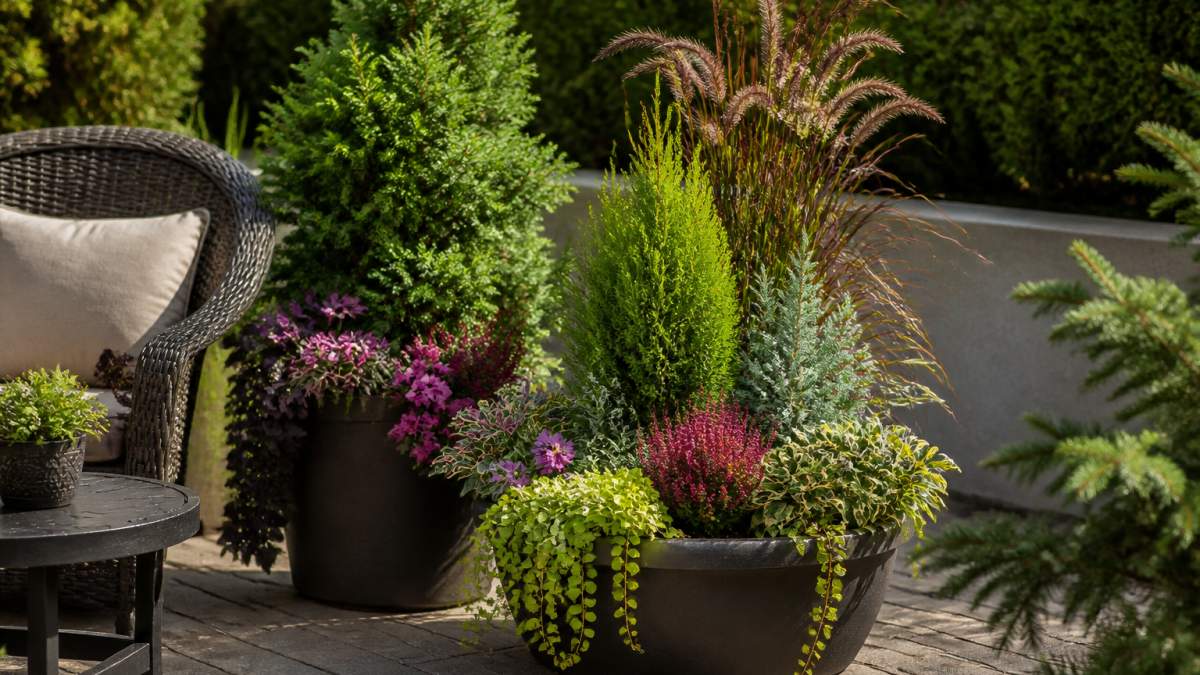
Use this simple formula: one tall plant for height, one filler for texture, one spiller for softness.
Tall plant (center or back): Dwarf conifer, ornamental grass, or upright perennial. This plant provides structure and draws the eye.
Filler (middle layer): Boxwood, heuchera, or compact evergreen. This plant fills space and adds color or texture contrast.
Spiller (edges): Creeping Jenny, English ivy, or trailing euonymus. This plant softens container edges and creates movement.
Example combination for year-round interest:
- Center: Emerald Green arborvitae (narrow, columnar evergreen)
- Middle: Heuchera 'Obsidian' (deep burgundy foliage)
- Edge: Creeping Jenny (lime-green trailing stems)
Another winning combination:
- Center: Carex 'Evergold' (compact sedge with fine texture)
- Middle: Boxwood 'Green Velvet' (dense, rounded evergreen)
- Edge: Helleborus niger (winter-flowering perennial)
This pairing works for shade or partial sun.
Year-Round Container Maintenance and Refresh Schedule
Year-round container plants need consistent care, but not constant attention. The maintenance shifts by season.
Spring (March-May):
- Prune winter-damaged foliage from evergreens and perennials
- Add fresh compost to the top 2-3 inches of each pot
- Check drainage holes for clogs and clear if needed
- Water thoroughly when soil is dry (spring can be surprisingly dry)
- Plant seasonal flowers around your evergreen base if desired
Summer (June-August):
- Water containers deeply 2-3 times weekly (more in heat waves)
- Deadhead spent flowers to encourage more blooms
- Pinch back leggy growth to keep plants compact
- Watch for spider mites and aphids in heat stress
- Move containers to partial shade if they're scorching
Fall (September-November):
- Reduce watering as temperatures cool
- Plant mums, ornamental cabbages, or kale for seasonal color
- Cut back perennials after frost but leave evergreens intact
- Move containers to sheltered locations before hard freezes
- Stop fertilizing, let plants harden off for winter
Winter (December-February):
- Water on mild days when soil is dry (critical step most gardeners skip)
- Check containers after heavy snow and brush off weight
- Move pots closer to south-facing walls for reflected heat
- Don't fertilize or prune, let plants rest
- Inspect for winter damage and address in spring
The maintenance table below summarizes the key tasks:
| Season | Watering | Pruning | Planting | Protection |
|---|---|---|---|---|
| Spring | Increase as growth starts | Remove winter damage | Add seasonal plants | Move to sun |
| Summer | Deep, frequent (2-3x/week) | Deadhead, pinch back | None | Partial shade in heat |
| Fall | Reduce gradually | Cut back perennials | Seasonal color | Move to shelter |
| Winter | Water on mild days | None | None | South-facing wall |
Common Mistakes to Avoid
Most year-round container plants fail for predictable reasons. Avoid these mistakes and your displays will thrive.
Mistake 2: Choosing containers that crack in winter. Ceramic, concrete, and terracotta fail in freeze-thaw climates.
Mistake 3: Skipping winter watering. This is the single biggest killer of year-round container plants.
Mistake 4: Overcrowding containers. Too many plants compete for water and nutrients.
Mistake 5: Ignoring drainage. Drainage holes aren't optional. They're essential.
Mistake 6: Moving containers into harsh wind. Winter wind dries out container plants faster than cold does.
Year-round container plants transform patios and balconies into living spaces that look intentional in every season.
Frequently Asked Questions
What plants can I put in pots that will come back every year?
Evergreen plants and hardy perennials return year after year in containers. Dwarf conifers, boxwood, heuchera, and ornamental grasses survive dormant periods and regrow in spring. Hellebores and heathers provide winter blooms. Choose varieties rated for your hardiness zone, and ensure adequate drainage and insulation in pots during freeze-thaw cycles. Perennials in containers need refreshed potting mix every two to three years to maintain vigor.
Can perennials survive winter in pots?
Yes, perennials survive winter in containers, but require protection in cold climates. Container roots freeze more easily than in-ground soil because pots are exposed on all sides. Wrap pots with burlap or move them against a south-facing wall to buffer temperature swings. Use high-quality potting mix with drainage holes to prevent ice buildup. Hardy perennials like sedums, coreopsis, and daylilies tolerate outdoor pots through winter in most regions.
What should I put in planters for fall and winter?
Fall and winter containers thrive with evergreen foliage, ornamental grasses, and cold-hardy flowering plants. Combine dwarf conifers for structure, creeping Jenny or ivy for trailing texture, and heathers or hellebores for color. Add ornamental kale or cabbage for dramatic foliage. Use variegated euonymus or heuchera for year-round interest. Layer plants by height and texture, and refresh soil annually to support root systems through cold months.
How do I choose the best pots for year-round container gardening?
Select pots made from durable, freeze-resistant materials like high-impact polypropylene, which withstands freeze-thaw cycles without cracking. Ensure drainage holes are present to prevent root rot and ice formation. Match pot size to plant root depth: herbs need 6 to 8 inches, perennials 10 to 12 inches, shrubs 14 to 18 inches. Pair pots with matching saucers to protect decks and patios from water stains. Lightweight plastic pots are easier to move and refresh seasonally than ceramic or stone.
