Durable Construction for All Seasons: Long-Lasting Planters
Table of Contents
- What Makes Durable Planters Last Through All Seasons
- Best Planter Material for Outdoors: Comparing Your Options
- Construction Quality and Reinforcement: What Stops Cracking
- Outdoor Planter Drainage: The Foundation of Longevity
- Winter-Proof Planters: How to Protect Planters in Winter
- UV Resistance and Fade Prevention for Year-Round Appeal
- Lifecycle Cost and Durability: What You Actually Pay For
- Recommended Durable Planters for Long-Term Use
- Frequently Asked Questions
Last Updated: October 18, 2026
What Makes Durable Planters Last Through All Seasons
Durable planters built with the right materials and construction survive freeze-thaw cycles, intense UV exposure, and moisture stress that crack and degrade lesser containers. At Beloit Plastics LLC, we've engineered planters specifically for all-season use, the kind that look as good in spring as they do after a harsh winter.
The difference between a planter that lasts three seasons and one that lasts a decade comes down to material choice, construction reinforcement, and drainage design. A planter that cracks under ice pressure or fades to gray within two years isn't just disappointing, it's a waste of money and effort.
Most homeowners assume all outdoor planters are built the same. They're not. Some materials become brittle in cold. Others absorb water and split when temperatures drop below freezing. Construction quality matters too: thin walls flex and fail; reinforced designs stay intact. Durable planters for all seasons combine weather-resistant material, thoughtful reinforcement, and proper drainage to handle whatever your climate throws at them.
Best Planter Material for Outdoors: Comparing Your Options
When choosing a long-lasting planter, material selection is everything. Each option handles temperature swings, moisture, and UV exposure differently. Here's what actually matters when comparing your choices.
Polypropylene: Weather Resistance and Freeze-Thaw Performance
Polypropylene stands out for all-season durability because it flexes rather than cracks under freeze-thaw stress. When water inside a planter freezes and expands, rigid materials split. Polypropylene absorbs that pressure without fracturing.
This material doesn't absorb water the way wood or concrete does, so it won't rot or degrade from moisture. It's also lightweight, easier to move and rearrange than stone or ceramic alternatives. The downside: polypropylene can fade if exposed to intense UV without protection, though quality fade-resistant formulations minimize this issue.
Beloit Plastics LLC uses high-impact polypropylene reinforced for outdoor use. Our Austin Planter 4-inch sets with saucers start at $16.45 for a five-pack, making them an affordable entry point for container gardening. The white granite option ($16.45) and terra cotta colorway ($19.99) both feature drainage holes pre-drilled and fade-resistant color molded throughout the material, not just a surface coating that wears away.

Other Materials and Their Seasonal Limitations
Concrete and stone deliver aesthetic appeal but carry real durability trade-offs. Both absorb water and are prone to cracking in freeze-thaw cycles common in northern regions. A concrete planter that survives three winters might develop stress fractures by year five. They're also heavy, moving a 40-pound stone planter to a sheltered spot before winter is impractical for most people.
Ceramic and terracotta are beautiful but fragile in cold climates. The freeze-thaw cycle that polypropylene handles gracefully will shatter ceramic within a season or two. Wooden planters (cedar, redwood) resist rot better than other woods but still require regular maintenance and eventual replacement.
Fiberglass and composite materials offer a middle ground: lighter than concrete, more rigid than polypropylene, and UV-resistant. For budget-conscious buyers or renters who may relocate, polypropylene offers good value for all-season performance.
| Material | Freeze-Thaw Resistance | Weight | Maintenance | Typical Lifespan |
|---|---|---|---|---|
| Polypropylene | Excellent | Lightweight | Minimal | |
| Concrete | Poor | Heavy | Moderate | |
| Ceramic | Poor | Medium | None | |
| Wood | Moderate | Medium | High | |
| Fiberglass | Good | Light | Minimal |
Construction Quality and Reinforcement: What Stops Cracking
A planter's thickness and internal structure determine whether it survives pressure or splits. Thin-walled planters flex too much and eventually fail. Reinforced designs with thicker material and strategic bracing hold up to seasonal stress.
Look for planters with uniform wall thickness, not thin in some spots and thick in others. Uneven construction creates stress points where cracks initiate.
Fasteners and assembly matter too. Planters held together with poor-quality screws or inadequate adhesive separate when exposed to temperature swings. The best construction uses integrated molded designs with no seams or joints that can separate.
Beloit Plastics LLC's Austin Planter line uses molded-color construction where the color runs throughout the resin, not a coating applied to the surface. This means the planter maintains its appearance even if minor surface scratches occur.

Our 12-inch red pot with saucer ($19.37) exemplifies this approach: high-impact polypropylene, molded-color design, and a ribbed underside saucer that elevates the pot and promotes airflow underneath. The support grid in the saucer prevents moisture from pooling, which would otherwise accelerate degradation.
Outdoor Planter Drainage: The Foundation of Longevity
Drainage is non-negotiable for all-season longevity. Without proper drainage, water pools at the planter base, freezes, expands, and cracks the container from inside out. A planter with excellent drainage prevents root rot, protects your deck or patio from water stains, and extends the planter's lifespan significantly.
The best outdoor planter drainage systems include multiple drainage holes at the bottom of the pot, not just one. Several holes distribute water flow evenly and prevent blockages. The holes should be large enough that soil doesn't clog them, but small enough that soil doesn't wash out.
Matching saucers are essential for all-season performance. A quality saucer collects excess drainage, protects surfaces from water stains, and includes a support grid that keeps the planter slightly elevated. This airflow prevents moisture from trapping underneath, which would otherwise lead to mold growth and material degradation.
Beloit Plastics LLC saucers come in sizes from 3 inches to 21 inches, designed to match our planter range. The ribbed underside elevates the pot, and the flat inner surface ensures even seating. The LAP 12-inch flower pot and saucer five-pack ($39.99) includes saucers with support grids that promote airflow, a critical detail for preventing moisture buildup during wet seasons.
Winter-Proof Planters: How to Protect Planters in Winter
Winter protection starts with material choice but extends to seasonal placement and preparation. Even the most durable planters benefit from thoughtful winter care that minimizes stress.
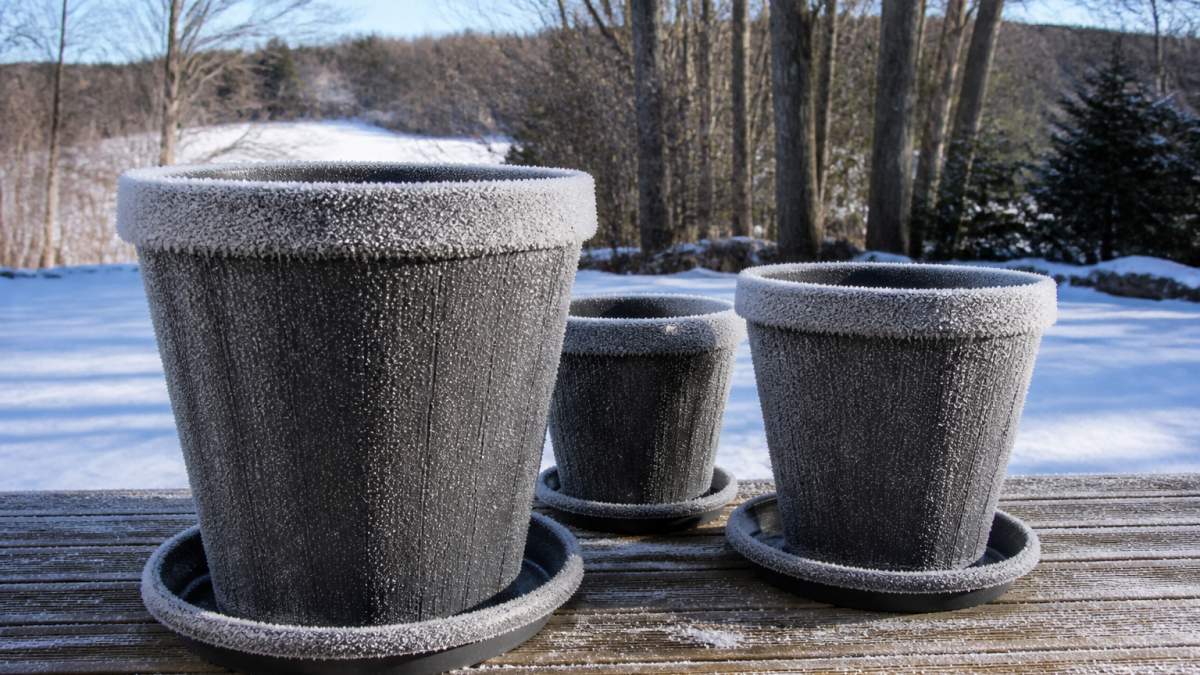
Move tender plants indoors before the first hard freeze. For planters staying outside, drain them completely so ice doesn't form inside and crack the container. Empty soil or move planters to a sheltered location where they're protected from wind-driven rain and direct freeze-thaw cycling.
Polypropylene's flexibility gives it an advantage here: it won't shatter if water freezes inside, but draining prevents unnecessary stress. Grouping planters together creates a microclimate that moderates temperature swings, reducing the stress cycles that lead to material fatigue.
Austin Planter Plastic Flower Pots with Saucers, 4 inch, Terra Cotta 5 Pack →
If you live in a region with brutal freeze-thaw cycles, repeated freezing and thawing throughout winter, elevation becomes critical. The MRAP 14-inch pot and saucer ($20.75) includes a saucer with a ribbed underside that keeps the pot elevated, reducing ground contact and winter stress.
UV Resistance and Fade Prevention for Year-Round Appeal
UV exposure fades planters over time, especially those in full sun. Polypropylene with fade-resistant formulation maintains its color far longer than untreated plastic or painted surfaces that chip and peel.
The difference between standard polypropylene and UV-stabilized polypropylene is significant. Standard material can fade noticeably within one season of intense sun exposure. UV-stabilized formulations resist fading for years, keeping planters looking vibrant through multiple seasons.
Beloit Plastics LLC uses fade-resistant formulations across our Austin Planter line. The color is molded throughout the material, not applied as a surface coating, so minor scratches don't expose lighter plastic underneath. The terra cotta five-pack ($19.99) and white granite five-pack ($16.45) both maintain their appearance year after year without the fading that makes planters look weathered and tired.
For maximum color retention, position planters where they receive dappled shade during the hottest parts of the day if possible. This reduces UV stress without eliminating the light plants need.
Lifecycle Cost and Durability: What You Actually Pay For
A $15 planter that lasts two seasons costs $7.50 per year. A $20 planter that lasts six years costs $3.33 per year. Durability is an investment, not an expense.
The cheapest planter at purchase often becomes the most expensive over time because replacement is frequent and wasteful. Material quality, construction reinforcement, and drainage design determine whether you're replacing planters annually or enjoying them for a decade.
Consider what you're actually paying for: polypropylene planters from Beloit Plastics LLC cost more than the lowest-priced options available online, but the difference reflects better material, reinforcement, and American manufacturing. Our Austin Planter four-inch sets start at $16.45 for five planters, roughly $3.30 per planter. That's a modest investment for containers that survive multiple seasons without cracking or fading.
Concrete and stone planters cost more upfront but crack in freeze-thaw cycles, requiring replacement. Ceramic is inexpensive until it shatters in winter. Fiberglass lasts longer but costs significantly more. Polypropylene offers a good balance of upfront cost, durability, and performance across all seasons.
Recommended Durable Planters for Long-Term Use
For most gardeners seeking durable planters all seasons, polypropylene with reinforced construction and matching saucers delivers a good combination of durability, affordability, and aesthetics.
The Austin Planter 4-inch Flower Pots with Saucers in white granite ($16.45 for five) are ideal for small herbs, succulents, and seedlings.
For larger plants and more visual impact, the 12-inch red pot with saucer ($19.37) combines durable construction with classic aesthetics.

The MRAP 14-inch pot and saucer ($20.75) steps up to a larger footprint for statement plants or mixed plantings. At 14 inches wide and 5 inches tall, it accommodates substantial plants while remaining portable.
For a complete garden setup, the LAP 12-inch flower pot and saucer five-pack ($39.99) offers versatility and value. Five coordinated pots with matching saucers let you create a cohesive garden across multiple locations, patio, balcony, entryway.
All Beloit Plastics LLC planters are made in the USA from over 90% recycled polypropylene, combining durability with environmental responsibility.
Protecting your plants and enhancing your outdoor space starts with choosing planters built to last. Freeze-thaw cycles, intense sun, and moisture stress eliminate planters with weak construction or poor material choices.
Frequently Asked Questions
Can outdoor planters crack in freezing weather?
Yes, freeze-thaw cycles are a primary cause of planter failure. Water absorbed into porous materials expands when frozen, creating internal pressure that cracks the container. Durable planters for all seasons use materials like high-impact polypropylene that resist moisture absorption and flex slightly rather than fracture. Proper drainage also prevents water from pooling inside, reducing the risk of ice formation and structural damage.
What is the best planter material for outdoors year-round?
Polypropylene with high-impact reinforcement offers good all-season performance. It resists moisture absorption, maintains flexibility in extreme temperatures, and won't become brittle in cold. Unlike ceramic or concrete, it won't crack under freeze-thaw stress. Recycled polypropylene also provides environmental benefits while delivering the same durability. Look for planters made from 90%+ recycled content to confirm material quality and weather resistance.
How important is drainage for long-lasting outdoor planters?
Drainage is critical to planter longevity. Multiple drainage holes prevent water from pooling at the base, which accelerates rot, mold, and freeze-thaw damage. Included saucers with support grids elevate planters slightly, allowing air circulation underneath and preventing moisture from trapping against deck or patio surfaces. This dual drainage system protects both the planter and the surfaces it sits on, extending the lifespan of both.
How long do durable plastic planters typically last outdoors?
High-quality polypropylene planters are designed for longevity when properly maintained. Fade-resistant construction and UV stabilizers prevent brittleness and color loss. Planters made from recycled polypropylene with reinforced walls resist cracking even after repeated freeze-thaw cycles. Actual lifespan depends on climate severity, maintenance, and whether the planter is protected during extreme weather or moved indoors seasonally.
What's the difference between winter-proof planters and standard outdoor planters?
Winter-proof planters are engineered to survive freeze-thaw cycles through flexible, moisture-resistant materials and reinforced construction. Standard outdoor planters may handle rain and sun but often crack when water freezes inside them. Winter-proof options use high-impact polypropylene, have multiple drainage holes, and include saucers designed to shed water rather than trap it. This construction prevents the internal ice expansion that destroys less durable containers.
