How to Choose Fabric Grow Bags or Plastic Pots for Your Garden
Last Updated: November 13, 2026
Quick Summary
Fabric grow bags are breathable, so air reaches the roots, excess water drains through the whole surface, and the soil stays cooler. Plastic pots hold water and moisture longer, which suits hot, dry climates and plants that need steady watering. The right choice depends on your climate and how often you can water.
- Fabric bags allow air pruning, which encourages denser, branching root systems.
- Plastic pots hold moisture longer, so they can cut watering frequency in hot, dry weather.
- Fabric bags can dry out within a day in hot, windy conditions and may need two waterings daily.
- Use fabric bags in humid or mild climates to reduce waterlogging risk.
- Fabric bags store flat and are lighter to move, while plastic pots are sturdier and more durable.
Table of Contents
- Fabric Grow Bags vs Plastic Pots: The Core Trade-Off
- Benefits of Fabric Grow Bags vs Plastic Pots for Vegetables
- Grow Bags vs Plastic Pots for Tomatoes: Watering and Moisture
- What Are Grow Bags Made Of, and Is the Material Safe?
- Disadvantages of Fabric Grow Bags
- Long-Term Cost, Portability and Durability
- Choosing Your Container Setup and Next Steps
- Frequently Asked Questions
Fabric Grow Bags vs Plastic Pots: The Core Trade-Off
Fabric grow bags and plastic pots both hold soil and plants, but they handle water, air and heat in opposite ways. Fabric is breathable, so roots get air and excess moisture escapes through the sides. Plastic is solid and holds water longer. That single difference shapes almost every decision you will make about container gardening.
Most gardeners end up choosing based on one question: do you want the soil to stay wet longer, or do you want better airflow to the roots? Neither answer is wrong, but each suits different plants, climates and watering habits.
Fabric grow bags are the flexible, lightweight option. Plastic pots are the sturdier, more moisture-retentive option. The sections below focus on how plastic containers perform against fabric alternatives.
Benefits of Fabric Grow Bags vs Plastic Pots for Vegetables
Fabric grow bags offer real advantages for vegetable gardening, mainly around root health and temperature. Plastic pots offer advantages in water retention and durability. The right choice depends on what you grow and how often you can water.
Root Health, Air Pruning and Drainage
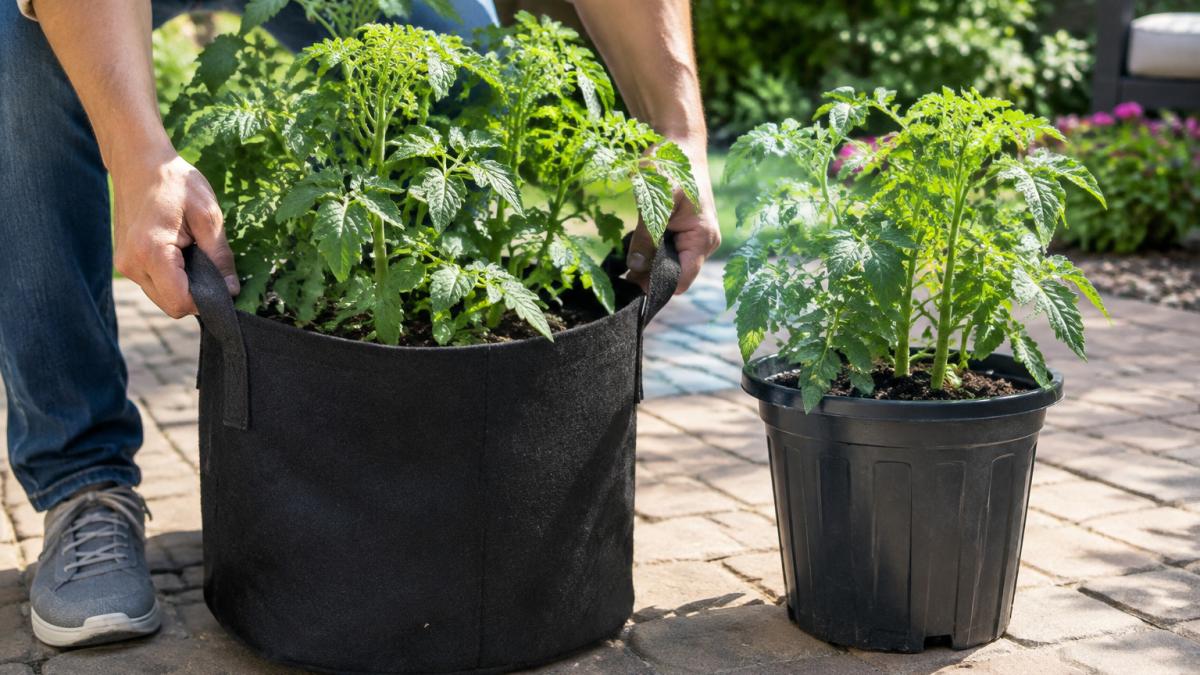
Fabric bags allow air pruning. When roots reach the fabric wall, they dry slightly and stop growing in that direction, which encourages denser, branching root systems. Plastic pots keep roots enclosed, so they often circle the inside of the container. Over time, that circling can restrict growth.
Drainage works differently too. Plastic pots rely on drainage holes at the base, which can clog or leave water pooled. Fabric drains through its whole surface, so excess water exits more evenly. Plastic pots with saucers help catch that drainage, but they do not improve airflow to the roots.
Soil Temperature and Heat Management
Plastic absorbs and holds heat. Fabric bags stay cooler because air moves through the material and heat dissipates more readily.
That said, fabric dries out faster in heat, which can offset the cooling benefit. Lighter-colored plastic pots reflect more sunlight than dark containers and can run cooler than dark plastic.
The two container types differ in root health, drainage and heat, as summarised below.
| Factor | Fabric grow bags | Plastic pots |
|---|---|---|
| Root growth | Air pruning builds denser, branching roots | Roots often circle inside the container |
| Drainage | Excess water exits through the whole surface | Relies on base holes, which can clog |
| Heat | Stays cooler as air moves through | Absorbs and holds heat |
| Water retention | Dries out faster in heat | Holds moisture longer |
| Durability | Lighter and more flexible | Sturdier and more durable |
Grow Bags vs Plastic Pots for Tomatoes: Watering and Moisture
Tomatoes are heavy drinkers in summer, and the container material changes how often you refill. A large tomato plant in a container can need water every day during hot weather, and in a fabric bag on a windy patio it may need water twice a day. Plastic pots hold moisture longer, which can cut watering frequency.
Watering by climate
- Hot, dry, windy conditions (full sun, low humidity, exposed patio): fabric bags can dry out within a day, so plan on one to two waterings per day for a mature tomato. Plastic pots with saucers may hold enough moisture for one deep watering per day.
- Humid or mild conditions: fabric bags may need water every one to two days, while plastic pots can go two to three days between waterings if the soil drains well.
- Rainy spells: fabric sheds excess water through its walls, which lowers waterlogging risk; plastic pots with saucers can pool water and need the saucer emptied.
A common pattern is to check moisture by weight: lift the container or push a finger two inches into the soil. If it is dry at that depth, water until it runs from the drainage holes (plastic) or seeps through the fabric (bags).
Watering by plant and container size
- Seedlings and herbs in 4-inch pots: small volumes dry fast in both materials; expect daily checks.
- Tomatoes in 5-gallon containers: the minimum practical size for a full-grown plant. A 14-inch pot with matching saucer, such as the MRAP pot, gives more root room than the 4-inch Austin Planter range, which suits seedlings or herbs rather than mature tomatoes.
- Larger vegetables in 10- to 14-inch pots: bigger soil volume buffers both materials, but fabric still dries faster than plastic of the same size.
A practical approach: use fabric bags if you garden in a humid or mild climate and want to avoid waterlogging. Use plastic pots with saucers if you live somewhere hot and dry and want more moisture buffer between waterings. Either way, match container size to plant size and check moisture at root depth rather than by surface appearance.
What Are Grow Bags Made Of, and Is the Material Safe?
Most fabric grow bags are made from woven or non-woven polypropylene or similar synthetic fabric. Some brands use recycled materials. The fabric is designed to be breathable and durable, not to release chemicals into soil under normal use.
Beloit Plastics LLC's Austin Planter pots are made from high-impact polypropylene, with over 90% recycled plastic in the Austin Planter line, and the pots are weather resistant and suited to indoor or outdoor use.
For edible crops, check the manufacturer's material statement before buying. If a product listing does not specify its material composition, ask the seller directly or choose a product with a clear material spec.
Disadvantages of Fabric Grow Bags
Fabric bags dry out quickly, which can stress plants if you miss a watering.
Plastic pots have downsides too. They retain heat and can cause waterlogging in poorly drained setups. Choose pots with clear drainage holes and avoid placing them directly on solid surfaces without saucers.
Long-Term Cost, Portability and Durability
Upfront price is only part of the story. The useful comparison is cost per growing season, which factors in how many seasons each container lasts, whether it can be reused, and how much storage and care it needs between crops.
Cost per growing season
Divide the purchase price by the number of growing seasons to compare true cost per season.
Plastic pots cost more initially. The Austin Planter 4-inch 5-pack in lime green or terra cotta is priced at $19.99, the white granite 5-pack at $16.45, and the 14-inch MRAP pot with saucer at $20.75, with the Austin Planter polypropylene flower pot and saucer at $29.95.
A simple way to run the math: take the purchase price, divide by the seasons you expect the container to last, and add any replacement cost. A fabric bag that lasts two to three seasons at a low price can still cost more per season than a plastic pot that lasts five or more seasons at a higher price.
Reuse, cleaning and end-of-season care
- Fabric bags: empty the soil, brush off roots and debris, wash with mild soap and water, and dry fully in the sun before storing flat. Damp storage encourages mildew and odor.
- Plastic pots: scrub with mild soap and water, rinse, and let dry. Stack them to save space. Check drainage holes for compacted soil before reuse.
- Saucers: empty and clean saucers between crops so they do not harbor standing water or algae.
Portability and storage
Portability favors fabric. A filled fabric bag can be dragged or folded when empty, and it stores flat. Plastic pots are rigid and stack, but they take more storage space and are heavier when filled. For gardeners who move containers with the seasons or overwinter plants indoors, fabric's lighter empty weight and flat storage are real advantages; for gardeners who want a container that holds its shape and can be scrubbed and reused year after year, plastic is the more durable long-term choice.
Choosing Your Container Setup and Next Steps
Start with what you grow and where. Tomatoes and large vegetables in hot, dry locations benefit from the moisture buffer of plastic pots with saucers. Herbs, seedlings and vegetables in humid or mild climates often do well in fabric bags that prevent waterlogging.
Match container size to plant size. Use 4-inch pots for seedlings and herbs, and move to 10 to 14 inches or larger for vegetables. Check whether a saucer fits the pot you buy, since Beloit Plastics LLC offers saucers in sizes from 3 to 21 inches.
If you want durable, U.S.-made containers with matching saucers, the Austin Planter polypropylene flower pot with saucer and the 14-inch MRAP pot are good places to start. For smaller herb or seedling setups, the Austin Planter 4-inch 5-packs offer a low-cost way to try several colors. Explore Now to see the full range.
Frequently Asked Questions
Are grow bags as good as plastic pots?
For many vegetables, yes. Fabric grow bags allow airflow through the walls, which encourages air pruning and denser, healthier root systems. Plastic pots hold moisture longer, so they need less frequent watering in hot, dry weather. Grow bags also drain well and are easy to store. The better choice depends on your climate, how often you can water, and the plants you grow. Test one of each with the same plant to see which suits your routine.
Do fabric grow bags dry out faster than plastic pots?
Yes, in most conditions. Because fabric is breathable, moisture evaporates from the sides as well as the surface, so soil in a grow bag can dry out faster than soil in a plastic pot of the same size. Check moisture with a finger two inches deep each day during warm weather. Larger bags, mulched surfaces and shade from afternoon sun slow drying. Plastic pots retain water longer but can overheat in full sun.
What are the disadvantages of fabric grow bags?
Fabric grow bags dry out faster, so they often need more frequent watering, especially in summer. They can also be less stable when filled with heavy wet soil and may wear out after several seasons of use, depending on the fabric. Some gardeners find them less attractive on decks or patios. Choose a heavier-weight fabric and a bag size suited to your plant to reduce these drawbacks.
Are grow bags or plastic pots better for tomatoes?
Fabric grow bags are a strong choice for tomatoes because their airflow encourages a compact, fibrous root system and reduces the risk of waterlogging. Plastic pots, especially larger ones, hold moisture more consistently, which helps when tomatoes are fruiting in heat. Use at least a 5-gallon container for a single tomato plant, water deeply and regularly, and monitor moisture closely if you choose fabric.

