How to Choose Long Lasting Planters: A 2026 Guide
Table of Contents
- What Makes a Planter Last: The Core Durability Factors
- Durable Planter Materials Comparison
- Best Planters for Outdoor Use: Selecting by Climate
- How to Maintain Outdoor Planters for Years of Use
- Sizing and Container Selection for Root Depth and Growth
- End-of-Life Disposal and Sustainability
- Frequently Asked Questions
Last Updated: September 24, 2026
What Makes a Planter Last: The Core Durability Factors
Choosing long lasting planters means understanding three core durability factors: material composition, drainage design, and temperature resistance.
This guide covers the exact factors that determine longevity, so you can make an informed choice.
Material Selection and Weather Resistance
The material you choose is the foundation of durability. Polypropylene and recycled plastics, for instance, resist cracking in freeze-thaw cycles far better than traditional terracotta. Terracotta is porous, water seeps into the clay body, and when temperatures drop below freezing, that water expands and shatters the pot from the inside out. This is why terracotta performs poorly in cold climates but thrives in warm, dry regions.
Fiberglass and composite materials combine structural integrity with UV resistance, but cost more than plastic alternatives. For outdoor use in variable climates, they deliver consistent performance without the maintenance demands of natural materials.
Recycled polypropylene strikes a practical balance. It's resistant to UV degradation when formulated with stabilizers, maintains flexibility in cold temperatures, and won't absorb water. The color is molded throughout the resin, so fading doesn't expose a different shade underneath. Products like Beloit Plastics LLC's Austin Planter line use 95% recycled polypropylene specifically because the material's properties align with the demands of year-round outdoor use.

Drainage Holes and Root Health
A planter without proper drainage causes root rot. Multiple drainage holes allow excess water to escape while maintaining soil moisture.
Drainage hole size and placement matter: small holes clog with soil, center-only holes miss water at edges. Multiple holes distributed across the bottom ensure even water movement.
Saucers protect surfaces from staining but should be emptied after watering to prevent root rot.
Durable Planter Materials Comparison
| Material | Best Climate | Maintenance | Lifespan | Freeze-Thaw Resistant |
|---|---|---|---|---|
| Recycled Polypropylene | All climates | Minimal | 5-7 years | Yes |
| Fiberglass/Composite | All climates | Low | 7-10 years | Yes |
| Terracotta | Warm/Dry | High | 2-3 years | No |
| Ceramic | Mild climates | Medium | 3-5 years | Limited |
Polypropylene and Recycled Plastics
Recycled polypropylene is the go-to material for long lasting planters: it resists freeze-thaw cycles, UV damage, and is lightweight yet rigid. It's also recyclable at end-of-life.
High-quality polypropylene is thick-walled and durable. Color is molded throughout the material, not applied as a surface coating, so it won't fade in the sun.
Fiberglass and Composite Options
Fiberglass and composites resist UV damage and structural degradation. They don't absorb water, so they avoid freeze-thaw damage.
Fiberglass costs more than polypropylene but justifies the expense for permanent, high-visibility installations.
Terracotta and Ceramic Considerations
Terracotta performs poorly in freeze-thaw climates. Water penetrates the porous clay, and when frozen, expands and shatters the pot.
Terracotta performs adequately in warm, dry climates but is a poor choice for long lasting planters in regions with freezing temperatures.
Ceramic is less porous than terracotta but still vulnerable to freeze-thaw damage.
Best Planters for Outdoor Use: Selecting by Climate
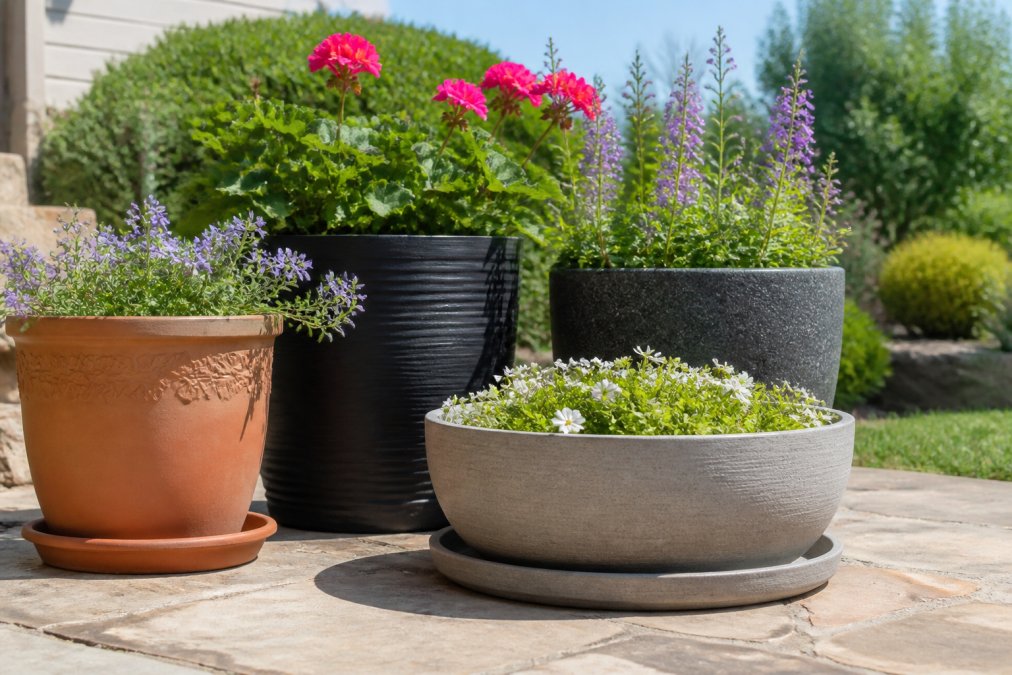
Climate determines which materials will last in your conditions. Understanding your freeze-thaw risk, UV exposure, and humidity profile is essential.
Austin Planter Plastic Flower Pots with →
Freeze-Thaw Cycle Resistance
Freeze-thaw cycles are the primary killer of outdoor planters. Water enters porous materials, freezes, expands, and cracks the container.
UV Resistance and Color Retention
Polypropylene formulated with UV stabilizers resists fading far better than unstabilized plastic or composites without proper resin protection.
Weight and Load-Bearing for Balconies and Decks
Weight capacity is a practical constraint most guides ignore. A balcony or deck has a maximum load-bearing capacity, usually measured in pounds per square foot. Overloading creates a safety hazard.
How to Maintain Outdoor Planters for Years of Use
Durability isn't just about material selection. Maintenance practices determine whether a planter reaches its full lifespan or deteriorates prematurely. Regular care costs almost nothing but extends the life of your containers significantly.
Seasonal Cleaning and Care
Clean planters at least twice per year, once in spring before planting season and once in fall after plants are removed. Use mild soap and water. For stubborn algae or mineral deposits, a soft brush works without damaging the surface.
Staining, Sealing, and Weatherproofing
Polypropylene and recycled plastic don't require sealing. They're inherently weatherproof and don't benefit from additional treatments. This is a major advantage over wood, ceramic, and some composite materials that demand regular sealing.
Repair and Repairability
Polypropylene and plastic containers can be repaired if cracked or damaged. Small cracks can be sealed with plastic epoxy or flex sealant. This repair extends the life of the planter significantly. Terracotta and ceramic, once cracked, are essentially unrepairable. You can glue them, but the repair is fragile and the pot is structurally compromised.
Sizing and Container Selection for Root Depth and Growth
Container size determines how much room roots have to develop and how much moisture the soil retains. Undersizing a planter stunts plant growth. Oversizing wastes space and water. The right size depends on the plant's mature root depth and your climate's moisture retention needs.
End-of-Life Disposal and Sustainability
What happens to a planter when it reaches the end of its useful life? This question matters if sustainability factors into your purchasing decisions.
Frequently Asked Questions
What type of planter lasts the longest?
Polypropylene and fiberglass planters typically outlast terracotta and ceramic options, especially in harsh climates. Recycled polypropylene resists freeze-thaw cycles, UV damage, and color fading for several seasons outdoors. Look for planters with structural integrity, drainage holes, and UV-resistant construction. American-made options often use thicker, high-impact materials engineered for durability, making them a solid investment for long-lasting planters.
How do I choose a planter that won't crack in freezing temperatures?
Select materials with high freeze-thaw resistance. Polypropylene and composite materials flex slightly during temperature swings, preventing cracks. Avoid porous materials like terracotta without protective sealing. Look for planters made from recycled, high-impact plastics that maintain structural integrity in cold climates. Proper drainage also helps by reducing water saturation that expands when frozen. Test reviews from customers in cold regions to confirm real-world performance.
How does drainage affect the longevity of an outdoor planter?
Drainage holes are critical for long-lasting planters because they prevent water saturation, which causes root rot and structural damage. Excess moisture accelerates material degradation, especially in freeze-thaw cycles where water expands and contracts. A drainage layer and properly designed saucers catch overflow while allowing air circulation around roots. Without adequate drainage, even durable materials break down faster due to continuous moisture stress and soil health deterioration.
Are plastic planters more durable than ceramic or terracotta?
Quality plastic planters, especially recycled polypropylene, generally outperform terracotta and ceramic for outdoor durability. Plastics resist freeze-thaw cycles, UV fading, and moisture absorption better than porous ceramics. Terracotta requires sealing and careful maintenance to prevent cracking in cold climates. However, durability depends on material thickness and construction quality. High-impact recycled plastics engineered for outdoor use offer superior longevity compared to thin plastics or unprotected ceramic options.
What should I look for in a high-quality, American-made planter?
Prioritize thick, high-impact polypropylene or composite construction with multiple drainage holes. Check for fade-resistant coloring that won't degrade in sunlight and UV-resistant additives. Verify the manufacturer uses recycled or eco-friendly materials and offers sturdy saucers included. Look for customer testimonials confirming multi-season durability. American-made planters often feature superior structural integrity and better customer support. Direct manufacturer pricing typically offers better value than imported alternatives.
What are the most common mistakes when buying outdoor plant pots?
Avoid choosing planters based on price alone without checking material durability or drainage features. Don't select pots too small for root depth, limiting plant growth. Skip planters without adequate drainage holes or saucers, risking water damage to surfaces. Overlook UV resistance claims without verifying fade-resistant testing. Ignore climate-specific needs like freeze-thaw protection in cold regions. Finally, don't assume all plastic planters are equal; thickness, material composition, and construction quality vary significantly between manufacturers.
How much weight can an outdoor planter hold on a balcony or deck?
Weight capacity depends on both the planter's structural integrity and your deck or balcony's load-bearing limits. Most residential decks support 40 pounds per square foot, though this varies. Lightweight recycled polypropylene planters typically weigh 1-3 pounds empty, allowing soil and plants to stay within safe limits. For balconies with stricter weight restrictions, choose lightweight plastic options over ceramic or fiberglass. Always check your structure's specifications and distribute weight evenly. Oversized planters with dense soil can exceed safe loads quickly.
Do I need to seal or treat outdoor planters to extend their life?
Polypropylene and modern recycled plastics rarely need sealing due to built-in UV resistance and weatherproofing. However, terracotta and unfinished wood benefit significantly from staining and sealing to prevent moisture absorption and cracking. Regular cleaning removes algae and mineral deposits that degrade finishes. For composite materials, occasional weatherproofing treatments extend lifespan. Check your specific planter's care instructions; many durable outdoor options require minimal maintenance beyond seasonal cleaning and proper drainage maintenance.
