7 Steps to Arrange Hanging Planters for Curb Appeal
Quick Summary
To arrange hanging planters for curb appeal, choose matching pots with drainage holes, hang them at varied heights with at least 6 feet 8 inches of clearance over the walkway, and place them to frame the front door. Vary heights by at least 6 inches between neighboring pots and keep 2 to 3 feet of spacing.
- Choose 11-inch pots with drainage holes and hangers that fit your existing hooks.
- Keep the lowest planter at least 6 feet 8 inches above the walkway.
- Vary heights by at least 6 inches between adjacent planters.
- Space planters about 2 to 3 feet apart and allow room for trailing plants to spread.
- Water when the top inch of soil feels dry and feed flowering plants every two to three weeks.
Table of Contents
- Why Hanging Planters Work So Well for Curb Appeal
- Step 1: Choose the Right Hanging Planters and Hangers
- How to Hang Hanging Baskets Without Drilling Outside
- Best Plants for Hanging Baskets by Light and Climate
- How to Arrange Hanging Plants at Different Heights
- Front Porch Hanging Planter Ideas and Placement Spacing
- Keeping Your Hanging Planters Looking Full All Season
- Booking Your Planter Setup for Your Front Entrance
- Frequently Asked Questions
Why Hanging Planters Work So Well for Curb Appeal
Hanging planters are one of the fastest ways to make a home look cared for. They add color at eye level, soften hard lines on a porch, and draw the eye toward the front door. This guide walks you through arranging hanging planters step by step.
A planter that hangs well does three jobs. It adds color, it fills vertical space that would otherwise sit empty, and it signals to visitors that someone looks after the place. Most homes have plenty of unused space above the porch rail or beside the door. Hanging planters put that space to work.
Think of a hanging planter as a focal point rather than decoration. One well-placed grouping near the entrance does more for the front of a house than a dozen scattered pots. Keep the number of planters small and the spacing deliberate.
Watch out: Hanging a planter too low can block the walkway, and one hung too high looks lost. Measure before you commit to a hook.
Step 1: Choose the Right Hanging Planters and Hangers
Start with the size of the planter. For most front porches, an 11-inch hanging pot strikes a good balance between presence and weight. Smaller pots dry out fast and look thin from the sidewalk. Larger pots are heavier and need sturdier hooks.
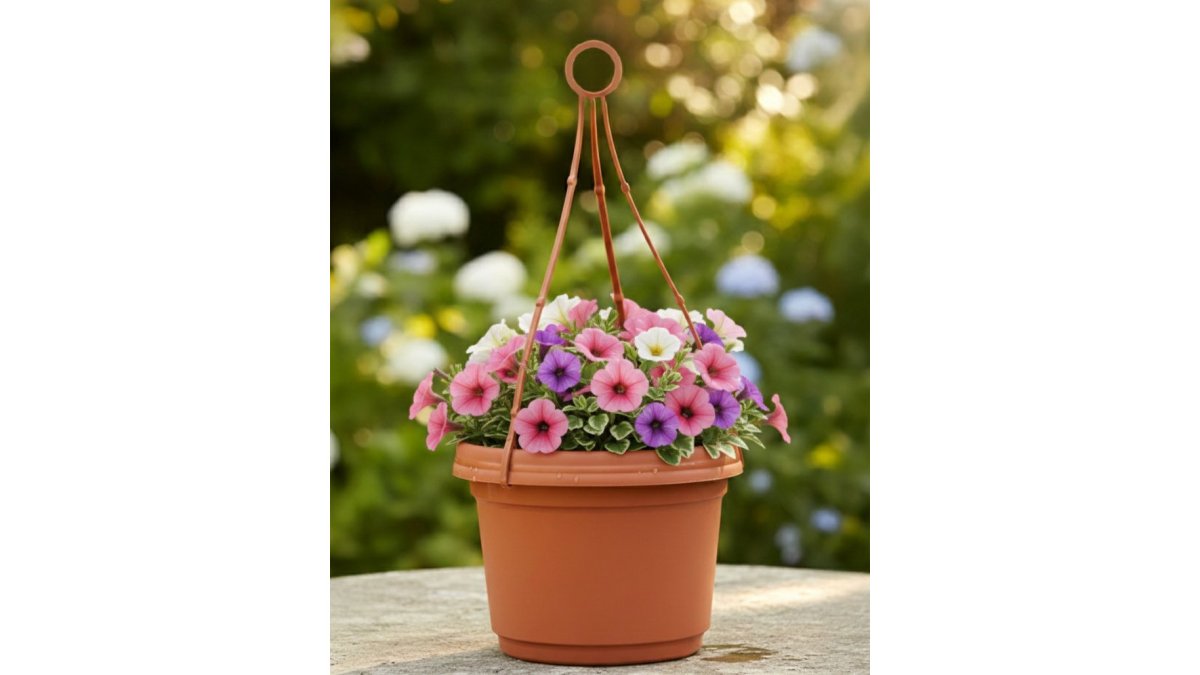
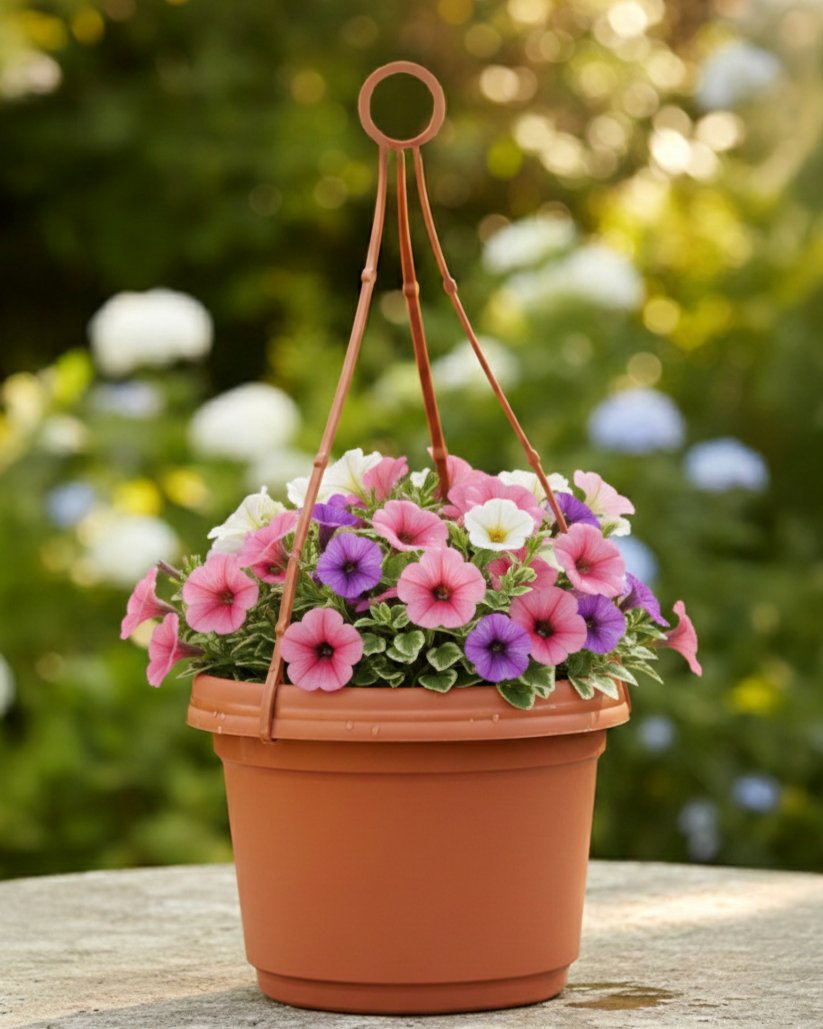
Our 11-inch Austin Planter Hanging Flower Pots with Hangers come in a five-pack in terra cotta, with drainage holes and hangers included, so you can match a full row in one order. Shop the terra cotta set for the exact pots described here.
Check three things before you buy:
- Drainage holes: Standing water rots roots and stains surfaces below.
- Hanger type: Make sure the hanger fits the hook or bracket you already have.
- Weight when wet: Soil holds a lot of water. Plan for the heaviest version of the planter.
Before you buy, check these three things that most affect how a hanging planter performs.
| Check | Why it matters | Note |
|---|---|---|
| Drainage holes | Standing water rots roots and stains surfaces below | Look for holes in the base |
| Hanger type | Must fit the hook or bracket you already have | Confirm before buying |
| Weight when wet | Soil holds a lot of water | Plan for the heaviest version |
How to Hang Hanging Baskets Without Drilling Outside
You do not always have to drill into siding or brick to hang a planter. Many renters and homeowners avoid drilling for good reason, since holes can allow water in and may breach a lease.
Consider these options:
- Porch hooks that clamp over a rail or beam
- Freestanding plant stands for spots without overhead support
- Over-the-door or fence hangers for light pots and quick changes
The Door or Fence Hanger set of five, priced at $12.99, is designed for light hanging pots and holds up to 10 lbs. Always confirm the weight limit against the planter once it is full of wet soil.
Best Plants for Hanging Baskets by Light and Climate
Plant choice matters as much as placement. A basket in full afternoon sun needs different plants than one under an overhang.
For sunny spots, look at trailing plants that handle heat, such as petunias, verbena, and trailing geraniums. For shady porches, coleus, impatiens, and ferns tend to hold their color. Mix one upright plant, a few fillers, and a trailing edge for a full, balanced look.
Climate changes the list. In hot, dry regions, choose plants that tolerate heat and water less often. In cooler areas, plan to bring pots in or choose cold-tolerant varieties. Check the tag or ask your local nursery which plants do best in your zone.
How to Arrange Hanging Plants at Different Heights
Height is where most hanging planter arrangements succeed or fail. The goal is a staggered, balanced look that never forces people to duck. A common pattern is to set the bottom of the lowest planter at least 6 feet 8 inches above the walkway, the same clearance as a standard exterior door, so most adults and delivery visitors pass under it without ducking.
Work from a single anchor point. Pick the spot that draws the eye first, usually beside the front door or at the outer edge of the porch, and hang the largest or fullest planter there at roughly 7 feet to the bottom of the pot. Step down from that anchor in small increments: a second planter 6 to 12 inches lower and 3 to 4 feet to the side, and a third another 6 to 12 inches lower and 3 to 4 feet beyond that.
Keep the lowest pot in any grouping at least 18 inches above the porch railing or any furniture below it. Trailing plants can add another 12 to 24 inches of hanging growth at maturity, so account for the plant, not just the pot. A petunia that spills 2 feet over the edge effectively lowers your clearance by 2 feet.
Sightlines matter as much as measurements. Stand at the sidewalk and look toward the door: the tallest planter should sit near the edge of your view, the middle one closer to the door, and the lowest one framing the entry. Avoid hanging a pot directly in front of a window or door glass, where it blocks light and reads as an obstacle from inside.
Watch out: Hanging every planter at the same height flattens the composition and makes the porch look like a storage rack. Vary the heights by at least 6 inches between adjacent pots, and check clearance with a tape measure before you fill the pot, wet soil and mature plants add weight and drop.
Front Porch Hanging Planter Ideas and Placement Spacing
Spacing is a plan, not a guess. Start by mapping the fixed features of your porch, the door, windows, posts, steps, and the sightline from the street, and place planters relative to those features rather than filling empty wall space.
At the door, hang planters symmetrically on either side, with the pot centers about 18 to 24 inches out from the door frame and the bottoms at least 6 feet 8 inches above the threshold. This frames the entry without crowding the door swing. Leave at least 12 inches between the pot and the door casing so the door opens fully and the planter does not scrape.
On porch posts, one planter per post at a consistent height reads as intentional. Space posts planters so the gap between adjacent pots is roughly 2 to 3 feet, enough for each plant to fill out without touching its neighbor in wind. On a standard 8-foot post spacing, that usually means one planter per post, not two.
Along a railing or beam, run planters in a row only if the spacing is even. A common pattern is 2 to 3 feet between pot centers, with the outermost pots set back at least 18 inches from the ends of the beam so the row looks anchored rather than cut off.
For windows, hang planters so the top of the pot sits just below the window sill, not across the glass. This keeps light coming in and avoids the planter blocking the view from inside. Keep at least 12 inches of clearance between the pot and any window that opens.
Step back to the sidewalk and check the sightline. The arrangement should lead the eye toward the door, not scatter it. If a planter blocks the house number, the doorbell, or the path to the steps, move it. A good test is to photograph the porch from the street at eye level, if the planters look balanced in the photo, they will look balanced in person.
Watch out: Trailing plants spread wider than the pot. A planter spaced 2 feet from its neighbor can still touch it once the plants mature, so leave extra room on the side where the fullest trailing variety will grow.
Keeping Your Hanging Planters Looking Full All Season
A planter that looks great in May can look sad by August. Water when the top inch of soil feels dry, and expect to water more often in summer heat. Feed flowering plants every two to three weeks with a balanced fertilizer.
Rotate pots now and then so every side gets light. Pinch back leggy stems to encourage fuller growth. Remove faded blooms to keep the plant flowering.
The hanging pots are easy to clean and reusable. A quick wash with mild soap and water between plantings keeps them looking new.
Booking Your Planter Setup for Your Front Entrance
With the right pots, hangers, plants, and spacing, a front entrance can look finished in an afternoon. Start by choosing your planter size, confirm your hanging method, then pick plants for your light. Arrange the pots at varied heights, leave room between them, and maintain them through the season.
If you want to see the full range before you order, browse the Austin Planter Hanging Flower Pots with Hangers. You can also find matching hangers and the no-drill door and fence hangers to complete your setup in one place.
Frequently Asked Questions
How far apart should hanging planters be?
Hang planters about 18 to 24 inches apart on a porch or along a fence line so each plant has room to fill out without crowding its neighbor. On a narrow entryway, space them a little closer, about 12 to 18 inches, and rely on different plant heights to keep the arrangement from looking cluttered. Check the mature width of each plant in the planter, because trailing varieties like petunias and bacopa can spread 12 inches or more on their own. Leave at least 36 inches of clear walking space so guests and delivery workers can pass without brushing against the planters.
How do you hang outdoor planters without drilling?
Use a freestanding plant stand, a hanging bracket that clamps over a porch rail, or an over-the-door or fence hanger that holds the planter without fasteners in the wall. Over-the-door hangers work well for lighter pots, while fence hangers suit a rail or fence top. Confirm the hanger's weight rating before you fill the pot, since wet soil adds significant weight. Lightweight resin planters are easier to position this way than heavy clay, and they are less likely to crack if the hanger slips during a storm.
How often should you water outdoor hanging baskets?
Most hanging baskets need water every day in summer heat and every two to three days in cooler spring or fall weather. Push a finger about an inch into the potting soil before watering. If it feels dry, water thoroughly until it drains from the bottom holes. Hanging planters dry out faster than ground beds because air moves around them on all sides, so check them more often on windy or sunny exposures, especially on the south or west side of the house.
What plants are best for hanging baskets near an entryway?
Petunias, bacopa, lobelia, and calibrachoa handle sun well and trail attractively over the edge of the pot. For shadier entryways, impatiens, fuchsia, and coleus bring color without needing full sun. Pair one upright plant in the center with trailing plants around the edge for a balanced look. Choose plants that match the light your porch receives, and avoid sun-loving varieties on a north-facing entrance, where they will struggle to bloom.

