Best Pots for Starting Garden Seedlings Indoors
Quick Summary
The best pots for starting garden seedlings are reusable plastic containers with drainage holes, sized to match each crop's growth stage. Four inch pots with saucers suit most crops, while two inch cells work for small seeds like lettuce and herbs. Clean pots between uses to prevent damping-off.
- Pots without drainage holes are the most common mistake, causing root rot quickly indoors.
- Clean reusable pots with a diluted bleach solution between plantings to remove pathogens.
- Tomatoes, peppers and eggplants typically move from a 2 inch cell to a 4 inch pot after 3-5 weeks.
- Upsize seedlings as soon as roots appear at the drainage holes to avoid stunting.
- Reusable plastic often costs less per seedling than single-use containers over several seasons.
Table of Contents
- What Makes a Good Pot for Starting Seedlings
- Plastic Seed Starter Pots: Reusable and Long-Lasting
- Plantable Seedling Pots: Planting Without Root Disturbance
- Seedling Pots with Tray: Keeping Moisture and Bottom Watering Simple
- Side-by-Side Comparison of Pot Materials and Long-Term Cost
- Matching Pot Size to Crop and Growth Stage
- Best Pots for Starting Garden Seedlings Indoors: Choosing Your Setup
- Frequently Asked Questions
What Makes a Good Pot for Starting Seedlings
Most seedlings fail at the root, not the leaves. A pot that is too large holds wet soil around young roots, and a pot that is too small restricts them before the plant is ready to move. Choosing the right pot is one of the simplest decisions a gardener can make, and picking from the best pots for starting garden seedlings shapes how well everything after it goes.
A good seedling pot does three things well. It drains freely through holes in the base, it holds enough soil for early root growth, and it lets you move the plant without damage. Depth matters as much as width, because many seedlings, especially tomatoes and peppers, develop long taproots early on.
We look for pots that are easy to clean and reuse across seasons. Reused containers only work if they can be washed thoroughly between plantings, since old soil can carry fungal problems into a new batch of seedlings.
Watch out: Pots without drainage holes are the most common mistake. Standing water at the base causes root rot faster than almost any other issue indoors.
Plastic Seed Starter Pots: Reusable and Long-Lasting
Plastic is the most practical choice for gardeners who start seeds year after year. Bright color won't fade in the sun and can last several seasons outdoors, according to the product listing for the Austin Planter pots.
Our USDA National Agricultural Library guidance on container gardening notes that reusable containers work well when cleaned with a diluted bleach solution between uses. That step matters because it removes pathogens that cause damping-off.
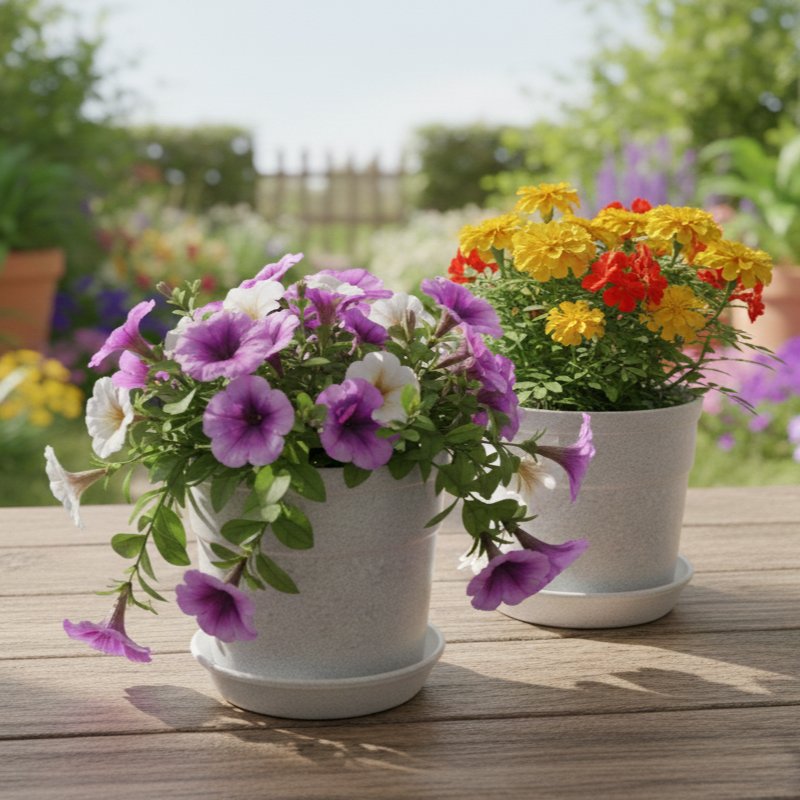
The Austin Planter 4 inch Flower Pots with Saucers, White Granite, 5 pack, are made from 95% recycled polypropylene. At $16.45 for a set of five, they suit gardeners who want a sturdy, reusable option. product
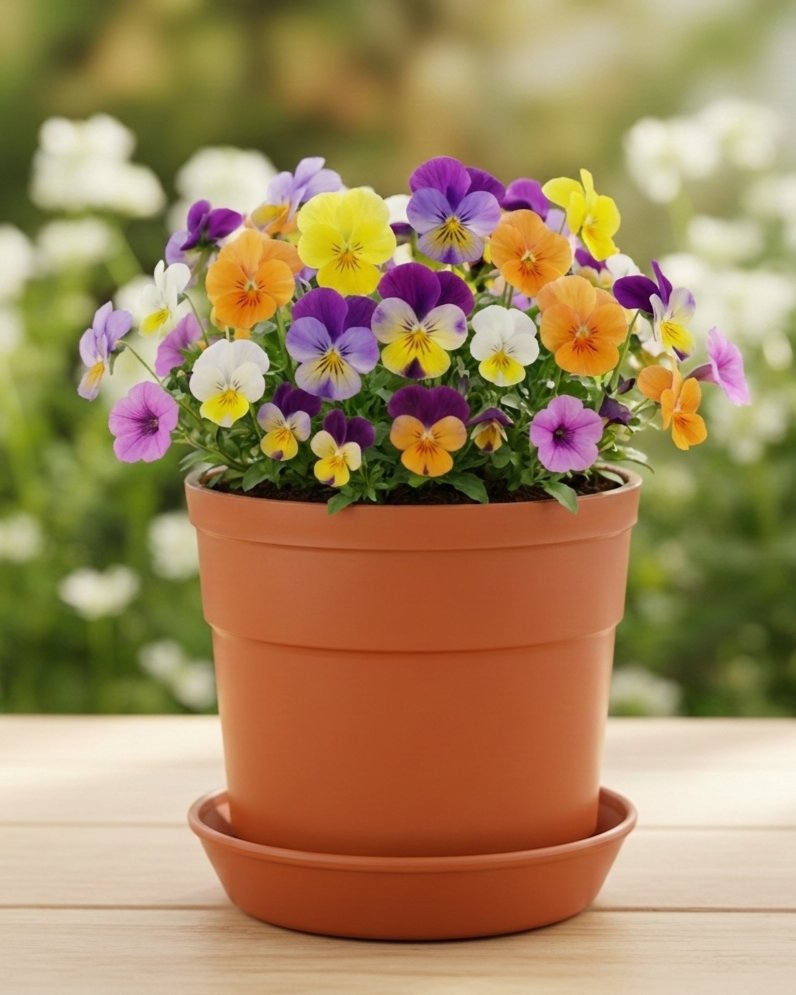
For a color option, the Austin Planter Plastic Flower Pots in terra cotta cost $19.99 for five pots. product
Pros: Reusable, lightweight, inexpensive per seedling, easy to sanitize. Cons: Roots can circle inside rigid walls if seedlings stay too long, and plastic does not break down in the soil.
Plantable Seedling Pots: Planting Without Root Disturbance
Plantable pots are made from biodegradable materials and go into the ground with the seedling. The main advantage is that you skip transplanting the root ball, which reduces transplant shock for sensitive plants like cucurbits. But plantable pots are not a uniform category, and the material determines whether the pot helps or hurts the seedling.
Peat pots are the traditional option. They break down slowly in cool soil and can wick moisture away from the root zone if the rim is left exposed above the soil line. A common pattern is for the exposed rim to act like a wick, pulling water out of the pot and drying the root ball faster than a plastic pot would. Set the pot slightly below the soil surface so the rim stays damp and soil contact is continuous.
Coir pots are made from coconut husk fiber. They tend to hold moisture longer than peat and break down more evenly, but they can stay intact long enough to restrict roots if the seedling stays in the pot too long. Roots that hit the wall of a coir pot may circle rather than push through, especially in slow-growing seedlings that spend six weeks or more indoors.
Fiber and paper pots break down fastest, which makes them a good match for fast-growing annuals that will be transplanted within three to four weeks. For slow-growing seedlings, the pot may soften and tear before roots are ready to move, which defeats the purpose.
A practical test before planting: tear the rim and score the sides of any fiber pot with a knife or scissors. This gives roots a clear path out and reduces the chance that the pot walls restrict them after transplant. Many gardeners also peel away the top rim before setting the pot in the ground, since that exposed edge is the part most likely to dry out and pull water from the root zone.
Watch out: Fiber pots that sit in a saucer of standing water can grow algae and mold on the outside, and the pot may break down prematurely. Bottom-water only long enough for the surface to darken, then pour off any remaining water.
Plantable options make the most sense for direct-sown transplants or fast-growing annuals. For slow-growing seedlings that need several weeks indoors, a reusable plastic pot usually gives better results because it holds its shape and drains predictably until transplant day.
Seedling Pots with Tray: Keeping Moisture and Bottom Watering Simple
A tray underneath a set of pots makes watering far more manageable. Bottom watering lets seedlings draw moisture up through the drainage holes, which keeps the soil surface drier and reduces the risk of fungal growth on stems.
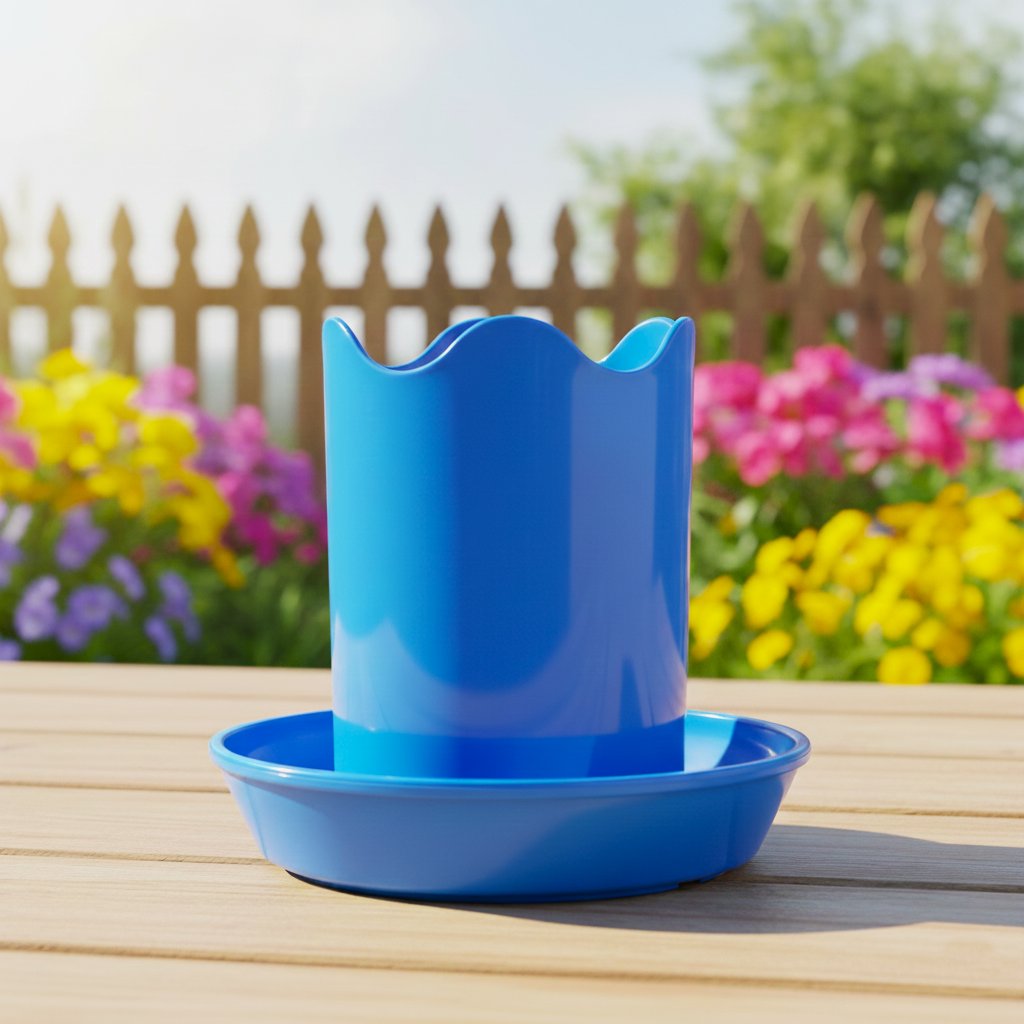
Saucers do double duty. They catch runoff so windowsills and shelves stay dry, and they hold a reservoir of water that seedlings can use between waterings. The Austin Planter 4 inch pots include saucers, which catch excess water. product
The Austin Planter 2 inch wavy pots in sea blue are priced at $15.99 for five. product
Side-by-Side Comparison of Pot Materials and Long-Term Cost
Comparing pots on purchase price alone misses most of the picture. A reusable set that lasts five seasons often costs less per seedling than cheap single-use containers bought every year.
| Pot Type | Typical Price (USD) | Reusable | Biodegradable | Best For |
|---|---|---|---|---|
| Polypropylene 4 inch, 5 pack | $16.45 | Yes | No | Multi-season indoor starts |
| Terra cotta-colored plastic 4 inch, 5 pack | $19.99 | Yes | No | Color-coded varieties |
| Sea blue 4 inch, 5 pack | $12.99 | Yes | No | Budget multi-season starts |
| Sea blue 2 inch wavy, 5 pack | $15.99 | Yes | No | Very young seedlings |
Typical Price (USD)
Pros: Lower long-term cost, consistent drainage, reusable. Cons: Higher upfront cost than single-use peat pots, and plastic waste accumulates if pots are retired early.
Matching Pot Size to Crop and Growth Stage
Pot size should match the plant's stage, not the size of the seed. Small seeds like lettuce and herbs do well in 2 inch cells for the first few weeks. Tomatoes, peppers, and eggplants need 4 inch pots or larger to develop roots before transplanting outdoors. The table below gives practical starting points by crop, including how long a seedling can typically stay in each size before it needs to move up.
| Crop | Starting Container | Time Before Upsizing | Next Size | Notes |
|---|---|---|---|---|
| Tomatoes | 2 inch cell | 3-4 weeks | 4 inch pot | Move when first true leaves appear; bury the stem deeper at each repot |
| Peppers | 2 inch cell | 4-5 weeks | 4 inch pot | Slower to germinate; keep soil warm |
| Eggplants | 2 inch cell | 4-5 weeks | 4 inch pot | Same warm-soil needs as peppers |
| Herbs (basil, parsley) | 2 inch cell | 3-4 weeks | 4 inch pot | Basil grows fast; pinch tips to keep it bushy |
| Lettuce and greens | 2 inch cell | 2-3 weeks | 4 inch pot or direct sow | Short indoor window; transplant while small |
| Cucurbits (cucumber, squash) | 3-4 inch pot | 2-3 weeks | Direct to garden | Start late; roots resent disturbance |
| Flowers (marigold, zinnia) | 2 inch cell | 3-4 weeks | 4 inch pot | Zinnias grow quickly; do not let them root-bind |
Move seedlings up a size when roots begin to show at the drainage holes, which is a reliable sign the plant has outgrown its container. Repotting too late causes stress, so check roots every week or two during the active growth period.
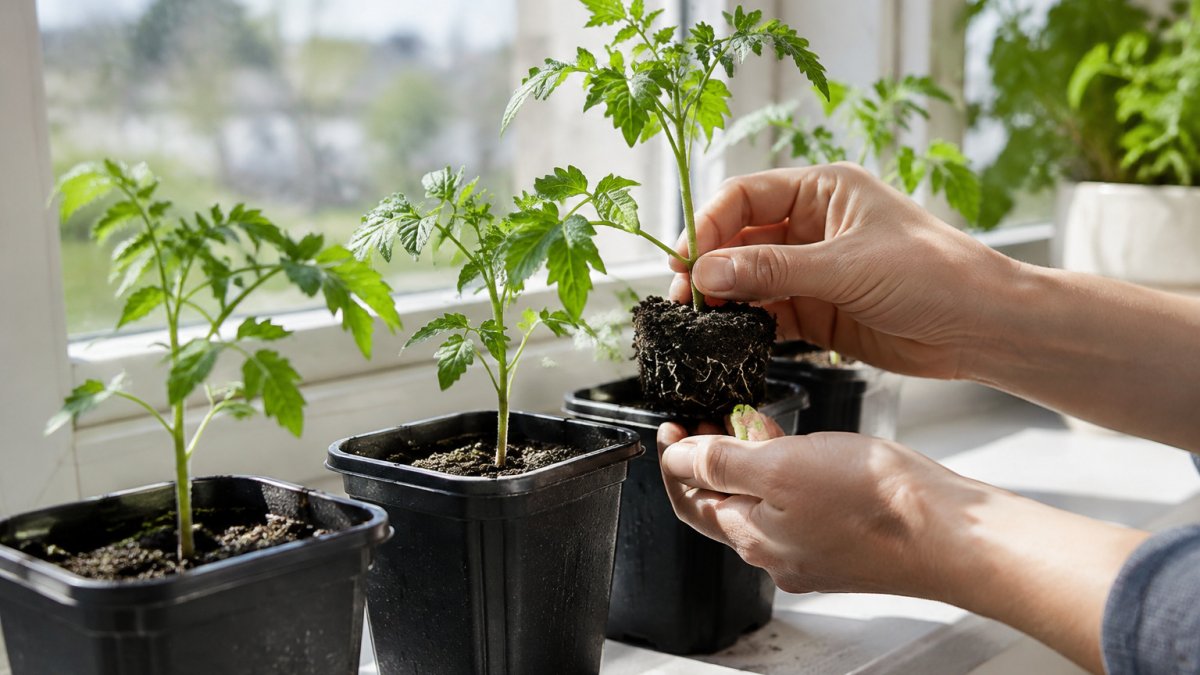
Many gardeners start tomatoes in a 2 inch pot, then move them to 4 inch containers once they develop true leaves. This two-step approach saves soil and space in the early weeks. Tomatoes are also the crop most forgiving of deep repotting: bury the stem up to the lowest leaves each time, and the plant will grow additional roots along the buried stem.
Watch out: A seedling left in a 2 inch cell past its window will circle roots around the bottom of the cell. By the time it reaches the garden, those circling roots may not spread outward, which stunts the plant for weeks. Check the drainage holes weekly and upsize as soon as roots appear.
Best Pots for Starting Garden Seedlings Indoors: Choosing Your Setup
For most home gardeners, reusable plastic pots with drainage holes and matching saucers offer the best balance of cost, durability, and ease of use. Start with one pack of 4 inch pots for your main crops, add 2 inch pots for small seeds, and keep a saucer set for bottom watering.
Clean every pot with a diluted bleach or hydrogen peroxide solution before reusing it, and label each row so you can track varieties and sowing dates. Those two habits prevent most seedling losses.
Beloit Plastics LLC offers U.S.-made planters and saucers for gardeners who want a dependable container. Explore the full set of planters and saucers to find the right size for your next round of seedlings. product
Explore the Austin Planter range and find the right pot for your seedlings. button
Frequently Asked Questions
What is the best container to use for starting seedlings?
For most home gardeners, a 4 inch plastic pot with drainage holes is the most practical choice for starting garden seedlings indoors. Plastic can be washed and reused for several seasons. Pots such as the Austin Planter 4 inch Flower Pots with Saucers, sold in 5-packs starting at $16.45, provide drainage holes and saucers that catch runoff. Choose a container size that gives roots room to grow before transplanting outdoors.
Are plastic pots or peat pots better for starting seeds?
Plastic pots are better for reuse and consistent moisture control, while peat pots are better when you want to plant the whole container directly into the garden. Plastic pots can be cleaned and used again, which lowers the cost per seedling over time. Peat pots can dry out quickly and sometimes wick moisture away from the root zone, so they need careful watering. Consider your transplant plan and how many seasons you expect to reuse containers before deciding.
Do seedling pots need drainage holes?
Yes, seedling pots need drainage holes to prevent root rot and waterlogged soil. Without drainage, excess water pools at the bottom and deprives roots of oxygen, which slows germination and weakens young plants. Drainage holes also allow air to move through the potting mix. A saucer or tray placed underneath lets you water from the bottom and catch extra water without damaging windowsills or decks.
What size pots should I use for starting garden seedlings?
Most garden seedlings do well in 2 to 4 inch pots at the start, then move to larger containers as roots fill the space. Small cells are efficient for quick-germinating crops like lettuce, while tomatoes, peppers, and squash benefit from 4 inch pots because their roots develop quickly. Seedlings grown in pots that are too small become root-bound and may suffer transplant shock. Check roots every week or two and upsize when they begin circling the container.

