

Why Choose Resin Planters for Garden Walkways
Last Updated: November 18, 2026
Quick Summary
Resin planters suit garden walkways because they are light, weather-resistant and nonporous, so they resist cracking and do not soak up water. They are easy to reposition and hold up to sun, rain and foot traffic, which matters more than looks alone for a path.
- Resin is lightweight, so planters are easy to move and reposition without a hand truck.
- Nonporous resin does not absorb and hold water the way unglazed clay does.
- Resin resists cracking from freeze-thaw cycles better than clay or concrete.
- Keep at least 36 inches of clear walking space, or 48 inches if two people must pass.
- Anchor taller planters or weigh the base with gravel to prevent tipping in wind.
Table of Contents
- Why Resin Planters Suit Garden Walkways
- Resin Compared With Clay, Stone, Concrete, Wood and Fiberglass
- Pros and Cons of Resin Planters on a Walkway
- Choosing Large Resin Planters and Spacing Them Along a Path
- Drainage, Watering and Plant Selection for Resin Containers
- Can Resin Pots Be Left Outside in Winter?
- Stability, Wind Resistance and Maintenance Along Walkways
- Planning Your Walkway Planters Before You Buy
- Frequently Asked Questions
Why Resin Planters Suit Garden Walkways
Resin planters are one of the most practical choices for dressing up a garden walkway, and Beloit Plastics LLC offers durable resin planters and stepping stones. Resin is a lightweight, weather-resistant plastic that holds up to sun, rain, and foot traffic. For a walkway, that combination matters more than looks alone, because a planter placed along a path has to survive constant contact with weather and the occasional bump from a passing gardener. A resin planter is a plant container molded from a synthetic resin rather than fired clay or poured concrete.
Most gardeners who choose resin do so for three reasons. It is light enough to reposition without a hand truck. It resists cracking when temperatures swing. And it does not absorb water the way unglazed clay does. These traits can make resin a practical choice for paths compared with heavier materials that are difficult to move once filled with soil.
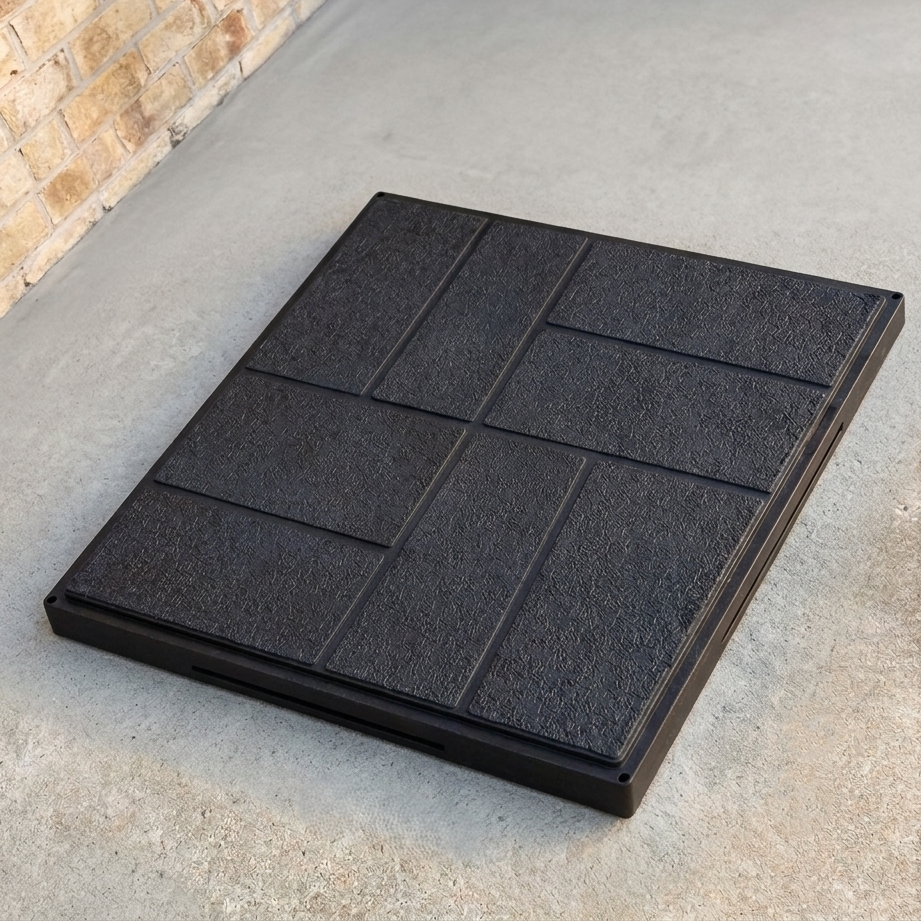
Resin also pairs well with the walkway itself. Our 18 Inch Square Resin Paver Stone For Garden Walkway can be used alongside planters to create a cohesive walkway look.
Resin Compared With Clay, Stone, Concrete, Wood and Fiberglass
Each material has a clear trade-off. The table below summarizes how resin compares with the most common alternatives for walkway planters.
| Material | Weight | Weather Resistance | Cracking Risk | Maintenance |
|---|---|---|---|---|
| Resin | Light | High | Low | Minimal |
| Clay (terracotta) | Heavy | Moderate | Higher in freeze-thaw | Sealing needed |
| Stone | Very heavy | High | Low | Minimal |
| Concrete | Very heavy | High | Moderate | Occasional sealing |
| Wood | Moderate | Moderate | Warps and rots | Regular treatment |
| Fiberglass | Light to moderate | High | Low | Minimal |
Clay is the traditional favorite, but unglazed terracotta absorbs water and can crack when that water freezes. Stone and concrete look substantial, yet their weight makes them hard to rearrange once a walkway is planted. Wood is attractive but needs regular treatment to resist rot. Fiberglass is strong and light, though it often costs more than resin. For most walkway applications, resin offers the best balance of weight, durability, and price.
Pros and Cons of Resin Planters on a Walkway
Resin has advantages and trade-offs to consider.
Pros:
- Light enough to move and reposition easily
- Nonporous construction, so it does not soak up and hold water
- Resistant to cracking from freeze-thaw cycles
Cons:
-
Lighter weight means a tall or top-heavy planter can tip in strong wind
-
Does not have the natural, aged look many people want from stone or clay
Watch out: A filled resin planter on a windy walkway can tip over if it is not anchored or placed behind a sturdier base. Set taller planters close to a wall or fence, or weigh the bottom with gravel.
Choosing Large Resin Planters and Spacing Them Along a Path
Large resin planters can define a walkway without blocking it, but the layout has to be planned around clear walking space first and visual rhythm second. Start by measuring the path width. A common pattern is to leave at least 36 inches of clear walking space, which is the minimum width most practitioners use for a single person to pass comfortably; if two people need to pass, aim for 48 inches or more. Subtract that clear zone from the total path width, and whatever remains is the budget for planters on each side.
For a path that is 60 inches wide, for example, a 36-inch clear center leaves 12 inches on each edge for planters. That fits a planter up to about 12 inches in diameter or square. A 72-inch path leaves 18 inches per side, which accommodates most large resin planters in the 16- to 18-inch range. Measure the planter at its widest point, including the rim, and remember that plants will spill over the edge by several inches once they fill in.
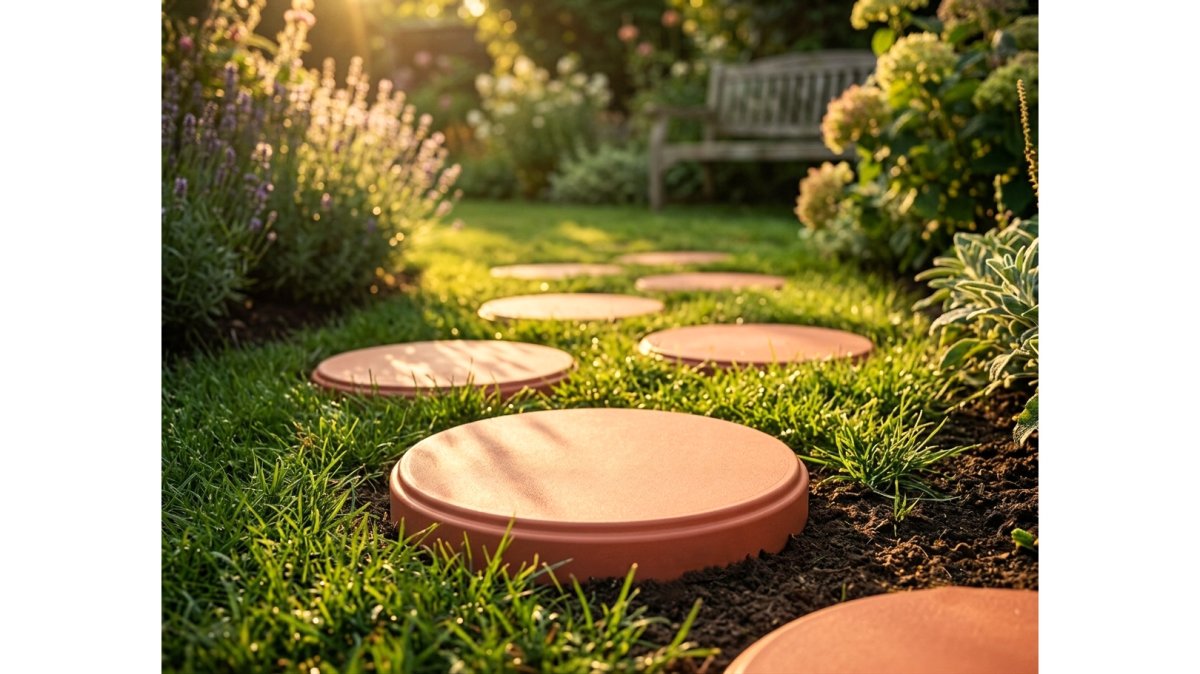
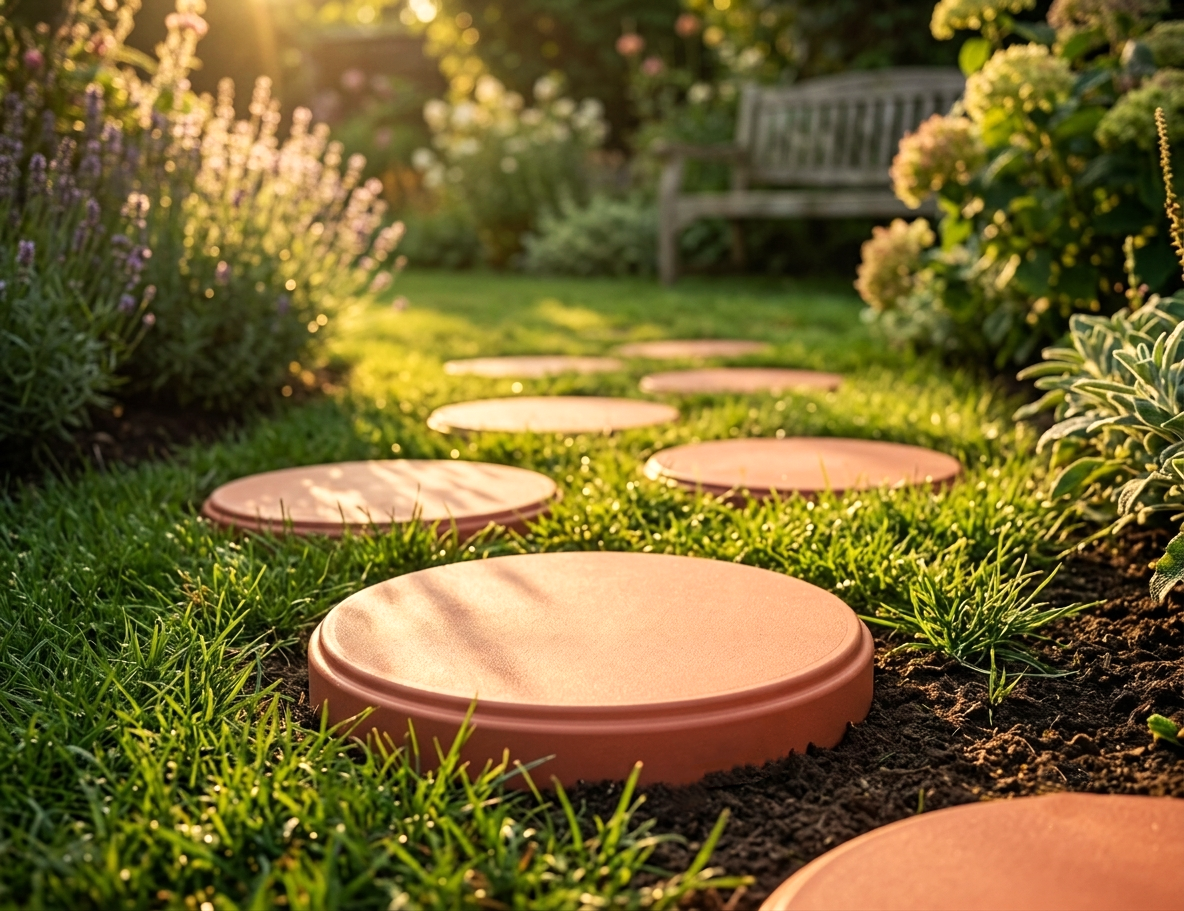
Spacing follows the same logic. Group planters in pairs at the entrance and at turns to mark decision points, then space single planters every four to six feet along straight runs. That rhythm creates structure without crowding the path. Keep the tallest planters at the ends and corners, where they frame the view, and use lower planters along the middle so sightlines stay open. The stepping stones shown in our two-pack are a useful companion here, since they can mark the walking line between planters and keep foot traffic centered.
Watch out: A planter placed at a turn can become a trip hazard if it narrows the clear path below 36 inches, so set turn planters back from the corner rather than into it.
Drainage, Watering and Plant Selection for Resin Containers
Because resin does not breathe, drainage is the most important factor in plant health. Make sure every planter has drainage holes, and add a layer of gravel or broken pottery at the base if the holes are small. Use a potting mix formulated for containers rather than garden soil, which compacts and holds too much water.
Watering needs are different in resin. Soil in a resin container tends to hold moisture longer than soil in clay, so check the top two inches before watering. Overwatering is a common mistake and can lead to root rot. Choose plants suited to container life: herbs such as rosemary and thyme, compact flowers, and succulents that tolerate drier soil.
Can Resin Pots Be Left Outside in Winter?
Yes, most resin planters can stay outdoors through winter, but the reason they survive is worth understanding because it changes how you manage them. Resin planters are built to withstand outdoor weather conditions through the seasons.
The soil is a different story. Wet soil expands as it freezes, and in a closed container that expansion pushes outward on the walls and upward on the root crown. A planter left full of saturated soil can still strain at the seams or heave the plant out of the ground even when the resin is sound. The practical routine is to stop watering generously as temperatures drop, let the soil drain before the first hard freeze, and tip smaller planters to shed excess water.
Root temperature matters as much as container survival. Resin walls are thin compared with stone or concrete, so the root zone in a resin planter tracks air temperature more closely. Tender perennials and evergreens in small resin pots are more exposed to hard frost than the same plants in a heavy stone urn. A common pattern is to group smaller resin planters together against a south- or west-facing wall, where the building releases stored heat overnight, and to mulch the soil surface with two to three inches of bark or straw to insulate the crown.
For larger planters that stay in place, keep the soil lightly drained rather than bone dry, and avoid the temptation to water during a warm spell in midwinter, since refreezing wet soil is the main risk. Empty or lift the soil from smaller planters before the first hard freeze if you plan to store them, and check the drainage holes in spring for roots or debris that blocked them over winter.
Stability, Wind Resistance and Maintenance Along Walkways
A walkway planter has to stay upright in wind and remain easy to care for. To improve stability, place heavier soil or gravel in the bottom third of the container and keep the planter's center of gravity low. Position taller planters where they are sheltered by a fence, wall, or hedge.
Routine maintenance is simple. Rinse planters each spring to remove mineral deposits and check for hairline cracks or loose hardware.
Planning Your Walkway Planters Before You Buy
Before you order, sketch the walkway and mark where planters and stepping stones will go. Note the width of the path, the number of planters you want, and any spots with strong wind exposure. This plan will tell you how many large planters and how many pavers or stepping stones to buy.
Our 18 Inch Square Resin Paver Stone is available in Black, Terra Cotta, and Hunter Green, and it sells for $18.95. Our Light Weight Stepping Stones are $9.95, and the Stepping Stones Two Pack is $12.99. Compare these options against your sketch and choose the mix that fits your layout and budget.
Frequently Asked Questions
What are the pros and cons of resin planters?
Resin planters are light enough to move easily and are designed for outdoor weather conditions. Their main drawbacks are a less natural look than stone or clay and a surface that can fade or stain under prolonged sun exposure. For a walkway, the weight advantage is usually the deciding factor, since planters can be repositioned as the layout changes or as you rearrange seasonal displays.
Can resin pots be left outside in winter?
Yes. Resin planters are designed for outdoor weather conditions and can be kept outside through the seasons. To protect plants, group containers near a wall, choose cold-hardy plants, and insulate roots with mulch. Empty any standing water from the saucer so it does not freeze against the base. Check that the drainage holes stay clear through the season.
How do resin planters compare with ceramic planters?
Ceramic planters offer a classic finish and are heavier, which keeps them stable in wind but makes them hard to move. Glazed ceramic is more resistant to water than unglazed clay, but it can chip or crack in freezing temperatures if water gets into the body. Resin is lighter, making it easier to reposition along a walkway.
Are resin planters durable enough for large outdoor containers?
Large resin planters can hold substantial soil and plant mass while remaining much lighter than stone or concrete of the same size. Resin is designed to withstand outdoor weather conditions and foot traffic. For wide planters on a walkway, check that the base is supported evenly and that the container is positioned away from high-traffic edges so it does not get knocked over.

