Weather Resistant Outdoor Garden Containers: A 2026 Guide
Table of Contents
- What Makes a Container Weather Resistant
- Best Planters for Outdoor Use: Material Comparison
- Frost-Resistant Garden Containers for Winter Survival
- How to Winterize Outdoor Pots and Protect Your Investment
- Drainage, Maintenance, and Long-Term Durability
- Choosing the Right Size for Your Patio or Balcony
- Why American-Made Weather Resistant Containers Matter
- Frequently Asked Questions
Last Updated: September 21, 2026
What Makes a Container Weather Resistant
Weather resistant outdoor garden containers are engineered to withstand temperature swings, moisture exposure, and UV radiation without cracking, fading, or deteriorating. The key lies in material selection and construction. Containers that resist weather perform this feat through non-porous materials, drainage systems that prevent water accumulation, and structural designs that accommodate thermal expansion.
When a container sits outside year-round, it faces freeze-thaw cycles that stress traditional clay or ceramic pots. Water enters the material, freezes, expands, and splits the structure. Weather resistant containers eliminate this problem through materials that don't absorb water and designs that allow soil and water to drain freely. At Beloit Plastics LLC, we engineer planters specifically for this purpose, using recycled polypropylene and resin compounds that maintain structural integrity through seasonal temperature swings.

The durability question homeowners ask most often: "I've bought planters before that looked great for like a year and then just started cracking in the winter, how do I know yours won't do the same thing?" The answer separates marketing from engineering. True weather resistance requires three elements working together: material composition that resists moisture absorption, design that manages water movement, and thickness that absorbs thermal stress without fracturing.
Best Planters for Outdoor Use: Material Comparison
Selecting the right material determines how long your containers will perform. Different materials handle freeze-thaw cycles, UV exposure, and moisture differently. Here's how the main options compare:
| Material | Freeze-Thaw Resistance | UV Fade Resistance | Weight | Durability Years |
|---|---|---|---|---|
| Polypropylene (recycled) | Excellent | Excellent | Light | 5-7+ seasons |
| Fiberglass | Excellent | Good | Light | 7-10+ seasons |
| Resin (high-impact) | Excellent | Excellent | Medium | 7-10+ seasons |
| Fiber Cement | Good | Fair | Heavy | 3-5 seasons |
| Stoneware | Poor | Fair | Heavy | 1-2 seasons |
| Terra Cotta | Poor | Fair | Medium | 1-2 seasons |
Polypropylene and Recycled Plastic
Polypropylene containers dominate outdoor gardening because they deliver reliable performance at accessible prices. Made from recycled plastic, these pots resist moisture absorption completely, water sits on the surface rather than soaking in. This eliminates the freeze-thaw cracking that destroys traditional clay pots.
The Austin Planter line from Beloit Plastics LLC uses 95% recycled polypropylene, engineered for fade-resistant color that lasts several seasons outdoors. These containers feature drainage holes to prevent root rot and included saucers that collect excess water while protecting deck and patio surfaces. The lightweight construction makes them ideal for balconies and rooftop gardens where weight matters.
One honest limitation: polypropylene isn't indestructible. Direct impact from lawn equipment or extreme UV in intense southern climates can cause fading over time. The trade-off is worthwhile, you get years of reliable performance without the cracking and splitting that plague clay alternatives.
Fiberglass and Resin Options
High-impact resin represents a premium tier of weather-resistant containers. This material combines the freeze-thaw resistance of plastic with superior UV stability and a more refined appearance.
Resin containers offer similar benefits with slightly heavier construction that resists wind tipping on exposed balconies. This material accommodates thermal expansion without cracking, critical for regions experiencing 80-degree temperature swings between seasons. The 12-inch Red Pot with Saucer from Beloit Plastics LLC uses high-impact polypropylene resin construction with a support grid in the saucer that promotes airflow and prevents moisture buildup under the pot.

The cost premium is real for resin containers. For apartment dwellers with limited space who want something lasting multiple years, this investment makes sense. For gardeners maintaining dozens of containers, recycled plastic offers better value-per-pot.
Fiber Cement and Stoneware
Terra cotta is a traditional choice that performs poorly in freeze-thaw environments. Water penetrates the porous material, freezes, expands, and cracks the structure. In mild climates without winter freezing, this material works fine. Anywhere temperatures drop below 32 degrees for extended periods, terra cotta containers fail within 1-2 seasons. The aesthetic appeal doesn't justify replacing pots annually.
Frost-Resistant Garden Containers for Winter Survival
Frost-resistant garden containers survive winter because they accommodate the physical stresses cold creates. Understanding freeze-thaw cycles explains why some materials crack while others endure.
Understanding Freeze-Thaw Cycles
A freeze-thaw cycle begins when water enters a porous material. As temperature drops below 32 degrees, that water freezes and expands about 9% in volume. The expansion creates internal pressure that cracks the material from within. When temperature rises, the ice melts, water drains out, and the cycle repeats.
This cycle happens dozens of times per winter in most climates. Each cycle weakens the structure slightly. After enough cycles, visible cracks appear. Clay, ceramic, and terra cotta are particularly vulnerable because they're highly porous. Water wicks deep into the material, freezes throughout the structure, and creates widespread damage.
Frost-resistant containers solve this by being non-porous. Recycled polypropylene and resin don't absorb water. Ice forms on the surface but not inside the material, eliminating internal expansion stress. The container flexes slightly rather than cracking, then returns to shape when temperature rises.
Drainage and Thermal Expansion
Drainage holes are essential for frost resistance. Without drainage, water pools at the pot bottom, freezes solid, and creates stress on the container walls. Proper drainage allows water to exit before freezing occurs.
Austin Planter Plastic Flower Pots with →
Thermal expansion is the container material's response to temperature change. Materials expand when heated and contract when cooled. Poorly designed containers have rigid construction that doesn't accommodate this movement, leading to stress cracks. Weather-resistant containers use materials with appropriate flexibility to expand and contract without fracturing.
The Austin Planter containers from Beloit Plastics LLC include multiple drainage holes and are manufactured from materials engineered to handle thermal expansion.
How to Winterize Outdoor Pots and Protect Your Investment
Winterization extends container lifespan by reducing stress during the harshest season. A few preparation steps in fall prevent damage that would otherwise require replacement.
Pre-Winter Preparation Steps
Start winterization in late fall, before the first hard freeze. Remove plants from containers that won't survive winter outdoors. For perennials staying in pots, reduce watering significantly, wet soil freezes harder and creates more internal pressure than dry soil.
Storage and Seasonal Care
Containers moved to sheltered locations survive winter better than those exposed to wind and temperature extremes. A garage, shed, or covered porch provides protection without requiring indoor space. Even an unheated structure reduces freeze-thaw cycles significantly.
Drainage, Maintenance, and Long-Term Durability
Proper drainage and regular maintenance determine whether containers last one season or many. These fundamentals separate short-lived planters from investments that perform for years.
Why Drainage Holes Matter
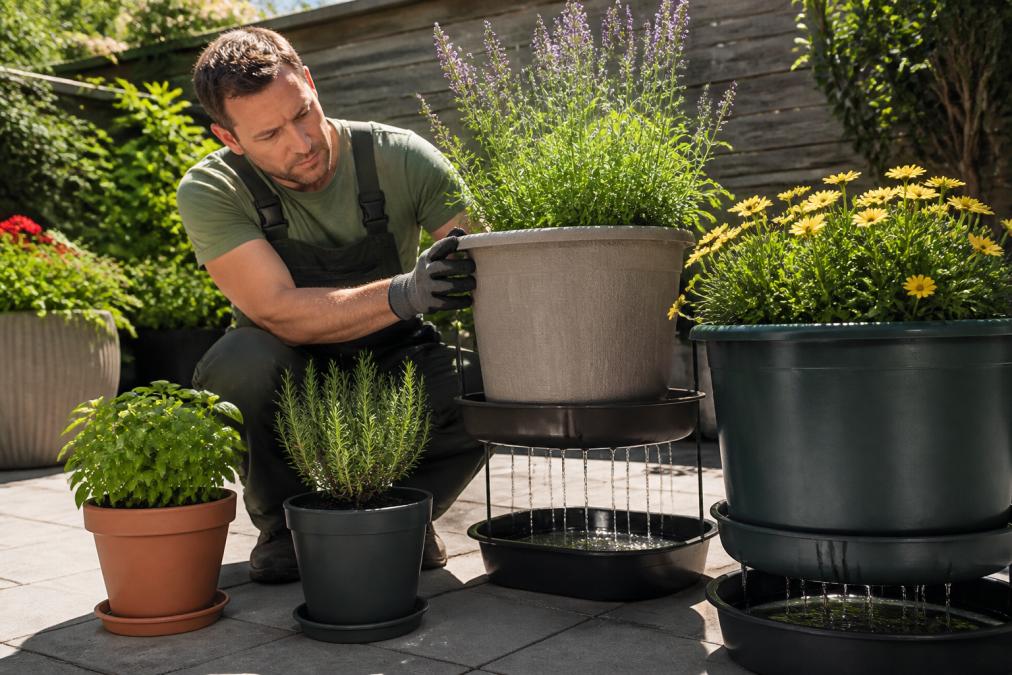
Drainage holes are non-negotiable for outdoor container gardening. Without drainage, water accumulates at the pot bottom, creating three problems: root rot from waterlogged soil, ice formation during winter that damages the container, and stagnant water that attracts mosquitoes and algae.
Cleaning and UV Protection
Clean containers every spring to remove algae, mold, and accumulated dirt. A simple rinse with a garden hose removes most debris. For stubborn buildup, use a soft brush and mild soap solution. Avoid abrasive scrubbing that damages the surface.
Choosing the Right Size for Your Patio or Balcony
Container size affects both aesthetics and plant health. Too small and plants become root-bound and stressed. Too large and excess soil retains water, increasing rot risk. Size also impacts stability on windy balconies and visual proportion in your space.
Why American-Made Weather Resistant Containers Matter
Choosing domestically manufactured containers supports local production while ensuring quality consistency. Beloit Plastics LLC manufactures all containers in Beloit, Wisconsin, maintaining direct control over materials and construction standards.
Frequently Asked Questions
Can plastic weather resistant outdoor garden containers really survive freeze-thaw cycles?
Yes, when made from high-impact polypropylene or resin designed for outdoor use. These materials expand and contract with temperature changes without cracking. The key is ensuring proper drainage to prevent water from pooling inside the pot, which freezes and causes structural damage. Products made from 90%+ recycled plastic with UV stabilization can withstand multiple freeze-thaw cycles year after year without degradation.
What's the difference between frost-proof and weather-resistant containers?
Frost-proof containers are engineered to survive freezing temperatures and freeze-thaw cycles without cracking. Weather-resistant containers handle rain, sun, and temperature changes but may not survive prolonged freezing. For outdoor use in cold climates, choose frost-resistant containers specifically. Materials like high-impact polypropylene are frost-proof, while some ceramic and terracotta options are not.
How do I winterize outdoor pots to prevent cracking and damage?
Before winter arrives, remove soil and plants from containers that cannot stay outdoors. For frost-resistant pots you're keeping outside, ensure drainage holes are clear and add pot feet to elevate them slightly for airflow. Empty saucers to prevent water from accumulating and freezing. If storing pots indoors, clean them thoroughly and stack them in a dry location. This preparation extends the life of your containers through multiple seasons.
What size outdoor planter should I choose for a small balcony or patio?
For small spaces, choose containers between 4 to 8 inches in diameter for herbs and small flowers. Consider the weight-to-stability ratio: lighter materials like polypropylene work well for balconies where weight matters. Ensure the pot size matches your plant's root system and soil capacity needs. Included saucers protect surfaces from water stains, making them essential for deck and patio use regardless of pot size.
Why do some outdoor planters crack after one winter while others last for years?
Cracking typically results from water pooling inside the pot during freezing temperatures. When water freezes, it expands and forces the container walls outward. Low-quality materials without proper UV stabilization also degrade faster. Containers made from 95%+ recycled, UV-stabilized polypropylene with drainage holes and proper pot feet prevent this damage. Maintenance like emptying saucers and ensuring drainage holes stay clear makes a significant difference.
Are resin planters better than ceramic for year-round outdoor use?
Resin planters generally outperform ceramic for outdoor durability. Resin is non-porous, resists moisture absorption, and tolerates freeze-thaw cycles without cracking. Ceramic and terracotta are porous and can absorb water, which freezes and causes structural failure. For best results, choose resin or high-impact polypropylene containers designed specifically for all-weather outdoor use.
