7 Best Lightweight Plastic Pots for Balcony Railings
Last Updated: November 19, 2026
Quick Summary
The best lightweight plastic pots for balcony railings are high-impact polypropylene planters with pre-drilled drainage holes, sized to your rail width and filled weight. Start with 7 inch pots on narrow rails and move to 9, 11, or 12 inch sizes only when your rail can carry the wet weight.
- Every Beloit Plastics pot ships with drainage holes already drilled, so no drilling is required.
- Measure top rail width, rail profile, rail-to-wall clearance, and rail height before ordering.
- A 7 inch pot holds roughly 1 to 1.5 dry quarts of mix; a 12 inch pot holds 5 quarts or more.
- Weigh your filled pot on a bathroom scale and compare it to the bracket and rail rating.
- Re-tighten the clamp after the first watering, since wet weight shifts the fit.
Table of Contents
- Quick Comparison: Lightweight Plastic Pots for Balcony Railings
- Balcony Railing Planter With Drainage: Why Holes Decide Plant Health
- Railing Planter Size and Fit: Measuring Before You Buy
- Adjustable Railing Planter Options and Secure Installation
- Best Lightweight Plastic Pots for Balcony Railings: Top Picks
- Balcony Herb Planters: Matching Pot Size to What You Grow
- Wind, Weight, and Weather: Keeping Rail Planters Safe and Durable
- Choosing Your Lightweight Plastic Pots for Balcony Railings
- Frequently Asked Questions
Quick Comparison: Lightweight Plastic Pots for Balcony Railings
The best lightweight plastic pots for balcony railings hold soil, roots, and water without adding dangerous load to a railing never engineered for a garden. At Beloit Plastics LLC, our planters are made from high-impact polypropylene and ship with drainage holes already in place, because a pot that traps water kills plants.
Here is the short version before the details:
| Pick | Size | Pack | Price | Best For |
|---|---|---|---|---|
| Austin Planter 7 Inch, White Granite | 7 in | 5 pack | $29.95 | Small herbs on narrow rails |
| Austin Planter 9 Inch, Terra Cotta | 9 in | 5 pack | $34.25 | Flowers that need more root room |
| LHAP 12 Inch Pot with Hanger | 12 in | Single | $19.99 | One large statement plant |
| Austin Planter 11 Inch with Hangers | 11 in | 5 pack | $29.99 | Full seasonal color runs |
Size
Every pick is lightweight and weather resistant. We cover drainage, fit, and safety first, because getting those wrong is how balconies end up with dead plants and cracked rails.
Balcony Railing Planter With Drainage: Why Holes Decide Plant Health
A balcony railing planter with drainage is not a nicety. It is the difference between roots that breathe and roots that rot. Water that cannot escape sits at the bottom of the pot, displaces oxygen, and suffocates root tissue within days.
Every pot in our lineup ships with drainage holes already drilled. The 9 inch Austin Planter features several drainage holes on the bottom, with no drilling required.
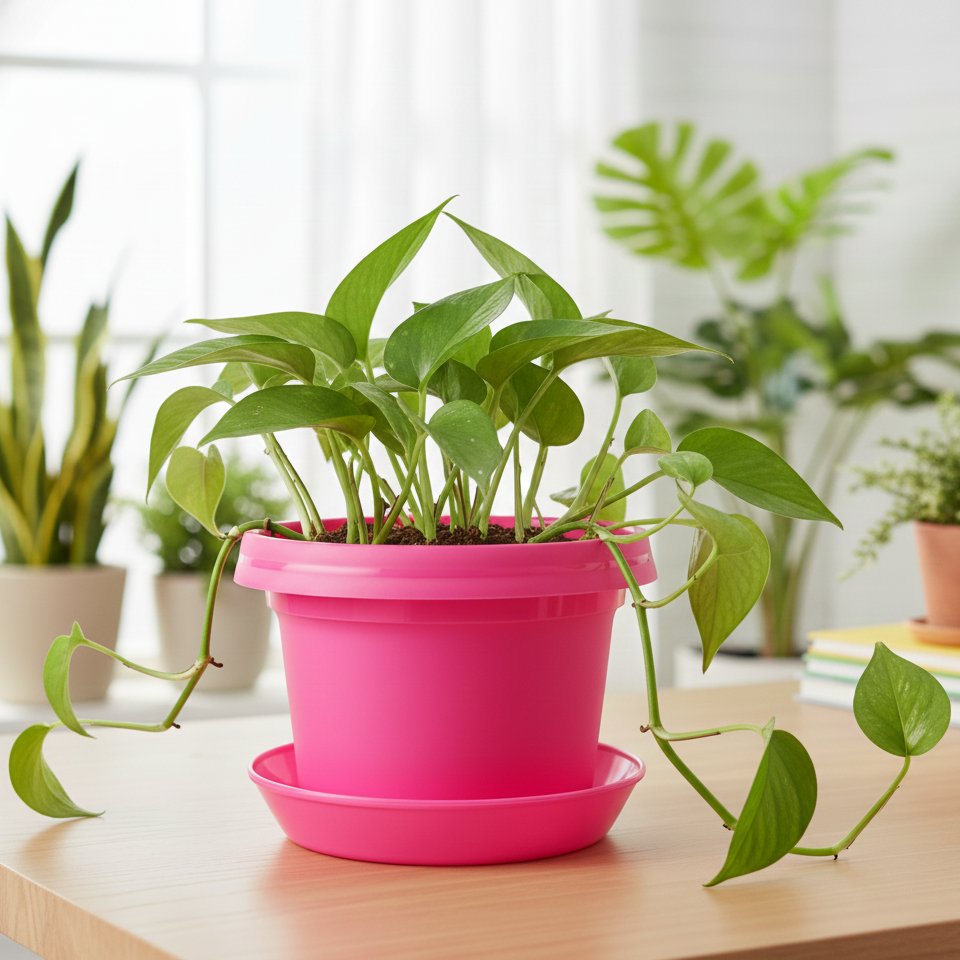
If you already own pots without holes, you can fix them. Our guide on how do you drill drainage holes in plastic pots walks through bit size, spacing, and how to avoid cracking the rim.
One more thing most guides skip: drainage water has to go somewhere. On a balcony, runoff drips onto the railing, the deck below, or a neighbor's patio. A saucer can catch it. Our balcony garden basics guide covers saucers, drip trays, and compact planting.
Railing Planter Size and Fit: Measuring Before You Buy
Railing planter size and fit comes down to four measurements, all taken with a tape measure before you order. Guessing from a photo is how people end up with a pot that overhangs the rail, blocks the view, or shifts in a breeze.
1. Top rail width. Measure the flat surface across the top of the rail, not its circumference.
2. Rail profile. A flat top takes a flat-backed bracket or strap. A round top needs a curved saddle or a strap that wraps and tightens.
3. Rail-to-wall clearance. Measure from the back of the rail to the wall or railing behind it. You need room for the pot's back edge plus a hand's width to water and deadhead.
4. Rail height and sightline. Measure from the deck to the top of the rail.
With those numbers, sizing gets simple. For a standard apartment rail under 2 inches wide, 7 inch and 9 inch pots fit comfortably without overhang.
Weight is the number people forget, and it is where fit turns into safety.
If you are matching pots to a specific railing setup, this guide to the best planters for apartment balconies breaks down sizing by rail type.
Adjustable Railing Planter Options and Secure Installation
Adjustable railing planters use brackets or straps that clamp to the rail and tighten to fit a range of widths. You buy once and it fits whatever rail you end up with, but adjustable hardware is only as secure as its tightening mechanism.
Installation follows the same logic for every style:
- Clean the rail surface so the clamp grips bare metal, not grit
- Set the bracket width slightly wider than the rail, then tighten
- Test the empty bracket with a firm downward pull before adding soil
- Fill the pot, water it, and let it sit for an hour before hanging
- Re-tighten after the first watering, since wet weight shifts the fit
Watch out: hanging a pot from a rail that also serves as a guardrail can violate building or lease rules, and a top-heavy pot on a loose clamp is a fall hazard. Check your lease before you load a rail, and never hang more weight than the rail was designed to carry.
Best Lightweight Plastic Pots for Balcony Railings: Top Picks
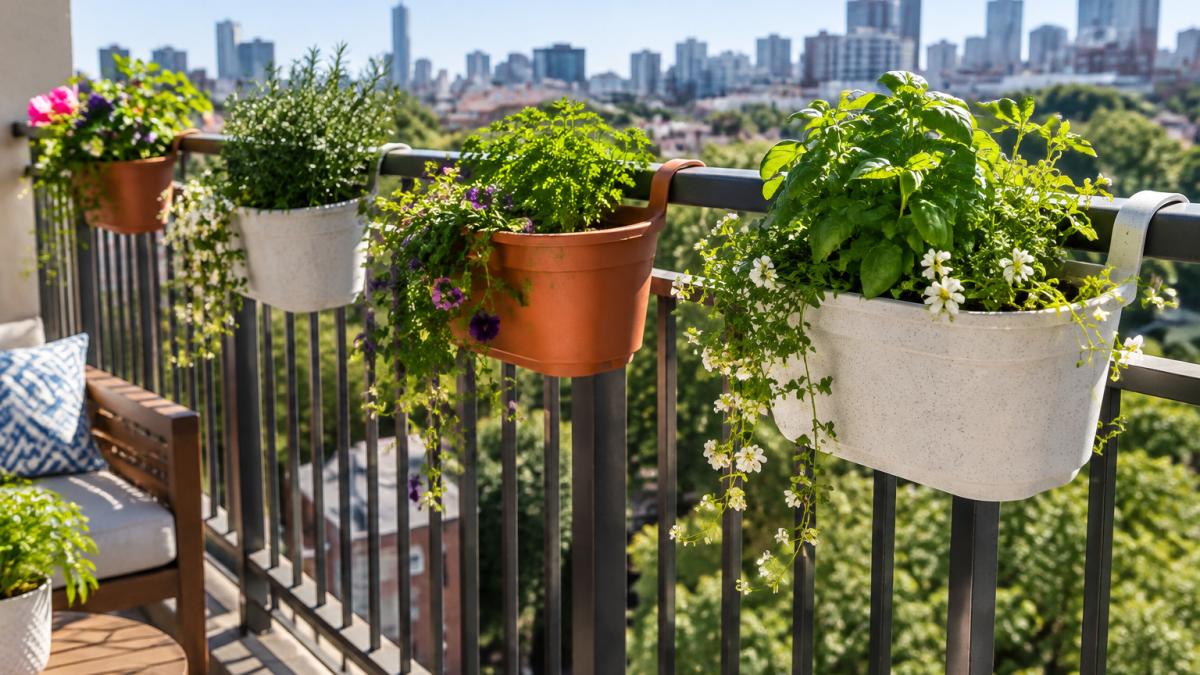
Each of these picks is made from high-impact polypropylene and made with over 90% recycled plastic. Here is how they differ.
Austin Planter 7 Inch, White Granite 5 Pack
The smallest pick is the one most balcony gardeners should start with. At 7 inches across, it holds a compact herb or a single trailing flower without crowding a narrow rail. The white granite color is molded throughout the resin.
Best for: renters with narrow rails who want a few herbs and one or two flowers. Skip if: you want a tomato plant or anything with a deep taproot.
Austin Planter 9 Inch Terra Cotta 5 Pack
The 9 inch size is the sweet spot for most balconies. It gives roots noticeably more room than the 7 inch while staying light enough to move with one hand. The bright color is molded throughout the resin.
Best for: flowers and larger herbs that need root depth. Skip if: your rail is narrow enough that a 9 inch pot overhangs.
LHAP 12 Inch Pot With Hanger
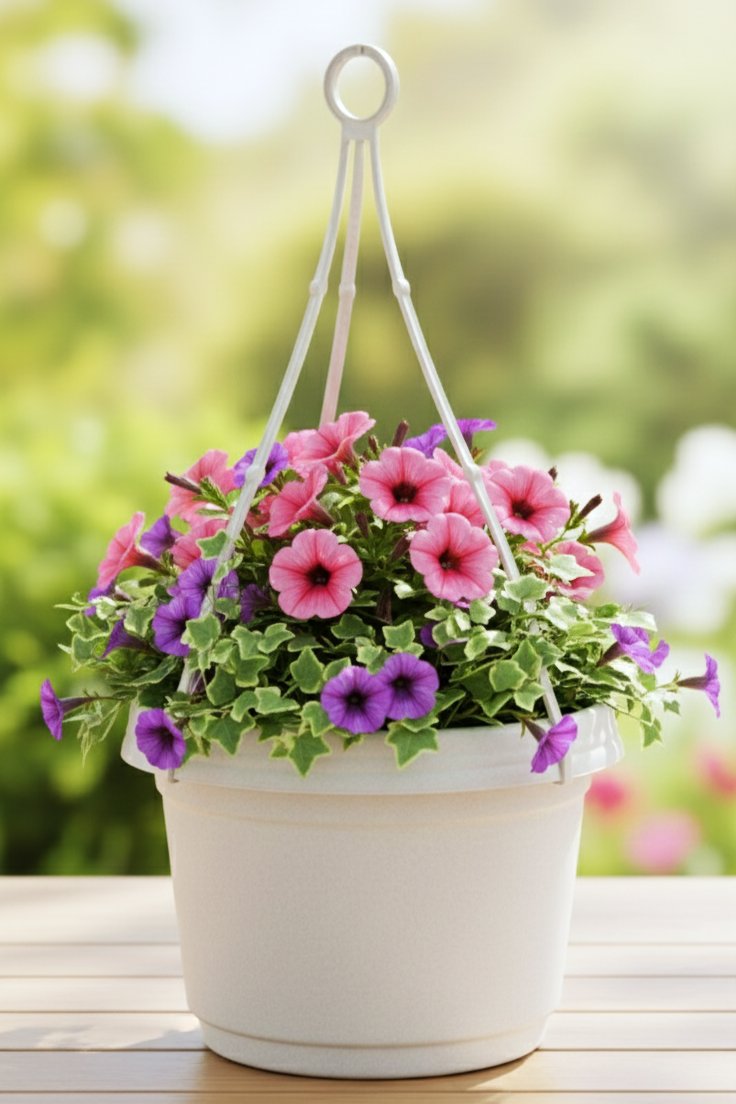
One big pot beats five small ones when you want a single focal point. The 12 inch LHAP holds a substantial plant, comes with its hanger included, and costs $19.99 as a single unit, the cheapest way to test whether a larger hanging pot suits your space.
Best for: a single statement plant or a full trailing arrangement. Skip if: your rail is hollow aluminum or your lease limits hanging weight.
Austin Planter 11 Inch With Hangers, Terra Cotta or Hunter Green
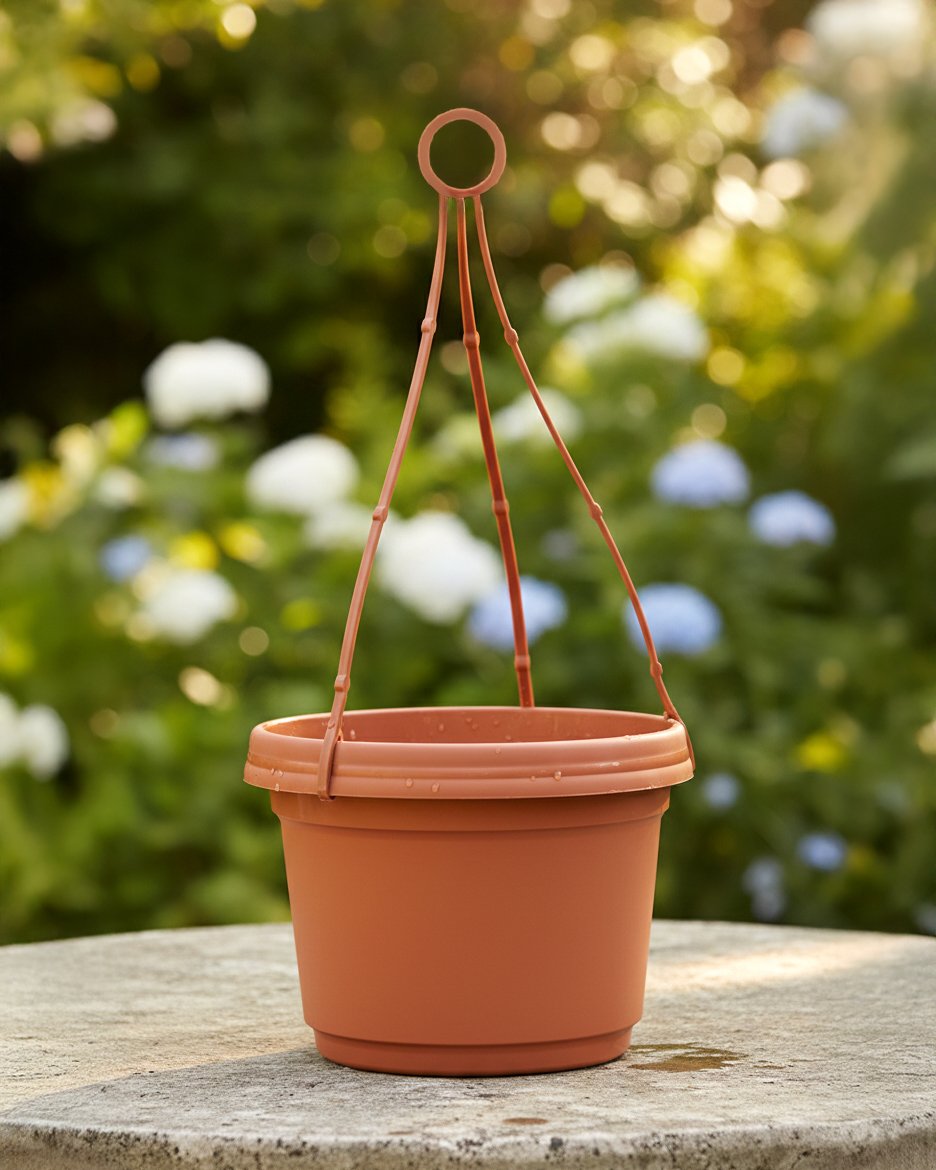
Five 11 inch pots for $29.99 is the volume play for someone who wants a full run of color along a long rail without watering five tiny pots every day. Choose hunter green to blend with foliage or terra cotta for a classic look.
Best for: long rails and gardeners who want a matched set. Skip if: you only have room for one or two pots.
Balcony Herb Planters: Matching Pot Size to What You Grow
Balcony herb planters work best when pot size matches root habit, not plant height. Basil and parsley spread wide and shallow. Rosemary and mint run deep. Getting this wrong is the most common reason a healthy-looking herb collapses in three weeks.
- Basil, cilantro, parsley: 7 inch pots, one plant each
- Mint, chives, thyme: 7 to 9 inch, mint alone since it spreads
- Rosemary, sage, oregano: 9 to 11 inch for root depth
- Cherry tomatoes, peppers: 12 inch minimum, one plant per pot
Mint deserves a warning. It sends runners aggressively and will crowd out neighbors in a shared pot, so give it its own container. Herbs also want more drainage than flowers, which is why pre-drilled holes matter here more than anywhere else on the balcony.
Wind, Weight, and Weather: Keeping Rail Planters Safe and Durable
Wind breaks balcony gardens, and weight turns a loose pot into a falling hazard.
Filled weight is the number that matters. Empty plastic pots are light by design, but soil and water are not.
Keep the load over the rail, not off one side. A pot centered over the top rail transfers weight down through the rail.
Lower is safer. Hang pots so the base sits close to the rail rather than high above it.
Check hardware monthly. A pot that swings in wind will eventually wear through its hanger.
Watch out: hanging a pot from a rail that also serves as a guardrail can violate building or lease rules, and a top-heavy pot on a loose clamp is a fall hazard.
Material choice matters too. Our breakdown of the benefits of lightweight plastic garden containers explains why lighter pots are often safer on a railing, not just easier to move.
Choosing Your Lightweight Plastic Pots for Balcony Railings
Choosing the best lightweight plastic pots for balcony railings comes down to four checks, in this order: measure the rail, confirm drainage holes, match pot size to what you grow, and verify the filled weight is something the rail can safely carry. Skip any one and the pot becomes a problem instead of a garden.
Here is the decision framework we use:
- Narrow rail, few plants: 7 inch Austin Planter, 5 pack
- Standard rail, mixed herbs and flowers: 9 inch Austin Planter, 5 pack
- Long rail, full color run: 11 inch Austin Planter with hangers, 5 pack
- One large focal plant: 12 inch LHAP with hanger
- Need a saucer to catch runoff: add a matching drip tray
Our pots ship with drainage holes, are made from polypropylene with recycled content, and are lightweight. Free shipping and 30-day returns are available.
Balcony gardening fails for boring reasons: no drainage, the wrong size, and hardware nobody checked. Get those three right and a railing becomes real growing space. Beloit Plastics LLC makes planters with drainage holes and high-impact polypropylene construction, in sizes from 7 to 12 inches. Shipping is free and returns are accepted within 30 days. Get started with Beloit Plastics LLC and turn your railing into a garden that survives the season.
Frequently Asked Questions
How do I choose a railing planter that fits my balcony railing?
Measure your railing's top width and the height from the top rail to the balcony floor before you shop. A railing planter size and fit check should include the pot's outer dimensions, the hanger or bracket opening, and the clearance needed for the pot to hang without touching the railing or wall. For hanging pots, confirm the hanger hook opening is wider than your rail. If your rail is unusually wide or narrow, look for an adjustable railing planter with a bracket that closes to the rail width.
Do balcony railing planters need drainage holes?
Yes. A balcony railing planter with drainage holes lets excess water escape so roots do not sit in soggy soil, which is the main cause of root rot. Beloit Plastics pots ship with drainage holes and no drilling is required. Place a saucer under each pot to catch runoff and protect the balcony floor from water stains. On a balcony, drainage also matters because water that pools in a pot adds weight and can overflow onto neighbors below.
Are plastic railing planters durable enough for outdoor use?
High impact polypropylene is the plastic used in Beloit Plastics planters. The color is molded throughout the resin.
How much weight can a balcony railing planter hold?
The railing itself, not the pot, is the limiting factor. Filled pot weight depends on the soil and plant, so weigh a filled pot before hanging it. Check your building's rules and your railing's condition before hanging anything heavy. Distribute weight across several smaller pots rather than one large one, and never hang a pot from a loose or rusted rail section.
What can I plant in a balcony railing planter?
Small herbs like basil, parsley, chives, and mint thrive in 7 to 9 inch pots. Trailing flowers such as petunias and ivy geraniums work well in hanging pots where they can spill over the edge. Succulents suit shallow, well-draining setups. Match pot size to root depth: herbs need at least 6 inches of soil, while larger flowers prefer 9 to 12 inch pots.

