
Best Weather Resistant Garden Saucers
Table of Contents
- Quick Comparison: Top Weather Resistant Garden Saucers
- How We Evaluated Weather Resistant Garden Saucers
- Protecting Wooden Decks from Water Damage
- Heavy Duty Plastic Plant Saucers for Every Pot Size
- Durability in Freeze-Thaw Cycles and Extreme Weather
- Which Saucer Should You Choose?
- Conclusion
- Frequently Asked Questions
Last Updated: October 1, 2026
Quick Comparison: Top Weather Resistant Garden Saucers
Weather resistant garden saucers protect your deck, floors, and plants by preventing water rings, root rot, and freeze-thaw cracking. The wrong saucer becomes brittle by spring and leaves permanent stains.
Heavy-duty polypropylene saucers with ribbed undersides, proper drainage holes, and weather-resistant construction separate products that last from those that don't. Below are the best options across different pot sizes.
| Size | Price | Best For | Key Feature |
|---|---|---|---|
| 3-4 inch | $9.99 | Small herbs, succulents | Lightweight, easy to move |
| 6-8 inch | $9.99-$11.99 | Medium flowers, vegetables | Balanced capacity and portability |
| 10-12 inch | $9.99-$11.99 | Large outdoor planters | Heavy-duty construction |
| 16-18 inch | $18.99-$19.99 | Extra-large statement pots | Maximum water collection |
How We Evaluated Weather Resistant Garden Saucers
Quality weather resistant garden saucers are tested across freeze-thaw cycles, UV exposure, moisture, and heavy pot weight. Here's what matters when choosing one.

Material composition determines durability. High-impact polypropylene resists cracking better than standard plastic. Color-molded resin (pigment throughout, not surface-painted) resists UV degradation.
Ribbed undersides lift the saucer off your deck or patio, creating an air gap that prevents water pooling and stops stains and rot before they start.
Drainage holes must be multiple and properly sized. A single hole clogs with soil debris; several smaller holes prevent root rot from standing water.
Saucer diameter matters more than depth. Quality saucers have different top and bottom dimensions, the top rim catches runoff, the bottom is smaller for stability. Measure your pot's base before ordering.
Protecting Wooden Decks from Water Damage
Water damage to wooden decks costs thousands to repair. A single leaking pot creates stains, soft spots, and rot. Weather resistant garden saucers with ribbed undersides prevent this.
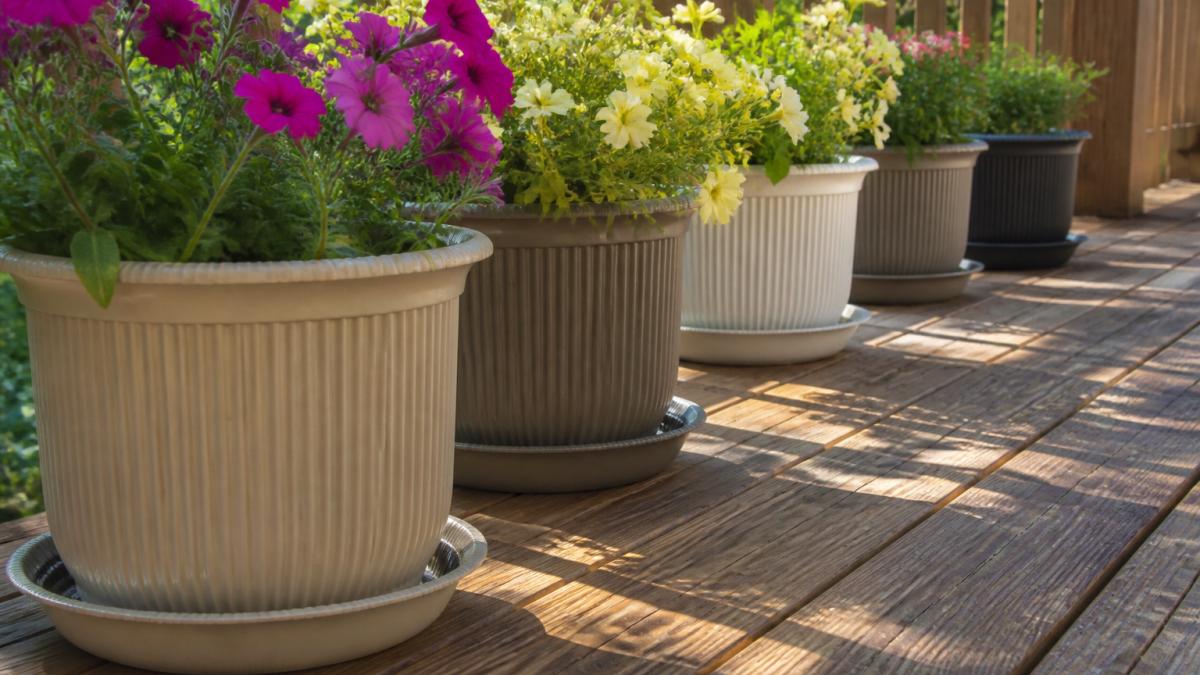
Standing water on wood creates mold, mildew, and fungi. A ribbed saucer lifts the pot away, allowing air circulation that prevents moisture pooling.
Beloit Plastics LLC saucers use ribbed bottoms that create multiple contact points, allowing water to drain instead of settling. This works on hardwood, composite, and concrete equally well.
Color-molded resin construction means protection doesn't degrade like painted saucers, it's built into the material itself.
Heavy Duty Plastic Plant Saucers for Every Pot Size
The saucer must match your pot's base diameter to catch spillage and provide proper water collection.
Beloit Plastics LLC offers heavy duty plastic plant saucers in nine sizes, from 3 to 18 inches, engineered to hold substantial weight without bending or warping.
Small saucers (3-5 inches): Perfect for tabletop herbs and succulents at $9.99. Lightweight and easy to move.
Medium saucers (6-8 inches): The workhorse size for vegetables, flowers, and shrubs. The 8-inch at $11.99 provides durability for outdoor patios.
Large saucers (10-12 inches): Heavy-duty options supporting larger planters without flexing. The 12-inch at $11.99 offers serious water collection capacity.
Extra-large saucers (16-18 inches): For statement plants and large pots. The 18-inch at $19.99 handles commercial-grade planters.
The flat inner surface ensures pots rest evenly, preventing rocking and cracking. The classic shape complements any decor style.
Durability in Freeze-Thaw Cycles and Extreme Weather
Understanding freeze-thaw mechanics is essential for choosing a saucer that lasts.
How freeze-thaw damage occurs: Water absorbed into plastic expands ~9% when frozen. In standard polystyrene or thin-wall polypropylene, this creates internal stress that produces hairline fractures, widening with each cycle until the saucer fails.
10 inch Heavy duty polypropylene Saucer →
High-impact polypropylene (HIPP) allows it to flex under stress rather than fracture.
Temperature performance thresholds:
The drainage hole advantage in cold climates: Saucers without proper drainage trap internal water, which freezes and creates damaging expansion stress. Multiple drainage holes (at least three) ensure complete drainage and prevent internal ice formation.
UV degradation compounds freeze-thaw stress: UV exposure breaks polymer chains, making plastic brittle. Color-molded resin resists UV better than surface-coated saucers because pigment acts as a UV absorber. Saucers that fade quickly often fail prematurely in freeze-thaw cycles.
Real-world durability data: Quality HIPP saucers with ribbed undersides and multiple drainage holes survive 50+ freeze-thaw cycles. Budget saucers typically fail between cycles 8-15. Material composition matters more than design.
Which Saucer Should You Choose?
Choosing the right saucer requires matching three variables: pot size, climate conditions, and your specific gardening priorities. The decision framework below addresses the factors that matter most to different gardener types.
Step 1: Match saucer diameter to pot base. Measure the bottom diameter of your pot, not the top rim. A saucer should be at least as wide as the pot's base, ideally 0.5-1 inch wider to catch all runoff. Undersizing by even half an inch means water spills onto your deck or floor. For pots with tapered bottoms (wider at the top than the base), measure at the actual contact point where the pot sits on the saucer.
Step 2: Assess your climate's freeze-thaw severity. If you experience regular winter temperatures with multiple freeze-thaw cycles, prioritize saucers made from high-impact polypropylene. These handle the expansion stress that destroys thinner plastics. If your climate is mild, standard polypropylene or even recycled plastic saucers will perform adequately. The 10-12 inch sizes at $9.99-$11.99 offer value for harsh climates because they're engineered specifically for freeze-thaw durability.
Step 3: Consider chemical leaching if growing edibles or organic plants. Most plastic saucers are made from virgin or recycled polypropylene, which is chemically stable and does not leach BPA or phthalates into soil under normal conditions. However, if you're growing herbs, vegetables, or medicinal plants that will be consumed, verify the saucer is food-contact safe or certified BPA-free. If chemical leaching is a concern, ceramic or terracotta saucers are an alternative, though they're heavier and more fragile in freeze-thaw climates.
Step 4: Evaluate weight-bearing capacity for large pots. A 16-inch pot filled with moist soil and a mature shrub can weigh 80-120 pounds. Not all saucers are engineered to support this load without flexing or cracking. Quality heavy-duty plastic saucers with ribbed undersides can typically support 100+ pounds distributed evenly. If you're using saucers under large statement plants or commercial-grade planters, confirm the manufacturer's weight rating. The 16-18 inch options at $18.99-$19.99 are designed for this load range.
Step 5: Assess your sustainability priorities. If you prefer eco-friendly options, recycled plastic saucers reduce virgin plastic consumption. Biodegradable saucers made from plant-based polymers (polylactic acid or PHA) are emerging alternatives, but they're not yet widely available at scale and have limited cold-weather data. For the most sustainable option with proven durability, choose recycled polypropylene saucers if your climate is mild; for harsh climates, virgin HIPP remains the most durable choice, and durability itself is an environmental factor.
Saucer selection by gardener type:
Apartment balcony gardeners with small herbs and succulents: The 3-5 inch sizes at $9.99 are ideal. Lightweight, easy to move for watering and cleaning, and affordable to buy in multiples. These don't require heavy-duty construction because the load is minimal.
Patio and deck gardeners in moderate climates: The 6-8 inch sizes at $9.99-$11.99 are the workhorse choice. They handle most flowering plants and vegetables, provide good water collection, and offer excellent value. If your deck is composite or sensitive to water staining, prioritize saucers with pronounced ribbed undersides.

Cold-climate gardeners with large outdoor planters: The 10-12 inch heavy-duty options at $9.99-$11.99 are essential. These are engineered specifically for freeze-thaw cycles and support substantial weight.
Conclusion
Weather resistant garden saucers aren't luxury items. They're essential protection for your deck, your floors, and your plants' long-term health. The difference between a saucer that lasts and one that doesn't comes down to material quality, drainage design, and freeze-thaw engineering.
Frequently Asked Questions
What material is best for outdoor weather resistant garden saucers?
High-impact polypropylene is the top choice for outdoor weather resistant garden saucers. It resists UV fading, handles freeze-thaw cycles without cracking, and remains lightweight for easy repositioning. Unlike terracotta, polypropylene doesn't absorb water or develop frost damage. USA-made polypropylene saucers offer color molded throughout the resin, ensuring durability and aesthetic appeal across seasons.
How do I prevent water damage when protecting wooden decks from water?
Use a saucer with a ribbed underside design that lifts the tray slightly off the deck surface. This creates airflow underneath, preventing water rings and stains on hardwood. The ribbed design also allows drainage holes in the saucer bottom to function properly, directing excess water away from the deck. Choose saucers sized correctly for your pots to ensure all drainage is captured.
Will heavy duty plastic plant saucers survive freezing temperatures?
Quality heavy duty plastic plant saucers made from high-impact polypropylene are freeze-thaw resistant. They won't crack or become brittle in cold climates because polypropylene remains flexible at low temperatures. However, ensure your saucer has proper drainage holes to prevent water pooling, which can freeze and damage the saucer.
Do I need a saucer for outdoor pots on a wooden deck?
Yes, especially on wooden decks. Plant water and soil spillage create stains and can lead to wood rot or mold. A weather-resistant saucer catches excess drainage and protects your deck investment. The ribbed underside design keeps the saucer elevated, allowing air circulation and preventing moisture from being trapped against the wood surface. This is particularly important in humid climates or areas with frequent rain.
