7 Best Vegetables for Small Container Gardens
Table of Contents
- 7 Best Vegetables for Small Container Gardens
- Best Pots for Container Gardening
- Vegetable Container Size Guide
- How to Water Vegetables in Containers
- Growing Vegetables in 5-Gallon Buckets
- Container Gardening on Balconies and Patios
- Frequently Asked Questions
Last Updated: October 7, 2026
7 Best Vegetables for Small Container Gardens
Growing vegetables in pots transforms any balcony, patio, or windowsill into a productive garden. The 7 best vegetables for small container gardens deliver reliable harvests in tight spaces without demanding much expertise or equipment.
With the right vegetables and containers, apartment dwellers and space-limited homeowners can grow real food.
Quick Picks for Small Spaces
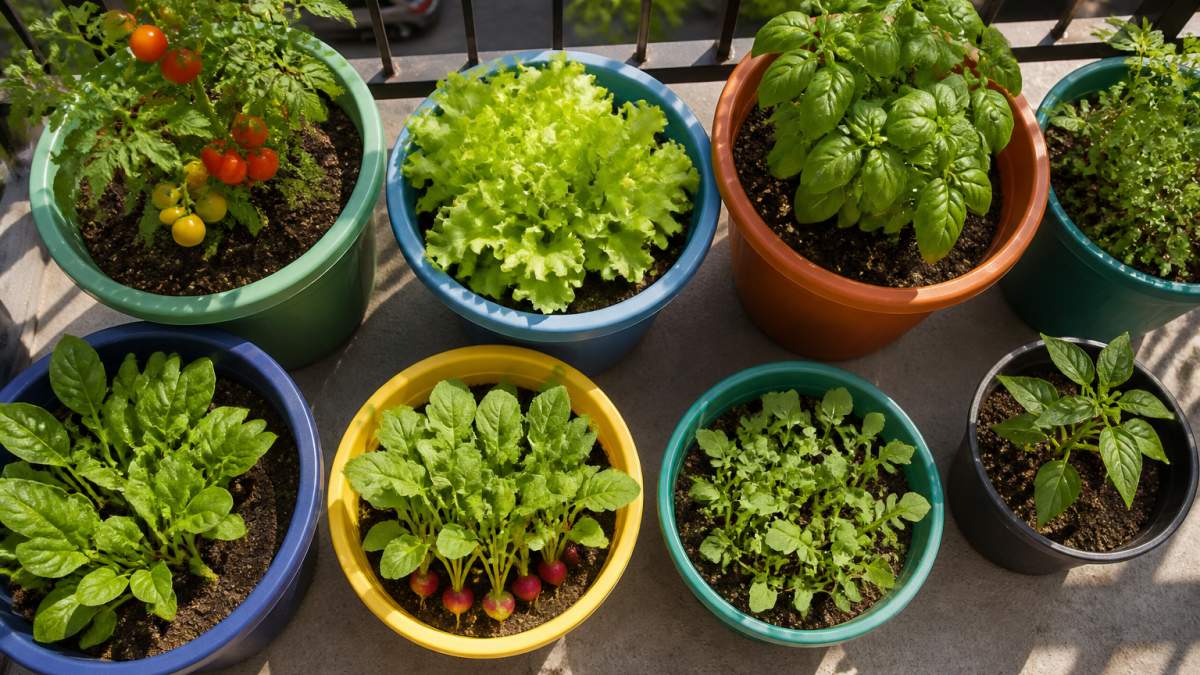
- Cherry Tomatoes, Produce prolifically in 5-gallon pots, ready to harvest in 60-70 days
- Lettuce & Leafy Greens, Mature in 30-45 days, perfect for succession planting every 2 weeks
- Radishes, Fastest harvest at 25-30 days, ideal for impatient gardeners
- Basil & Herbs, Endless pinching means continuous harvests from one small pot
- Bush Beans, Compact varieties yield heavily without sprawling vines
- Peppers, Slow starters but produce for months once established
- Carrots & Root Vegetables, Surprising depth requirement, but dwarf varieties work in 10-12 inch pots
1. Cherry Tomatoes, Best for Continuous Harvests
Cherry tomatoes are the workhorse of container gardening. Compact determinate varieties like 'Tiny Tim,' 'Window Box Roma,' and 'Tumbling Tom' produce dozens of fruits from a single plant without taking over your space.
A single cherry tomato plant in a 5-gallon container produces 50-150 fruits over a season depending on sunlight and feeding. The catch: tomatoes need 6-8 hours of direct sunlight daily, so south or west-facing is ideal.
Water consistently, since dry-then-wet cycles trigger blossom-end rot and split fruit. Feed every 2 weeks with a balanced fertilizer once flowers appear, and pinch off the first few flower clusters so roots establish before fruiting.
2. Lettuce & Leafy Greens, Best for Beginners
Lettuce is foolproof in containers. It tolerates partial shade (4-6 hours of sun), matures in 30-45 days, and keeps producing if you harvest outer leaves instead of pulling the whole plant. Varieties like 'Buttercrunch,' 'Oak Leaf,' and 'Lollo Rosso' grow well in 6-8 inch pots.
The secret to continuous harvests is succession planting: sow a new pot every 2 weeks so one matures while the next germinates. A single windowsill can supply salad greens for months.
Spinach and arugula follow the same pattern, with arugula maturing in 30-40 days. Both tolerate cooler temperatures better than lettuce, making them ideal for spring and fall.
A 10-inch pot holds 3-4 lettuce plants. Water when the top inch of soil feels dry, and skip fertilizer for the first 3 weeks since potting soil has enough nutrients.
3. Radishes, Best for Impatient Gardeners
Radishes mature in 25-30 days, fast enough to see a complete crop cycle in a month. 'Cherry Belle,' 'French Breakfast,' and 'Watermelon' radish all do well in containers.
A 6-inch pot holds 4-6 radish plants. They need cool soil and consistent moisture, never drying out between waterings, or they bolt and become woody. In summer, grow them in partial shade to slow bolting.
The real win with radishes is succession planting: plant a pot every 2 weeks from spring through fall for a continuous harvest.
4. Basil & Herbs, Best for Endless Pinching
Basil is the most productive herb in containers. Plant it in a 6-inch pot with 6-8 hours of sun, and it rewards constant pinching with exponential growth. Never let it flower, since pinching buds doubles leaf production.
'Genovese' basil is the standard, but 'Thai,' 'African Blue,' and 'Cinnamon' add flavor options. All thrive in warm soil, consistent moisture, and regular harvesting.
Parsley, cilantro, and chives are equally productive in small pots. Cilantro bolts faster than basil in heat, so grow it in spring and fall. Parsley takes 3 weeks to germinate, so start it indoors. Chives tolerate shade, drought, and neglect better than any other herb.
5. Bush Beans, Best for Compact Productivity
Bush beans are determinate, growing to a set height (12-18 inches) and stopping. No staking, no pruning, no sprawling vines. Varieties like 'Provider,' 'Mascotte,' and 'Contender' produce heavily in pots.
Plant 4-6 bean seeds in a 5-gallon pot. They germinate in 5-7 days and flower within 3 weeks, with harvest starting at 50-60 days and continuing 3-4 weeks if you pick regularly. Pick pods at 4-6 inches while tender, since letting them mature slows new flower production.
Beans need 6-8 hours of sun and consistent moisture. They're nitrogen-fixing, so too much nitrogen produces leafy plants with few flowers; a light feeding at flowering is enough.
The main pest issue is spider mites in hot, dry conditions. Mist the foliage regularly to keep humidity up and deter mites.
6. Peppers, Best for Long-Season Production
Peppers are slow starters, taking 60-90 days to produce fruit. But once they start, they produce continuously through fall, and a single plant in a 5-gallon pot yields 10-20 peppers over a season.
'Lunchbox' peppers and compact bell pepper varieties like 'Mohawk' and 'Corbaci' stay manageable in containers. Thai hot peppers are even more compact and prolific than bells.
Peppers need 8+ hours of direct sun and warm soil. Start them indoors in late winter for summer fruit. Once established, water when soil is dry 1 inch down and feed every 3 weeks with a balanced fertilizer.
Peppers tolerate neglect better than tomatoes, won't split from irregular watering, and handle temperature swings, making them ideal for forgetful gardeners.
Best Pots for Container Gardening
The container itself is as important as the plant. Drainage, material, and size determine whether your vegetables thrive or struggle. At Beloit Plastics LLC, we design pots for durability and plant health, not just looks.
Drainage holes are non-negotiable, since without them roots rot within days. Saucers catch excess water and protect surfaces, keeping water off decks and patios while roots still drain.
Material matters too. Plastic pots retain moisture longer than clay, an advantage in hot climates or for forgetful waterers, and won't crack in freeze-thaw cycles. Clay looks beautiful but chips, breaks, and absorbs water, requiring more watering.
Our Austin Planter Plastic Flower Pots with Saucers in 4-inch, Terra Cotta offer fade-resistant color, built-in drainage, and matching saucers, all made from 95% recycled polypropylene. They're lightweight enough to rearrange easily and durable enough to last multiple seasons without cracking.

For larger plants like tomatoes, the LAP 12 inch Pot with Saucer or Hanger provides the depth and capacity needed for root development. The matching saucer prevents water rings on patios.
| Pot Size | Best For | Minimum Soil Volume | Drainage Requirement |
|---|---|---|---|
| 4-6 inches | Herbs, radishes, lettuce | 1-2 gallons | Essential |
| 8-10 inches | Peppers, dwarf beans, small greens | 3-5 gallons | Essential |
| 12+ inches | Tomatoes, larger peppers, root vegetables | 5+ gallons | Essential with saucer |
Vegetable Container Size Guide
Container size determines how well vegetables establish roots and produce. Too small stresses plants from limited water and nutrients; too large keeps soil wet and invites root rot.
Herbs and Leafy Greens: 4-6 inch pots work for basil, parsley, and lettuce. A 6-inch pot holds 1-2 gallons of soil, enough for shallow-rooted greens. Succession plantings in multiple small pots are more productive than one large pot.
Radishes and Carrots: Radishes need 6 inches of depth but benefit from 8-10 inches of width. Carrots need 10-12 inches of depth minimum, even dwarf varieties, and a 5-gallon pot is ideal for 3-4 carrots.
Bush Beans: A 5-gallon pot accommodates 4-6 plants. They need room for root development but don't require the depth that root vegetables demand.
Peppers: A 5-gallon minimum. Peppers are heavy feeders and heavy drinkers. Smaller pots dry out too quickly in heat. A 10-gallon pot is better if space allows.
Tomatoes: Cherry tomatoes produce well in 5-gallon pots, larger determinate varieties benefit from 7-10 gallons, and indeterminate types need 10+ gallons to support their sprawl.
How to Water Vegetables in Containers
Watering is where most container gardeners fail. Containers dry out faster than in-ground soil, especially in heat or wind. But overwatering kills more plants than underwatering.
A saucer catches excess water and provides a moisture reservoir roots can draw from between waterings; empty standing water after 30 minutes to prevent root rot. Our Wavy 3 Pots with Rectangle Saucer has a ribbed underside that keeps the pot elevated for air circulation.
Growing Vegetables in 5-Gallon Buckets
Five-gallon buckets are durable and hold the right amount of soil for most vegetables.
A 5-gallon bucket grows:
- 1 cherry tomato plant
- 3-4 lettuce plants
- 4-6 radishes
- 1 pepper plant
- 4-6 bush bean plants
- 2-3 carrots (dwarf varieties)
- 1 basil plant plus 2-3 companion herbs
Our Sample Pack 12-Piece Flower Pot and Saucer Set offers graduated sizes from 2 to 12 inches, giving you flexibility to match pot size to plant needs without the DIY bucket drilling.

Container Gardening on Balconies and Patios
Balconies and patios present unique challenges: limited sun, wind exposure, weight restrictions, and space constraints. But they're ideal for container gardening because containers are movable.
Weight matters on upper-floor balconies. Lightweight plastic pots like those from Beloit Plastics LLC reduce weight compared to ceramic or clay.
Our Oval Pot with Saucer in 17" × 9" dimensions fits snugly along railings and entryways, maximizing space efficiency while the matching saucer protects finishes from water stains.

Container gardening delivers fresh vegetables from spaces you thought were too small. The 7 best vegetables for small container gardens, cherry tomatoes, lettuce, radishes, basil, bush beans, peppers, and carrots, prove that apartment dwellers and space-limited gardeners can grow real food. Start with one or two pots this season, and once you experience harvesting your own produce, you'll expand. Beloit Plastics LLC's durable, American-made containers provide the reliable foundation your garden needs. Explore Now and discover how quality pots transform your growing potential.
Frequently Asked Questions
What vegetables grow well in small containers?
Tomatoes, lettuce, spinach, arugula, radishes, carrots, and herbs thrive in small containers. Cherry tomatoes and dwarf varieties are especially productive in limited space. Leafy greens and root vegetables are high-yielding crops that mature quickly in pots as small as 4 to 6 inches deep, making them ideal for balconies and windowsills.
What is the best pot size for growing vegetables in containers?
Pot size depends on the vegetable. Leafy greens need 4 to 6 inches of depth and width. Tomatoes require at least 12 inches of depth and 10 inches of width. Carrots and radishes need 8 to 10 inches of depth. Root vegetables and beans need 6 to 8 inches. Using the right container size prevents root crowding and ensures healthy yields.
How often should you water vegetables in containers?
Water container vegetables when the top inch of soil feels dry to the touch. Container-grown vegetables dry out faster than garden soil, so consistent watering is critical. Use saucers to catch excess water and prevent surface staining while maintaining a water reservoir.
Can you grow vegetables in 5-gallon buckets?
Yes, 5-gallon buckets are excellent for growing vegetables like tomatoes, peppers, beans, and potatoes. Drill drainage holes in the bottom and use quality potting mix. A single 5-gallon bucket can support one tomato plant or multiple leafy greens. This container size offers enough soil volume for productive harvests while remaining portable for patios and small spaces.
