
Are American Made Planters Better? A Practical Guide
Table of Contents
- Why American Made Planters Get Compared to Imports
- What Actually Makes Durable Outdoor Planters Last
- Longevity of Plastic vs Terracotta Planters
- How to Choose High-Quality Plant Pots Without Overpaying
- Where American Made Planters Cost More, and Where They Don't
- The Drawbacks of Buying American Made
- Conclusion
- Frequently Asked Questions
Last Updated: October 8, 2026
Why American Made Planters Get Compared to Imports
The question of whether American made planters are better is really a question about what happens to a planter after two or three winters. Domestic manufacturers typically mold thicker walls, control their own resin blends, and stand behind the product long enough to answer for it. Imported planters often compete on price first and durability second, which is why so many of them look fine in year one and split by year three. At Beloit Plastics LLC, we make planters and saucers in the United States from 95% recycled high-impact polypropylene, and we hear the same story from customers constantly: they bought cheap pots, they cracked, they want something that lasts.
That gap is not marketing. It shows up in wall thickness, in how a pot handles a hard freeze, and in whether the manufacturer will still be around when you need a replacement saucer.
What Actually Makes Durable Outdoor Planters Last
Durability comes down to three things: wall thickness, the plastic or clay formula, and how the container handles water. A planter that is thick, made from a UV-stable material, and drains properly will outlast a thinner one by years, regardless of where it was made.
Wall Thickness and Impact Resistance
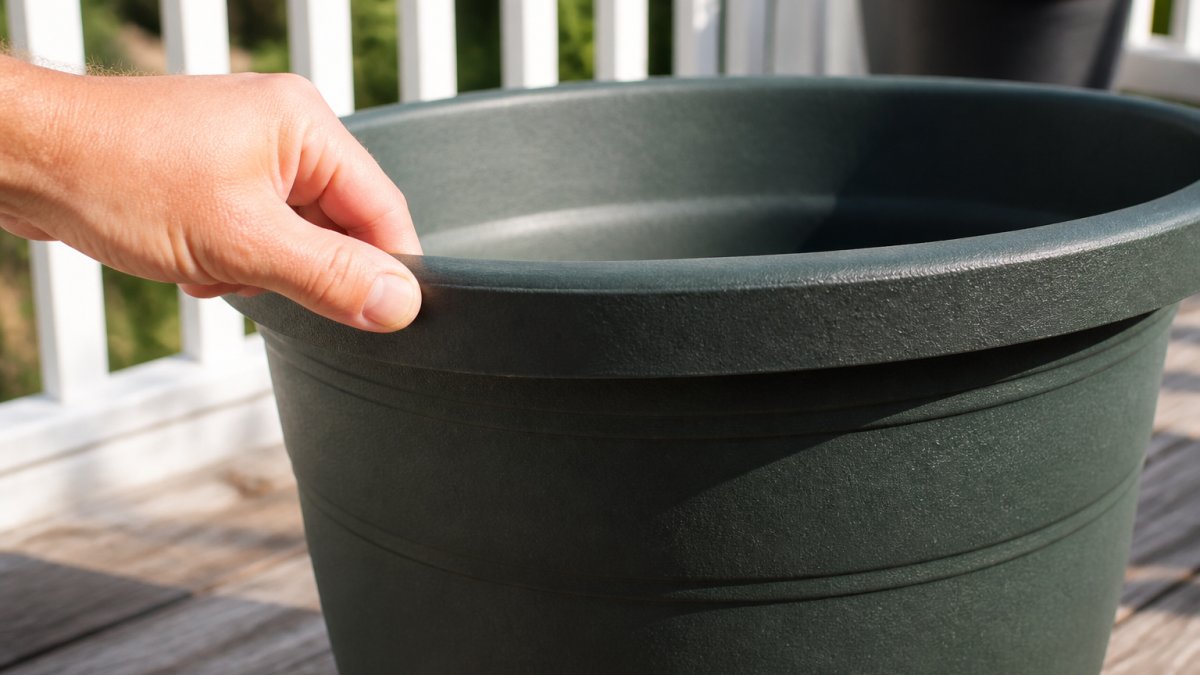
Thin walls flex. Flexing creates hairline cracks at the rim and base, and those cracks are where every future failure starts. High-impact polypropylene tolerates being bumped by a hose, a shovel, or a dog without stress fracturing. The Plastics Industry Association overview of polypropylene properties explains why polypropylene resists impact and fatigue better than many competing plastics.
How Freeze-Thaw Cycles Test a Planter
Water expands when it freezes. If a planter holds moisture in its walls or sits in a puddle, that expansion pushes outward and inward at the same time. Terracotta and thin plastic lose that fight. A planter with a proper saucer and drainage holes lets water move out instead of sitting in the base, which is the single biggest factor in surviving a Northeast winter.
Longevity of Plastic vs Terracotta Planters
Plastic wins on longevity in almost every outdoor setting, and it is not close. Terracotta is porous, so it absorbs water, and absorbed water freezes and flakes the surface. Unglazed terracotta left outside through a hard winter often chips or cracks within a season or two.
Plastic planters made from high-impact polypropylene resist that cycle entirely. They do not absorb water, they do not fade easily when the color is molded through the resin, and they can be washed and reused for years. The Austin Planter 4 inch Flower Pots with Saucers come in a 5-pack with drainage holes built in, and the saucers catch runoff so surfaces stay dry.

The honest trade-off: terracotta looks and feels like traditional pottery, and some gardeners want that. If appearance matters more than lifespan, terracotta is a fine choice. If you want the pot to still be there in five years, plastic is the practical answer.
| Factor | Plastic (polypropylene) | Terracotta |
|---|---|---|
| Water absorption | None | High |
| Freeze-thaw survival | Good | Poor outdoors |
| Weight | Light | Heavy |
| Cleaning | Dishwasher safe | Hand scrub only |
| Best for | Year-round outdoor use | Sheltered or indoor spots |
How to Choose High-Quality Plant Pots Without Overpaying
Choosing high-quality plant pots comes down to four checks you can do in under a minute. Most buyers skip them and end up replacing the same pot twice.
Austin Planter 18 Inch (16.3 Inch Base) Case of 2 Plant Saucers - White Granite →
- Press the rim. If it flexes easily, the wall is too thin for outdoor use.
- Measure the base, not the top. Add about 2 inches to the base diameter to find the right saucer size.
- Check for drainage holes. No holes means root rot and trapped water.
- Confirm the material. High-impact polypropylene holds up; thin, brittle plastic does not.
Where American Made Planters Cost More, and Where They Don't
Domestic planters usually cost more per unit than imported ones. That is real, and it is worth being honest about. What closes the gap is how many seasons you get out of each pot.
A planter that lasts one season and a planter that lasts five seasons are not priced the same once you divide by years of use. Our Austin Planter 18 Inch saucers, a case of two at $25.99, protect decks and floors from water rings and can be reused indefinitely. The 9 inch Hanging Flower Pots come as a 5-pack at $34.25, and the 2 inch Wavy planters with saucers run $15.99 for five. Buying direct from the manufacturer, with free shipping and a 30-day return window, removes most of the markup that inflates retail pricing.
The Drawbacks of Buying American Made
American made planters are not the right call for everyone, and pretending otherwise would be dishonest.
- Higher upfront price. You pay more per pot at checkout, even if the cost per season is lower.
- Fewer style options. Imported lines often carry more decorative finishes and shapes.
- Shipping time. Domestic manufacturing is fast, but it is not always same-day like a big-box pickup.
- Overkill for short-term use. If you need a pot for one summer, an inexpensive option may be enough.
For apartment dwellers with a few herbs on a balcony, a smaller set like our 2 inch planters with saucers is a sensible starting point rather than a full outdoor setup. For anyone gardening seriously across seasons, the durability math favors buying once.
Conclusion
The real test of a planter is not how it looks on day one; it is whether it is still holding a plant after three winters. That is where American made planters earn their price. Beloit Plastics LLC makes durable planters and saucers in the United States from 95% recycled high-impact polypropylene, with direct manufacturer pricing, always free shipping, and a 30-day return policy. Explore Now and get planters built to last every season.
Frequently Asked Questions
What are the benefits of buying American-made garden planters?
American-made planters often use higher-grade materials and thicker construction because domestic manufacturers compete on durability rather than just price. Many U.S. makers also use recycled plastics like polypropylene, which resists fading and cracking better than cheaper alternatives. Buying domestically can also mean shorter shipping distances and easier access to replacement parts or saucers. The trade-off is usually a higher upfront cost, but the product often lasts multiple seasons longer.
How can I identify authentic American-made garden products?
Look for a clear 'Made in USA' label on the product page or packaging, not just 'assembled in USA' or 'designed in USA.' Check the manufacturer's location and whether they list a domestic factory address. For plastic planters, domestic makers often highlight recycled content and specific resin types. If the listing is vague about origin, ask the seller directly before buying. Reputable American manufacturers usually state their location prominently.
Do American-made planters offer better value for the price?
Value depends on how long you keep the planter. A $25 American-made saucer that survives five winters costs less per year than a $12 import that cracks after one season. Domestic planters often include features like ribbed undersides, UV-stable color, and dishwasher-safe materials that imports may skip. If you replace cheap planters every year, the total spend adds up fast. For anyone gardening long-term, the per-season cost usually favors American-made.
Are plastic planters made in the U.S. more eco-friendly?
Many American plastic planters use 95% recycled high-impact polypropylene, which diverts plastic waste and reduces the need for new raw material. Domestic manufacturing also means shorter transport distances compared to overseas shipping. Polypropylene itself is recyclable and doesn't contain chlorine like PVC, so it burns cleaner in waste-to-energy facilities. The eco benefit is strongest when the planter lasts many seasons, so durability and sustainability go hand in hand.
