How to Choose Fade-Resistant Garden Decor for Sunny Yards
Last Updated: November 12, 2026
Quick Summary
Choose fade resistant garden decor by matching materials to each spot's sun exposure: UV-stabilized polypropylene, powder-coated metal, cast stone, and glazed ceramic hold color best, while untreated wood, thin resin, and painted finishes fade fastest. Look for molded-in color, a warranty that names fading, and a cited ASTM test standard.
- Full sun means six or more hours of direct sunlight per day; reflected heat from concrete and pale walls adds UV dose.
- UV-stabilized polypropylene planters typically last 5 to 10 years in full sun with quarterly rinsing.
- Cast stone and concrete never fade but benefit from a penetrating sealer every 2 to 3 years.
- A warranty that names fading as a covered defect beats a longer warranty that excludes color fade.
- Rotate statues a quarter turn every few weeks and move lightweight pieces into partial shade during hot months.
Table of Contents
- Assess Your Yard's Sun Exposure Before You Buy
- Best Materials for Outdoor Garden Decor in Direct Sunlight
- What Makes UV-Resistant Outdoor Decor Actually Hold Its Color
- How to Evaluate Fade-Resistance Claims Before You Pay
- How to Protect Garden Decor From Sun Damage Season After Season
- Fade-Resistant Outdoor Planters: What to Look For
- Color and Finish Choices That Age Well in a Sunny Yard
- Build Your Sun-Ready Garden Decor Checklist With Beloit Plastics
- Frequently Asked Questions
Assess Your Yard's Sun Exposure Before You Buy
Choosing fade resistant garden decor for sunny yards starts with one step most shoppers skip: measuring how much sun each spot actually gets. A spot that looks "sunny" at 9 a.m. may sit in brutal direct sunlight by 2 p.m.
Spend a single day watching your yard. Note where the light lands and how long it stays.
Map Full Sun, Partial Shade, and Reflected Heat
Full sun means six or more hours of direct sunlight per day. Partial shade means three to six. Anything less is deep shade, and deep shade rarely causes fading.
Reflected heat is the sneaky one. Concrete patios, white siding, and metal fences bounce UV rays back onto decor. A planter near a south-facing wall can take a double dose.
- Walk your yard at 9 a.m., noon, and 4 p.m.
- Mark each spot as full sun, partial shade, or reflected heat.
- Note surfaces that bounce light: concrete, pale walls, water.
The USDA plant hardiness and sun guidance is a solid starting point for understanding light and climate zones. Once you know your zones, buying gets much easier.
Best Materials for Outdoor Garden Decor in Direct Sunlight
The best materials for outdoor garden decor in direct sunlight are UV-stabilized plastic, powder-coated metal, stone, and glazed ceramic. Untreated wood, thin resin, and painted finishes fade fastest.
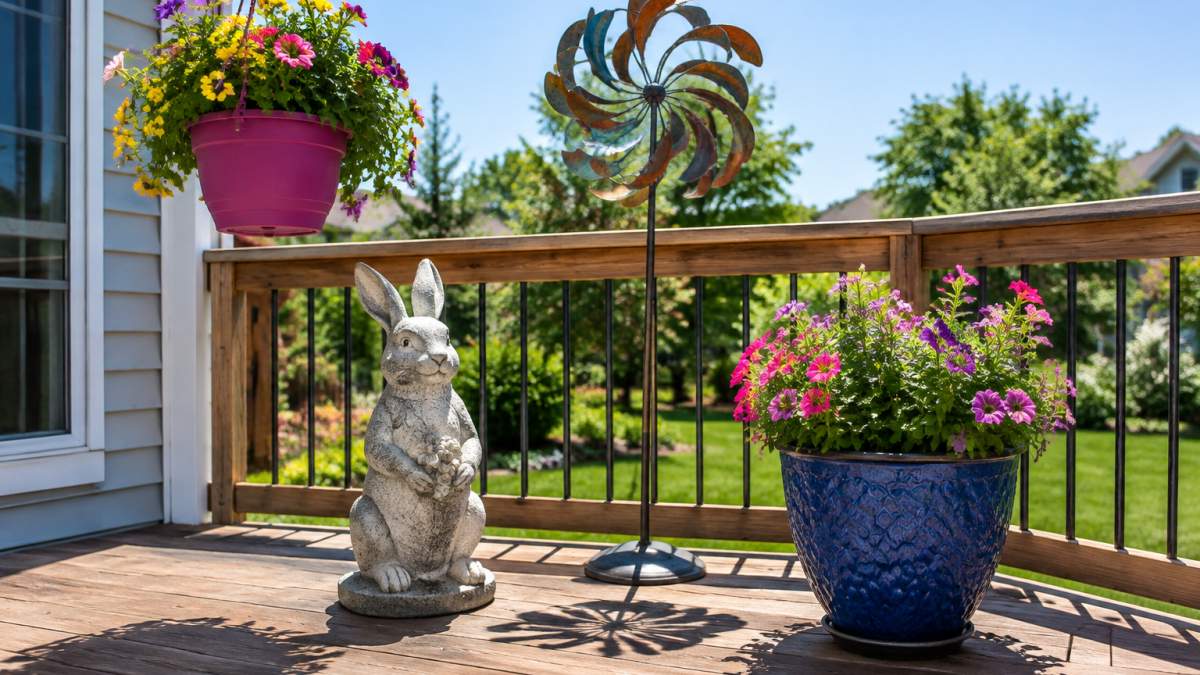
Here is how the common materials stack up under UV rays, including what actually fails first and what maintenance each one demands.
Material-by-Material UV Resistance Comparison
| Material | UV Resistance | Fade Risk | What Fails First | Typical Outdoor Life in Full Sun | Maintenance |
|---|---|---|---|---|---|
| UV-stabilized polypropylene | High | Low | Surface chalking after several seasons | 5-10 years | Rinse quarterly |
| Powder-coated metal | High | Low | Coating chips, then rust at the chip | 5-8 years | Touch up chips yearly |
| Cast stone and concrete | Very high | Very low | Cracking in freeze-thaw cycles | 10+ years | Seal every 2-3 years |
| Glazed ceramic | High | Low | Glaze crazing, then moisture intrusion | 5-10 years | Bring in before hard freeze |
| Untreated wood | Low | High | Graying and checking within one season | 1-3 years | Annual sealant |
| Thin, unfilled resin | Medium | Medium | Chalking and brittleness | 2-4 years | None effective |
| Solution-dyed acrylic fabric | High | Low | Mildew at seams, not fading | 5-8 years | Wash twice a year |
| Glass | Very high | Very low | Breakage, not fading | Indefinite | Handle with care |
Plastic gets a bad reputation it does not deserve. Polypropylene made with UV stabilizers is designed to hold color outdoors. Thin, cheap plastic is the problem, not plastic itself.
Stone and concrete never fade, but they are porous.
Glazed ceramic holds color well because the glaze is essentially glass fused to the clay body. Its weakness is thermal shock and crazing, the fine hairline cracks that let moisture in.
Watch out: a material labeled "resin" can mean anything from dense polyresin to hollow, thin plastic, so judge by weight and wall thickness rather than the word on the tag.
Typical Outdoor Life in Full Sun by Material
What Makes UV-Resistant Outdoor Decor Actually Hold Its Color
Color holds when the pigment sits inside the material, not on top of it. UV-resistant outdoor decor uses pigments mixed through the material or a UV-stable topcoat. Painted surfaces fade first because the coating breaks down.
Sunlight attacks the chemical bonds in colorants. UV rays break those bonds, and the color drifts toward gray or chalky white. Two things slow that process: stable pigments and a protective layer that absorbs UV before it reaches the color.
- Through-color pigments: the color runs all the way through the material.
- UV-stabilized additives: chemicals mixed in to absorb UV energy.
- Protective topcoats: sealants or powder coatings that shield the surface.
A common mistake is buying decor with a painted-on finish and expecting it to last. Our long lasting outdoor garden decor guide goes deeper on color retention if you want the full breakdown.
How to Evaluate Fade-Resistance Claims Before You Pay
Fade-resistance claims are marketing until you check the details. Look for specific language, a stated warranty, and honest material specs.
Most guides get this wrong. They tell you to trust the label. Here is what to actually check, and what a credible answer sounds like for each item:
- Does the listing name the material and the UV treatment? A credible listing says something like "UV-stabilized polypropylene with molded-in color" or "solution-dyed acrylic." A listing that says only "durable outdoor resin" is hiding the spec.
- Is there a warranty, and does it cover fading specifically? Read the exclusions. Many outdoor warranties cover structural failure, like cracking or breaking, but expressly exclude color fade. A warranty that names fading as a covered defect, even for a limited term, is a stronger signal than a longer warranty that excludes it.
- Are there customer photos showing the product after a season or two? Reviews with dated photos of the same item a year or two after purchase tell you more than any spec sheet. Look for photos of the underside or the sun-facing side, where fading shows first.
- Does the brand say "fade resistant" or the absolute "fade proof"? "Fade resistant" is an honest claim. "Fade proof" or "never fades" is a red flag, because no pigment survives indefinite UV exposure. A brand that admits limits is usually telling the truth about everything else.
- Is the color molded in, or painted on? Molded-in color runs through the full thickness of the material, so a scratch reveals the same color underneath. Painted or coated color sits on the surface and fails first.
- Does the product cite a test standard? Outdoor materials are commonly evaluated against ASTM test methods for accelerated weathering, which simulate years of sun exposure in a lab chamber. A seller who can name the standard and the test duration is showing their work; one who cannot is guessing.
The FTC advertising guidance on environmental and durability claims requires companies to back up claims with evidence, which gives you a legitimate reason to ask for proof before you pay.
Watch out: a warranty that requires you to ship the failed item back at your own cost, or that prorates coverage to almost nothing after the first year, is technically a warranty but practically worthless for a fading planter.
How to Protect Garden Decor From Sun Damage Season After Season
Protecting decor from sun damage comes down to placement, rotation, and a little seasonal care. Move pieces out of peak afternoon sun, rotate them, and clean them before storage. Small habits add years.
Afternoon sun between noon and 4 p.m. does the most damage. A spot that gets morning sun only will treat your decor far more gently.
- Rotate statues and ornaments a quarter turn every few weeks so one side does not take all the UV.
- Move lightweight pieces into partial shade during the hottest months.
- Rinse off dust and pollen, which trap heat on the surface.
- Apply a UV-protective sealant to painted or wood pieces once a year.
- Store delicate decor indoors or under cover through winter.
Watch out: sealing a wet or dusty surface traps moisture and dirt under the coat, which speeds up peeling. Clean and dry first, always.
For plant roots in the same heat, our guide on protecting plant roots from extreme heat pairs well with these decor habits.
Fade-Resistant Outdoor Planters: What to Look For
Fade-resistant outdoor planters need three things: UV-stabilized material, molded-in color, and drainage that keeps the pot from sitting wet. Skip any one and the planter fades, cracks, or rots roots.
Polypropylene is the workhorse here. It is light, tough, and holds color well when made with UV stabilizers. Beloit Plastics LLC makes its planters from polypropylene.
Look for these features:
- Drainage holes to prevent root rot and water pooling.
- A matching saucer to protect decks and patios from stains.
- Thick walls that resist cracking in cold snaps.
- Color molded through the plastic, not painted on.
Our planter buying guide walks through sizing and placement if you want help matching pots to your space.
Color and Finish Choices That Age Well in a Sunny Yard
Colors that age well are the ones that fade gracefully: terra cotta, warm gray, deep green, navy, and natural stone tones. Bright reds and yellows fade fastest because their pigments break down sooner under UV.
That does not mean you must avoid bold color. It means bold pieces belong in partial shade, or in materials with strong UV protection. A bright hanging pot in UV-stabilized plastic will outlast a painted wooden one every time.
- Safest long-term: earth tones, stone, muted green, charcoal.
- Fades fastest: red, orange, bright yellow, pastel pink.
- Ages well with texture: matte and satin finishes hide fading better than gloss.
Matte finishes are forgiving. Gloss shows every chalky patch.
Build Your Sun-Ready Garden Decor Checklist With Beloit Plastics
A sun-ready yard comes together in stages, and a checklist keeps you from buying the wrong thing twice.
Beloit Plastics LLC makes planters and garden accessories in the United States, with direct manufacturer pricing, always free shipping, and 30-day returns. Our polypropylene planters come with drainage holes and saucers to protect your surfaces.
Here is your buying checklist:
- Map sun, shade, and reflected heat in your yard.
- Match material to each zone.
- Check for UV treatment and molded-in color.
- Confirm drainage and saucers on every planter.
- Plan a rotation and cleaning routine.
Ready to shop? Browse our outdoor living decor collection and pick pieces that hold their color season after season.
The sun will test everything you put outside. Buy decor that is built for it, not decor that merely looks good on day one.
Frequently Asked Questions
What materials hold up best in direct sunlight outdoors?
Polypropylene, powder-coated metal, stone, and high-quality resin handle full sun best. Polypropylene is especially practical because it resists UV degradation, holds color, and stays lightweight. Stone and concrete last for decades but are heavy and can crack in freeze-thaw cycles. Wood needs regular sealing. Ceramic can craze or crack under rapid temperature swings. When shopping, look for a UV-resistant coating or colorfast pigment stated on the label rather than a vague weatherproof claim.
How can you tell if outdoor decor is UV-resistant?
Check the product listing for specific language: UV-resistant coating, colorfast pigments, fade-resistant polypropylene, or solution-dyed color. A credible seller names the material and the protection method. Be cautious of claims like won't fade without a material or testing reference. Also look for care instructions and a return window, since a seller confident in fade resistance will stand behind the product if color shifts within the first season.
Do resin planters fade in direct sunlight?
Resin planters can fade, but quality varies widely. Cheaper resin often uses surface dyes that chalk and lighten within one or two summers. Better resin is colored through the material or finished with a UV-resistant coating, which holds color much longer. Inspect the surface for a uniform, molded-in color rather than a painted look. Storing resin planters in shade during the harshest weeks and cleaning them with mild soap also slows fading.
How often should you replace garden decor exposed to full sun?
Most well-made fade-resistant garden decor lasts several seasons in full sun before noticeable color loss. Polypropylene planters, for example, are built to hold bright color for multiple outdoor seasons. Inspect pieces each spring for chalky surfaces, cracking, or color shift. Rotating decor between sunny and shaded spots, applying a protective sealant where appropriate, and storing delicate items in winter can extend replacement intervals well beyond the typical two-to-three-year cycle for untreated decor.

