Durable Pots for Patio Gardening: 2026 Guide
Table of Contents
- Why Material Durability Matters for Patio Pots
- Best Planters for Outdoor Use: Material Comparison
- How to Choose Outdoor Planter Size for Your Space
- Winterizing Outdoor Garden Containers for Freeze-Thaw Protection
- Top Durable Pot Options for Patio Gardening
- Maintenance and Longevity: Keeping Pots in Top Condition
- Frequently Asked Questions
Last Updated: September 28, 2026
Why Material Durability Matters for Patio Pots
Choosing the right pots for patio gardening isn't just about aesthetics. The material you select determines whether your containers survive freeze-thaw cycles, UV exposure, and years of seasonal use, or crack and fade within a single season. Durable pots for patio gardening protect your plants' root systems, resist weather damage, and maintain their appearance long enough to justify the investment.
Most gardeners learn this the hard way: a cheap terracotta pot shatters in winter, and a plastic pot develops cracks after two years of sun. The real cost is lost plants and wasted time replanting.
Patio environments are harsh: temperature swings, UV radiation, and freeze-thaw cycles tear apart inferior materials. The best durable pots for patio gardening combine weather resistance with structural integrity.
Beloit Plastics LLC engineered planters specifically for this challenge, prioritizing materials that withstand harsh conditions while remaining lightweight and affordable.

Best Planters for Outdoor Use: Material Comparison
Three primary materials dominate the market: polypropylene, terracotta, and fiberstone. Each has distinct advantages and critical limitations.
Polypropylene: Weather-Resistant and Lightweight
Polypropylene is engineered for durability and UV stabilization, resisting fading, cracking, and moisture absorption, ideal for patio containers facing constant sun and freeze-thaw cycles.
Why it works: Polypropylene doesn't absorb water, so it won't crack when frozen. It flexes under stress rather than shattering, maintains color for multiple seasons, and is lightweight for balconies and elevated surfaces.
Real-world performance: The Austin Planter 4-inch sets from Beloit Plastics LLC ($16.45-$19.99 per 5-pack) exemplify this durability, with colors remaining vibrant and material staying flexible in winter.
Where it falls short: Polypropylene can feel less premium than terracotta or ceramic, and soil temperature dynamics differ from porous materials.
Terracotta and Ceramic: Aesthetic Appeal vs. Durability
Terracotta and ceramic pots are fired clay products. They're beautiful, breathable, and traditional, but they're also fragile in cold climates and require careful handling.

Why gardeners love them: Terracotta's porous surface allows soil to breathe, feels substantial, and develops patina. Ceramic offers endless color options.
The durability problem: Terracotta and ceramic absorb water, which expands when frozen and fractures the pot. A single hard freeze can destroy them, making them unsuitable for cold climates unless brought indoors seasonally.
Geographic reality: In regions where winter temperatures regularly drop below 32°F, terracotta and ceramic are seasonal pots at best. They work beautifully in mild climates or as temporary seasonal displays, but they're not durable pots for year-round patio gardening in cold climates.
Fiberstone: The Heavy-Duty Middle Ground
Fiberstone is a composite material combining resin with fiberglass reinforcement. It mimics the appearance of stone or concrete.
What it delivers: Fiberstone resists freeze-thaw damage, offers better stability in wind, ages gracefully, and won't harbor moisture issues.
The tradeoff: Fiberstone is heavier and more expensive than polypropylene, making it impractical for balconies or frequent rearrangement.
Best use case: Fiberstone works best for permanent installations where weight isn't an issue and you want a sophisticated appearance that lasts. It's ideal for formal garden settings where the pot is meant to stay in place for years.
How to Choose Outdoor Planter Size for Your Space
Pot size determines soil volume and root health. Choose based on your plants' needs and space constraints.

The basic rule: Most plants need at least 6-8 inches of soil depth to establish healthy roots. A 4-inch pot works for small herbs and succulents. A 10-12 inch pot suits most flowers and medium herbs. Larger specimens and perennials need 14+ inches.
Space considerations: A 17-inch oval pot from Beloit Plastics LLC ($39.75) maximizes space efficiency on narrow balconies, fitting corners better than round pots.
Weight-to-Stability Ratio: Balancing Portability and Safety
Weight affects portability and wind stability. Lightweight polypropylene pots are easy to move but can tip in wind; heavier fiberstone stays put but requires effort to relocate. For most patios, a middle ground works best.
The MRAP 14-inch pot from Beloit Plastics LLC ($20.75) strikes this balance, offering stability without requiring two people to move.
Drainage Holes and Root Health
Drainage holes are non-negotiable. Without them, water accumulates around roots, causing rot and fungal disease. Every quality pot for patio gardening must include drainage holes or be paired with a drip tray that allows excess water to escape.
The best planters for outdoor use feature multiple drainage holes rather than a single center hole. This distributes water flow and prevents soil from clogging a single opening. All Beloit Plastics LLC pots include multiple drainage holes pre-drilled, no drilling required.
Saucers serve two purposes: they catch excess water and protect deck or patio surfaces from staining. The saucer's support grid allows air circulation under the pot, preventing moisture from pooling directly beneath it. This design detail prevents wood rot on decks and concrete staining on patios.
Winterizing Outdoor Garden Containers for Freeze-Thaw Protection
Winter is when material choice proves itself. Freeze-thaw cycles destroy poorly designed pots and protect well-engineered ones.
The freeze-thaw problem: Water inside or around a pot expands when it freezes. Porous materials like terracotta absorb water and fracture from internal pressure. Non-porous materials like polypropylene flex and survive. This is why weather-resistant polypropylene outperforms terracotta in cold climates, it's not about the material's strength, but its ability to shed water rather than absorb it.
Winterizing strategy: Use frost-proof materials (polypropylene, fiberstone) for year-round outdoor pots. Bring terracotta and ceramic indoors before the first hard freeze. Keep drainage holes clear and ensure saucers aren't sitting in standing water. Group pots together for wind shelter and reduced temperature stress.
Top Durable Pot Options for Patio Gardening
These options represent the best durable pots for patio gardening across different use cases and budgets. Each is engineered for longevity and real-world performance.
Austin Planter 4-Inch Sets: Budget-Friendly Durability
The Austin Planter 4-inch sets from Beloit Plastics LLC deliver exceptional value for gardeners starting out or managing multiple small plants. These sets come in several color options, lime green, terra cotta, red, purple, and sea blue, each priced at $16.45 to $19.99 for a 5-pack.
What makes them durable: Made from 95% recycled polypropylene with UV stabilization, they resist fading and cracking. Each pot includes a matching saucer with a support grid to prevent moisture buildup.
Best for: Small herbs, succulents, and young plants. The 5-pack format creates a cohesive herb garden or flower arrangement.
Honest limitation: At 4 inches, these pots constrain larger plants.
MRAP 14-Inch Pot and Saucer: Medium-Scale Gardening
The MRAP 14-inch pot combines practical design with premium durability. This round planter measures 14 inches wide by 5 inches tall and comes with a matching 14-inch saucer at $20.75.
12-Inch Red Pot: Single Statement Planter
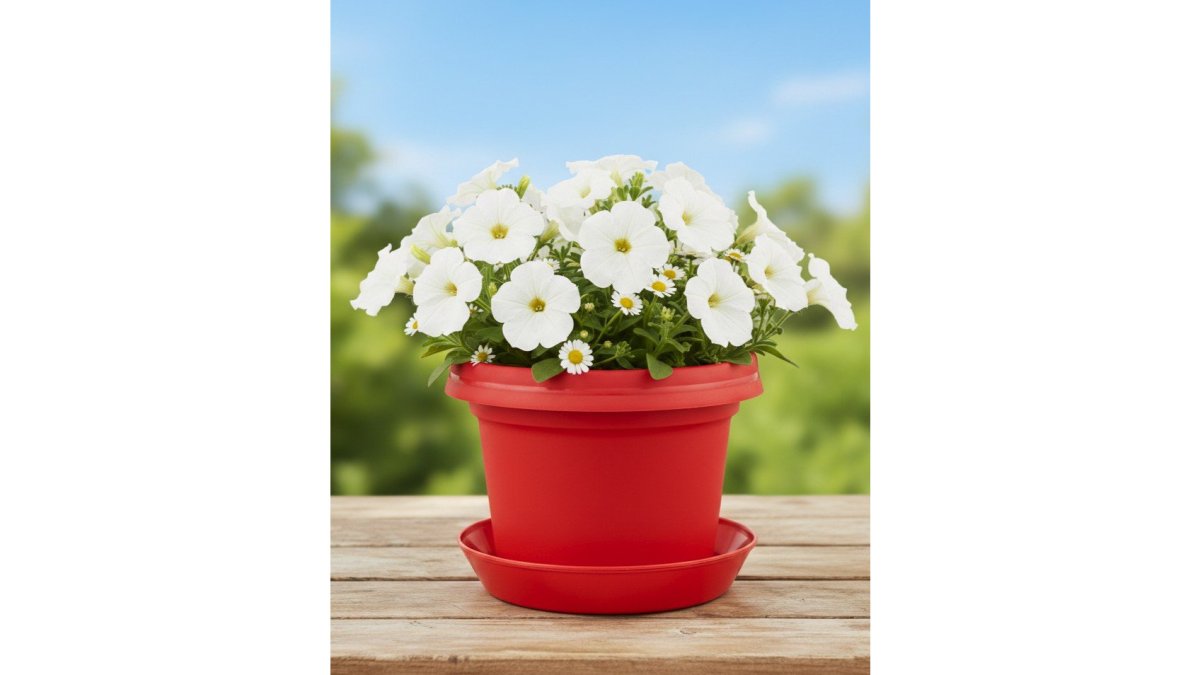
The 12-inch red pot from Beloit Plastics LLC ($19.37) serves as a focal point for any patio or garden arrangement. The classic molded-color planter design pairs with any decor, and the color runs throughout the resin rather than being applied as a surface coating.
Oval Pot with Saucer: Space-Efficient Design
The 17-inch by 9-inch oval pot from Beloit Plastics LLC ($39.75) maximizes space efficiency while maintaining elegant proportions. The oval shape fits corners, tight balcony spaces, and entryways where round pots won't work.
12-Piece Graduated Set: Complete Container Gardening Solution
The 12-piece flower pot and saucer set from Beloit Plastics LLC ($29.95) offers graduated sizes from 2 inches to 12 inches, providing a complete ecosystem for container gardening. This collection includes matching pots and saucers in modern planter design.
Maintenance and Longevity: Keeping Pots in Top Condition
Durability isn't just about material selection, it's also about maintenance. Simple care practices extend the life of any pot significantly.
Frequently Asked Questions
What is the most durable material for outdoor planters?
Polypropylene and UV-stabilized composite materials rank highest for durability in durable pots for patio gardening. Unlike terracotta, which cracks during freeze-thaw cycles, polypropylene resists weather extremes, moisture, and UV damage for several seasons. Fiberstone offers heavier-duty construction but costs more. Look for pots made from recycled polypropylene with drainage holes and weather-resistant finishes to maximize longevity.
How do I prevent outdoor planters from cracking in winter?
Winterizing outdoor garden containers starts with choosing frost-proof materials like polypropylene rather than ceramic or terracotta. Empty pots completely before freezing temperatures arrive, and store them indoors if possible. If leaving pots outside, ensure they have drainage holes so water doesn't pool and freeze inside. Lightweight, weather-resistant pots with proper drainage are far less prone to structural damage from freeze-thaw cycles than porous materials.
How do I choose the right size planter for my patio?
When choosing outdoor planter size, match pot diameter to your plant's mature width and root depth. Small herbs need 4-6 inch pots; flowers and vegetables need 8-12 inches; large shrubs need 14+ inches. Consider weight-to-stability ratio: lighter polypropylene pots work for windy balconies, while heavier options suit sheltered patios. Always verify drainage holes are present and saucers are included to protect surfaces from water damage.
Do plastic pots hold up better than ceramic outdoors?
Yes. Plastic pots made from UV-stabilized polypropylene outperform ceramic and terracotta in outdoor conditions. Ceramic cracks in freeze-thaw cycles and absorbs moisture that leads to structural failure. Plastic pots resist weather, won't shatter, stay lightweight for repositioning, and last several seasons without degradation. The trade-off is aesthetic: ceramic looks more traditional, but plastic offers superior durability and lower maintenance for year-round outdoor use.
