How to Choose Outdoor Planters: A 2026 Guide
Table of Contents
- Understanding Material Types and Durability
- Best Planters for Outdoor Use: What Makes Them Last
- Choosing Planter Size for Plants and Root Health
- Outdoor Planter Drainage Tips and Root Rot Prevention
- Placement, Proportion, and Aesthetic Integration
- How to Maintain Outdoor Planters Across Seasons
- Climate Resistance and Weather Durability
- Frequently Asked Questions
Last Updated: September 27, 2026
Understanding Material Types and Durability
Material choice determines planter durability. Plastic, terracotta, ceramic, concrete, and wood respond differently to freeze-thaw cycles, UV exposure, and moisture. Beloit Plastics LLC manufactures high-impact polypropylene planters that resist cracking in cold and won't degrade under sun exposure.
Terracotta and ceramic are porous, water absorbs and freezes, cracking pots from inside. Concrete absorbs moisture and spalls in cold climates. Wood rots.
Weather-resistant polypropylene doesn't absorb water, won't crack in freeze-thaw cycles, and resists UV fading, why professional landscapers choose plastic for outdoor use.
Best Planters for Outdoor Use: What Makes Them Last
The best outdoor planters have three features: drainage holes (to prevent root rot), weather-resistant material (for durability), and a matching saucer (to protect surfaces from water stains).
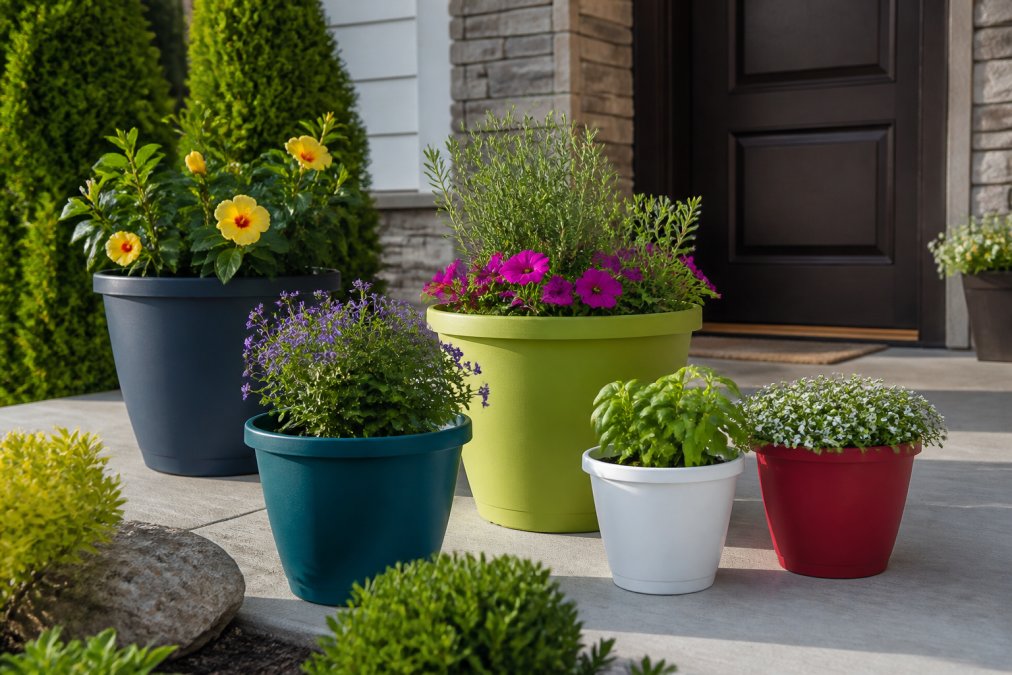
The Sample Pack 12-Piece Flower Pot and Saucer Set comes in graduated sizes from 2 to 12 inches with pre-drilled drainage holes and matching saucers. Made from high-impact polypropylene with over 90% recycled content, they resist cracking, fading, and water absorption. The ribbed saucer underside elevates the pot, allowing airflow to prevent moisture damage to decks.

The Austin Planter 4-Inch Set offers five lightweight pots with saucers in fade-resistant colors, durable across multiple seasons.

The 17-by-9-inch Oval Pot with Saucer maximizes visual impact at entryways while its matching saucer protects wood decks and stone patios from water damage.

Choosing Planter Size for Plants and Root Health
Most people choose planters by appearance, not soil volume. Oversized pots cause root rot; undersized pots stunt growth.
Soil volume, not just diameter, determines root expansion and oxygen access. Shallow pots dry faster (good for succulents); deep pots retain moisture longer (good for vegetables and perennials but risky for drought-tolerant plants).
Understanding Soil Volume and Root Development
Insufficient soil volume restricts root expansion and stunts growth; excessive volume (more than 2 inches beyond the root ball) promotes fungal disease. Aim for a "Goldilocks" fit with room for growth but no waterlogging.
Measure your plant's root ball diameter and add 1-2 inches for target pot diameter. A 4-inch root ball needs a 6-inch pot (~1.5 gallons); 6-inch root ball needs 8-inch pot (~3 gallons); 8-inch root ball needs 10-inch pot (~5 gallons); 10-inch root ball needs 12-inch pot (~7 gallons). Depth matters equally, a 10-inch-wide, 12-inch-deep pot holds 3 gallons distributed vertically, suiting deeper root systems.
Match planter depth to root architecture: Succulents need 4-6 inches; herbs need 8-10 inches; flowers need 10-12 inches; vegetables (tomatoes, peppers) need 12-18 inches; dwarf trees need 18+ inches.
For perennials and shrubs, choose a pot 3-4 inches larger than the current root ball to allow one season of growth. For annuals and herbs you'll replace seasonally, the 1-2 inch rule suffices.
Larger soil volumes reduce watering frequency but increase root rot risk; smaller volumes dry faster, requiring daily watering but reducing disease risk. Match planter size to your watering availability.
The MRAP 14-inch Pot (13 inches wide by 5 inches tall) suits shallow-rooted herbs and flowers. The Sample Pack 12-Piece Set offers graduated sizes from 2 to 12 inches for precise root-architecture matching.
Outdoor Planter Drainage Tips and Root Rot Prevention
Drainage holes are non-negotiable, they're the single biggest factor separating successful planters from failures. Without them, water pools around roots, roots lose oxygen access, fungal infections develop, and root rot kills plants within days to weeks. Prevention is the only option.
Traditional Drainage vs. Self-Watering Systems
Sample Pack 12-Piece Flower Pot and →
Traditional drainage (water drains freely through bottom holes) is simple and reliable. Self-watering planters use a built-in reservoir with a wick system to maintain consistent moisture without daily watering. Both have trade-offs worth understanding.
Traditional Drainage: Simple, reliable, works with any soil, no moving parts, lower cost. Requires attentive watering in hot weather. Best for herbs, succulents, vegetables, and flowers where you can water daily.
Self-Watering Planters: Reduce watering to 2-3 times weekly, ideal for busy schedules. Require specific potting soil, risk stagnation in cool weather, cost more, and aren't suitable for drought-tolerant plants. Best for moisture-loving flowers and vegetables in hot climates.
Outdoor conditions, rain, temperature fluctuations, seasonal dormancy, make self-watering systems unreliable. Rain overflows reservoirs; cool fall weather keeps them full too long, promoting fungal disease. Traditional drainage with manual watering gives you control. Every Beloit Plastics LLC planter uses traditional drainage with pre-drilled holes.
Optimizing Traditional Drainage
Don't try to work around drainage holes by adding gravel at the bottom, that's a myth. Gravel doesn't improve drainage; it just takes up space that could hold soil and can actually trap water. Instead, use a quality potting mix designed for container gardening. It's formulated with perlite or peat moss to improve aeration and prevent compaction. Look for mixes labeled "container soil" or "potting mix," not garden soil, which compacts and drains poorly in pots.
The saucer catches excess water and protects surfaces from stains. The ribbed underside of Beloit's saucers keeps the pot elevated, ensuring air flows underneath and moisture doesn't trap against wood or stone. This detail prevents water damage to decks, patios, and indoor floors, a critical consideration if you're placing planters on wood surfaces.
Drainage on Balconies and Rooftops
If you're placing planters on a balcony or rooftop, drainage becomes even more critical. Water that drains from your planter becomes your neighbor's problem if it falls on their space below. Use saucers to catch runoff, and position planters away from edges.
Seasonal Drainage Adjustments
Placement, Proportion, and Aesthetic Integration
Where you place a planter changes how people perceive your entire entryway. A single large planter flanking a doorway creates balance. Two matching planters, one on each side, anchor the space. Three or more planters arranged by size create visual depth and draw the eye along a pathway.
How to Maintain Outdoor Planters Across Seasons
Maintenance is minimal for quality plastic planters, but seasonal care extends their life. Spring is when you refresh soil, add new plants, and inspect for cracks or damage from winter. Summer requires consistent watering and occasional cleaning to remove pollen and dust. Fall means preparing for dormancy, reducing watering as temperatures drop and removing dead foliage. Winter is when freeze-thaw stress hits hardest.
Climate Resistance and Weather Durability
Different regions demand different planter choices. In the Northeast and Midwest, freeze-thaw cycles are the primary threat. In the Southwest, UV exposure and drought stress matter most. In coastal areas, salt spray and humidity accelerate degradation.
Frequently Asked Questions
What is the best type of planter for outdoors?
Weather-resistant polypropylene planters are among the best options for outdoor use. They resist UV fading, won't crack in freeze-thaw cycles, and weigh significantly less than ceramic or concrete alternatives. Look for planters made with high-impact polypropylene that include drainage holes and matching saucers to protect surfaces from water damage. The 12-piece sample pack offers graduated sizes from 2 to 12 inches, making it ideal for testing different arrangements before investing in larger containers.
How do I ensure proper drainage in outdoor planters?
Proper drainage starts with choosing planters that have multiple drainage holes pre-drilled in the bottom, no drilling required. Pair your planter with a matching saucer that features a ribbed underside and support grid to allow airflow and prevent moisture from trapping underneath. This design keeps the saucer elevated above flooring surfaces while the grid permits water to evaporate. Fill your planter with quality potting mix rather than garden soil, which compacts and restricts drainage. Check saucers regularly and empty standing water to prevent root rot.
What size planter do I need for my plants?
Planter size depends on your plant's mature root ball and soil volume needs. A general rule: the pot diameter should be 1 to 2 inches larger than the plant's root ball. Herbs and small flowers thrive in 4 to 6-inch pots, while larger perennials need 8 to 12-inch containers. Depth matters equally, aim for at least 6 inches of soil depth for most plants to support healthy root development. The 4-inch lime green pots work well for herbs and small houseplants, while 12-inch options suit larger flowers and shrubs.
How do I maintain outdoor planters through winter?
Frost-resistant planters made from high-impact polypropylene can withstand freeze-thaw cycles without cracking. Before winter, reduce watering to prevent soil saturation, which expands when frozen. Empty saucers after rain to prevent water from freezing inside. If you live in a region with brutal winter conditions, move delicate plants indoors or wrap containers with burlap for extra insulation. In spring, clean planters with mild soap and water, they're easy to maintain and fully reusable year after year.
Why is planter weight important for balconies and rooftops?
Balconies and rooftops have load capacity limits that vary by structure. Lightweight plastic planters weigh significantly less than ceramic, terracotta, or concrete alternatives, allowing you to create lush displays without exceeding safety limits. A single large ceramic planter can weigh 30+ pounds when filled with soil; plastic equivalents weigh 5 to 10 pounds. Check your building's structural load limits before placing multiple large containers. Lightweight plastic planters let apartment dwellers and small-space gardeners enjoy container gardening safely.
Can I use the same planter for different plants each season?
Yes. Plastic planters are fully reusable and easy to clean between plantings. Simply rinse with water and mild soap to remove soil residue and any pathogens. Because they're lightweight and durable, you can move them around your patio or porch to try different arrangements. The oval pot with saucer (17 inches by 9 inches) works equally well for spring flowers, summer herbs, or fall mums. This flexibility makes plastic planters an economical choice for gardeners who like to refresh their displays seasonally.
