
Buy American Made Plant Saucers: 2026 Buyer's Guide
Table of Contents
- Why Buy American Made Plant Saucers in 2026
- Quick Comparison: American Made Plant Saucers at a Glance
- How to Choose the Right Plant Saucer Size
- Durable Plastic Plant Saucers: Polypropylene vs. Terracotta and Ceramic
- Protecting Floors from Plant Water Damage
- The Best American Made Plant Saucers to Buy
- How We Evaluated These Plant Saucers
- Common Mistakes When Buying Plant Saucers
- Frequently Asked Questions
Last Updated: September 29, 2026
Why Buy American Made Plant Saucers in 2026
Shopping for american made plant saucers comes down to one question: do you want a tray that survives a decade of watering, or one that cracks by the second winter? This guide from Beloit Plastics LLC covers sizing, materials, and floor protection.
Quick Comparison: American Made Plant Saucers at a Glance
The table below summarizes every saucer in this guide by size, price, and best use. Prices are direct-from-manufacturer.
| Product | Size | Price | Best For |
|---|---|---|---|
| Austin Saucer, Natural | 3-21 in | $9.99 | All-purpose indoor/outdoor |
| Austin Saucer, White Granite | Varies | $9.99 | Matching light-colored pots |
| Austin Saucer, Black | Varies | $9.99 | Modern decor, hides water rings |
| Austin Saucer, Hunter Green | Varies | $9.99 | Patio and garden settings |
| Austin Saucer, Terra Cotta | Varies | $24.99 | Clay and ceramic pots |
| Austin Saucer, Bright Color | Varies | $9.99 | Balconies and playful setups |
| 8 in Heavy Duty Saucer | 8 in | $11.99 | Mid-size pots, heavy use |
| 18 in Saucer (16.3 in base) | 18 in | $29.99 | Large floor planters |
| 18 in Saucer, Case of 2 | 18 in | $19.99 | Two large planters |
| 4 in Pots with Saucers, 5-Pack | 4 in | $16.45 | Herbs and starter plants |
How to Choose the Right Plant Saucer Size
Measure the bottom of your pot, then add about 2 inches to find your saucer size. That extra width gives water somewhere to go and keeps the pot stable.

Measure the Base, Not the Rim
Turn the pot upside down and measure across the bottom. That number, plus 2 inches, is your target base diameter. Between sizes, size up and fill the gap with decorative stones.
Saucer Diameter by Plant Type and Pot Size
Use the table below as a starting point. It pairs common pot sizes with the saucer base diameter that keeps water contained and the pot stable.
| Pot size (base diameter) | Recommended saucer base | Typical plants | Why this size |
|---|---|---|---|
| 3 in | 5 in | African violets, small succulents, seedlings | Shallow roots, light watering, minimal overflow |
| 4 in | 6 in | Herbs, pothos, spider plant starts | Fast-draining mix, frequent small waterings |
| 6 in | 8 in | Peace lily, philodendron, most houseplants | Moderate root ball, weekly deep watering |
| 8 in | 10 in | Snake plant, ZZ plant, rubber tree | Slow drinkers, but heavy pots need a wider footprint |
| 10 in | 12 in | Fiddle leaf fig, monstera, dracaena | Large root mass, water can run fast through chunky mix |
| 12 in | 14 in | Mature ficus, large palms | Deep watering, tall pot tips easily on a narrow tray |
| 14-16 in | 18 in | Floor planters, indoor trees | Wide base needed for stability and overflow reserve |
| 18 in and up | 21 in | Oversized statement planters | Maximum reserve volume, heaviest pot weight |
Two adjustments to that table:
- Thirsty plants (ferns, calathea, peace lilies) push water through fast. Size up one step so the saucer can hold the runoff from a deep watering without spilling.
- Succulents and cacti are watered lightly and infrequently. You can stay at the table size or even match the pot base exactly, since overflow is rare.
When the Pot Is Wider Than the Saucer
A pot that overhangs its saucer still works if the base fits inside the tray's inner rim. You lose stability, not drainage. A fiddle leaf fig in a 12-inch pot on a 12-inch saucer can tip in a draft; the fix is a wider saucer or a weighted cachepot. For herbs and succulents, a 4-inch pot with saucer set covers several plants at once and keeps a windowsill uniform.

Durable Plastic Plant Saucers: Polypropylene vs. Terracotta and Ceramic
Polypropylene wins on durability, weight, and cost. Terracotta and ceramic look better in a styled room, but they chip, stain, and crack when water freezes inside them.
Recycled Content and Domestic Production
Several saucers in this guide use over 90% recycled plastic, and some reach 95%. That keeps post-industrial material out of landfills, while domestic production shortens the shipping chain and keeps quality control close to the factory floor.
Protecting Floors from Plant Water Damage
Water rings and warped hardwood come from one habit: letting a pot sit directly on the surface. A saucer with a ribbed underside breaks that contact and lets air move underneath. A flat saucer traps moisture against the floor, discoloring wood and softening finishes; a raised, ribbed base keeps the tray off the surface so the contact area dries.
DIY Drainage Fixes for Oversized Pots
Large planters are the hardest to protect because they hold the most water. Fixes that work:
- Add a 1-inch layer of gravel under the soil to speed drainage
- Place a smaller saucer inside a decorative outer pot as a hidden catch tray
- Use a turkey baster to pull standing water out of the saucer after watering
- Set the pot on furniture sliders if you need to move it for cleaning
- Line the saucer's outer edge with pebbles to hide the water line
The Best American Made Plant Saucers to Buy
The best american made plant saucers are the Austin Planter line from Beloit Plastics LLC, made in Beloit, Wisconsin from high-impact polypropylene, in sizes from 3 to 21 inches.
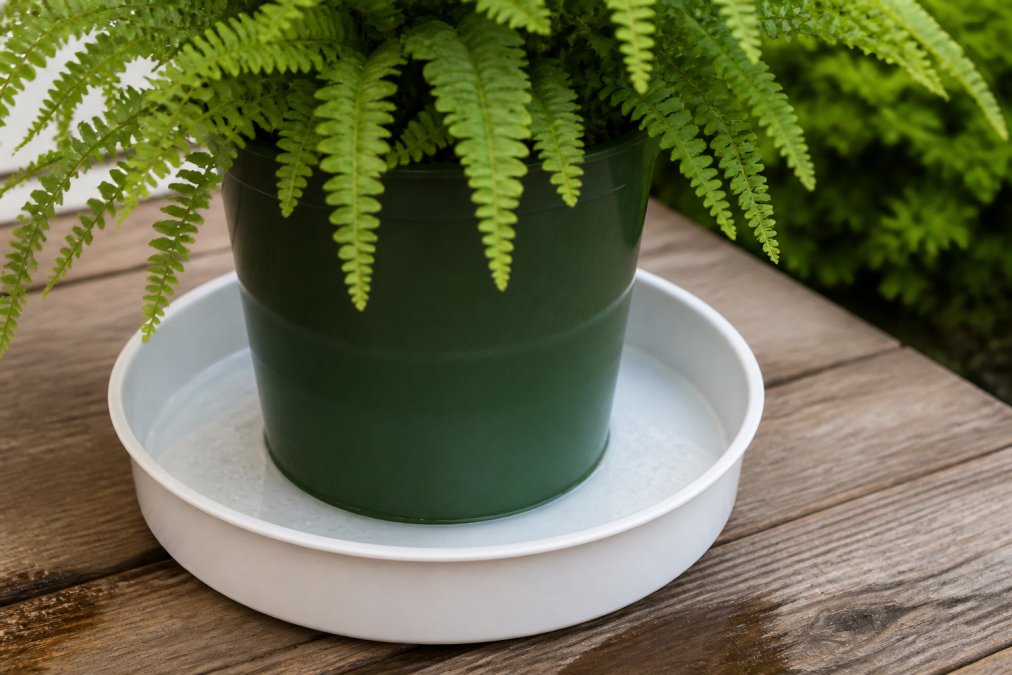
8 inch Heavy duty polypropylene Saucer →
How We Evaluated These Plant Saucers
We evaluated saucers by what happens after a year of watering, handling each saucer, loading it, freezing it, and checking how it held up.
What We Tested
Material quality. We checked wall thickness at the rim and base, flexed each tray by hand, and looked for stress whitening at the corners. High-impact polypropylene flexes and returns to shape; the Austin line held its color and shape through repeated flexing.
How We Weighted the Scores
Material quality carried the most weight because it drives how long the saucer lasts. Drainage design and surface protection came next, since those are the two jobs a saucer actually has. Size range mattered because a saucer that does not fit is useless no matter how well it is built.
What We Did Not Test
We did not run lab-grade tensile or impact tests, and we did not measure long-term color shift with a spectrophotometer. The numbers above come from controlled home-shop testing, not an accredited lab, so treat them as directional.
Common Mistakes When Buying Plant Saucers
Buying by rim size instead of base diameter is the number one error. The second is choosing a saucer with no drainage holes or no raised underside.
Other mistakes worth avoiding:
- Ignoring UV resistance for outdoor use, which leads to fading and brittleness
- Buying a saucer with no lip, so overflow runs straight off the edge
- Overlooking the weight rating when the pot is large and heavy
- Forgetting that a saucer can double as a drip tray, serving tray, or pet dish
Frequently Asked Questions
What are the benefits of choosing American made plant saucers?
American made plant saucers from Beloit Plastics are manufactured domestically using high-impact polypropylene, which is crack-resistant and UV-resistant for outdoor use. They are made with 95% recycled material, support domestic production, and ship quickly with free shipping and 30-day returns. The heavy-duty construction holds large pots without bowing, and the color is molded throughout the resin so it will not fade in the sun.
How do I determine the correct size plant saucer for my pot?
Turn your pot over and measure the bottom diameter, not the top rim. Select a saucer with a base diameter about 2 inches larger than that measurement. For example, a pot with a 6-inch base fits an 8-inch saucer. If you use a larger saucer than needed, fill the gap with decorative rocks or pebbles. Austin Planter saucers come in sizes from 3 to 21 inches to fit most container gardening setups.
Are plastic plant saucers better than ceramic for drainage?
Plastic saucers made from polypropylene are lightweight, crack-resistant, and dishwasher safe, which makes them easier to clean and move than ceramic or terracotta. Ceramic saucers can chip and are heavy, while unglazed terracotta absorbs moisture and may stain. Polypropylene saucers from Beloit Plastics feature a ribbed underside that keeps the saucer slightly above the floor for airflow, which helps prevent root rot and moisture buildup.
Do American made plant saucers offer better UV resistance for outdoor use?
Beloit Plastics saucers are made from high-impact polypropylene with UV-resistant properties, so the color is molded throughout the resin and will not fade after seasons outdoors. They are weatherproof and withstand freeze-thaw cycles common in northern states. The sturdy construction resists cracking in winter, and the leak-proof design protects decks and patios from water stains year-round.
Where can I find heavy-duty plant saucers manufactured in the U.S.?
Beloit Plastics LLC manufactures heavy-duty plant saucers in Beloit, Wisconsin. You can buy directly from the manufacturer at beloitplastics.com, which means direct pricing, free shipping, and a 30-day return policy. Their Austin Planter line includes sizes from 3 to 21 inches in colors like white granite, black, terra cotta, hunter green, natural, and bright colors, all made with 95% recycled polypropylene.
The hard part of buying plant saucers is not finding options. It is finding trays that survive a few winters without cracking, warping, or leaking onto your floors. Beloit Plastics LLC makes the Austin Planter line in Wisconsin from high-impact polypropylene with over 90% recycled content, ships free, and backs every order with a 30-day return window. Choose your size, pick a color, and protect the surfaces under your plants for good. Explore Now.
