

Durable Planters for Balcony Gardens: 7 Options
Table of Contents
- Why Durable Planters Matter for Balcony Gardens
- Best Materials for Outdoor Container Gardening
- Drainage Solutions for Balcony Pots
- How to Secure Balcony Planters Against Wind
- Lightweight Options for Small Balconies
- Sizing Your Durable Planters for Balcony Spaces
- Top Durable Planter Selections for Balcony Gardens
- Balcony Load Capacity and Weight Considerations
- Frequently Asked Questions
Last Updated: September 22, 2026
Why Durable Planters Matter for Balcony Gardens
Balcony gardening transforms cramped outdoor spaces into thriving green oases. But one thing separates successful balcony gardens from failed ones: the planters themselves. Most apartment dwellers grab whatever's cheapest at the big-box store, then watch it crack, fade, or leak within a season. That's when they realize: durable planters for balcony gardens aren't a luxury, they're essential infrastructure.
Balconies face extreme conditions: UV rays bounce off concrete and glass, wind accelerates moisture loss, and freeze-thaw cycles destroy weak materials. A planter that works on a sheltered patio fails on an exposed balcony. At Beloit Plastics LLC, we've engineered planters that survive these conditions. The difference between a planter lasting one season versus five comes down to material choice, structural integrity, and drainage design.
Choosing the right durable planters for balcony gardens protects your deck from water damage, keeps plants healthy through proper moisture management, and eliminates annual replacement costs.
Best Materials for Outdoor Container Gardening
Material choice determines whether your planters survive five seasons or five months. The best materials for outdoor container gardening balance durability, weight, aesthetics, and cost in ways that work specifically for balcony conditions.
Polypropylene is the top choice for balcony gardening. It won't shatter in freeze-thaw cycles, is lightweight for balcony load limits, and resists UV fading. Recycled polypropylene offers the same performance while reducing environmental impact, and domestic sourcing eliminates overseas shipping costs.
Terracotta and ceramic fail on balconies: they're porous, crack in freeze-thaw cycles, and are heavy. Choose plastic planters molded to look like terracotta for the aesthetic with superior durability.
Fabric grow bags degrade in direct sunlight within 1-2 seasons and dry out faster than rigid containers. Use them for seasonal planting only.
Drainage Solutions for Balcony Pots
Poor drainage kills more balcony plants than any other factor. The best drainage solutions combine multiple strategies.
Drainage holes are essential. Multiple holes distribute water flow evenly and prevent waterlogging in corners.
Matching saucers catch excess water and protect your balcony surface. A ribbed underside elevates the pot, allowing airflow and preventing moisture damage to decking.
Saucers create a water reservoir that plants draw from between waterings, useful when wind accelerates evaporation.
Potting mix selection matters as much as the pot. Use container mix (not garden soil) designed for drainage and aeration. Garden soil compacts and creates waterlogging.
Water in the morning, not at night. Morning watering allows excess moisture to drain before temperatures drop.
How to Secure Balcony Planters Against Wind
Wind is a hidden threat on high-rise balconies, where speeds are significantly higher than ground level. Securing planters is both responsibility and safety.
Weight distribution is your first line of defense. Most residential balconies support 40 pounds per square foot. Calculate total weight of planters, soil, and water. If approaching the limit, use lightweight planters with light potting mix.
Placement strategy matters. Position planters against the building wall or railing, not the open edge. Cluster planters together so they brace each other.
Anchoring systems provide insurance. Use cable ties or adjustable anchors to secure pots to the railing or building structure without restricting drainage.
Container selection affects wind resistance. Wider, lower planters are more stable than tall, narrow ones.
Lightweight Options for Small Balconies
Polypropylene planters weigh a fraction of ceramic or terracotta. A 4-inch pot with saucer weighs only 2-3 ounces empty, and just a few pounds filled, letting you create a lush garden without exceeding weight limits.
Vertical gardening maximizes space while minimizing weight. Hanging planters distribute weight across the ceiling or railing. Stack multiple planters at different heights to create visual depth without consuming deck space.
Tiered arrangements create layering that makes space feel fuller while using less deck area and improving air circulation.
Multi-pot sets offer efficiency and affordability. A 5-pack of 4-inch pots with saucers creates a cohesive display at lower per-pot cost.
Austin Planter Plastic Flower Pots with →

Sizing Your Durable Planters for Balcony Spaces
Planter size determines what you can grow and how well plants perform. Sizing your durable planters for balcony spaces requires matching pot dimensions to plant type, balcony dimensions, and your visual goals.
Minimum sizes vary by plant type. Herbs need 4-6 inches, trailing succulents 6-8 inches, and larger plants like tomatoes require 10-12 inches minimum.
Balcony dimensions set your upper limits. Use no more than 40-50% of deck space for planters to leave room for movement and seating.
Visual balance matters. Cluster planters in odd numbers (three or five) for a natural look rather than even numbers.
Weight calculations prevent overloading. A 4-inch pot weighs 3-4 pounds filled; a 14-inch pot weighs 15-20 pounds. Distribute weight across the balcony rather than concentrating it in one area.

Top Durable Planter Selections for Balcony Gardens
The planters you choose determine whether your balcony garden thrives or merely survives. Here are the best durable planter selections for balcony gardens, each engineered for real-world balcony conditions.
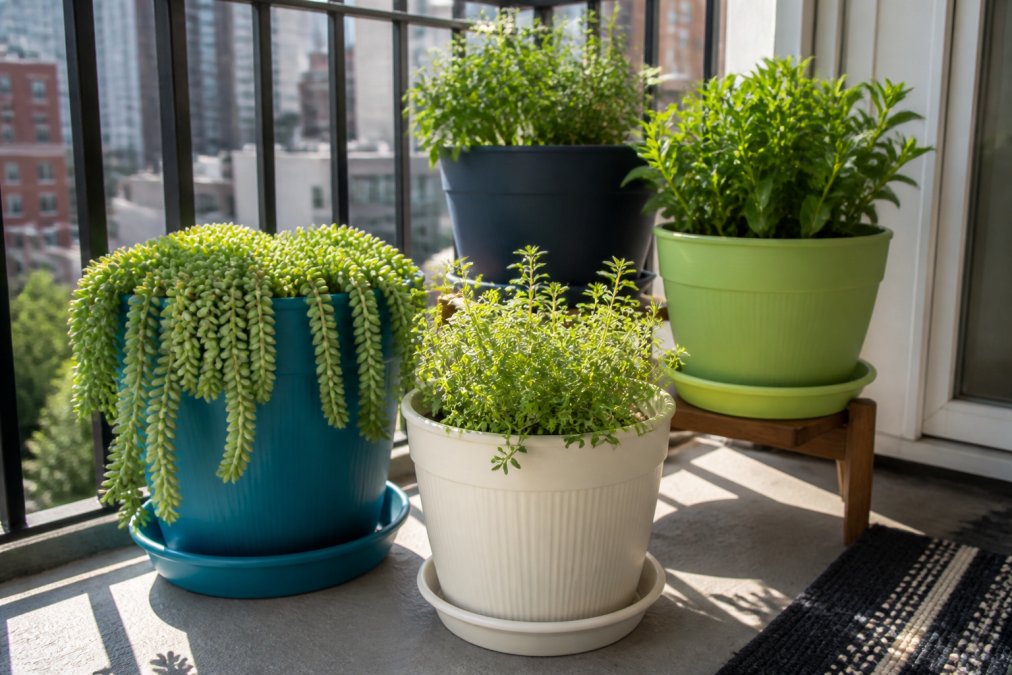
Austin Planter 4-Inch Pots with Saucers: Budget-Friendly Starter Set
Best for: New balcony gardeners and herb gardens
The Austin Planter 4-inch pots with saucers offer the best entry point into balcony gardening. These durable planters for balcony gardens come in 5-packs of lightweight, recycled polypropylene with multiple drainage holes and matching saucers. Fade-resistant colors stay vibrant through multiple seasons. At $16.45-$19.99 per 5-pack, they're affordable for experimentation.
MRAP 14-Inch Pot and Saucer: Premium Capacity for Larger Plants
Best for: Serious balcony gardeners wanting substantial plants
The MRAP 14-inch pot with matching saucer represents the premium tier of durable planters for balcony gardens. At 14 inches wide by 5 inches tall, it accommodates larger plants, ornamental shrubs, tomatoes, or substantial herb clusters. Crafted from weather-resistant polypropylene in Beloit, Wisconsin, the round shape resists wind tipping. At $20.75, it's a quality investment.
Pros:
- Larger capacity supports bigger, more mature plants
- Oversized saucer provides substantial water reservoir
- Weather-resistant polypropylene handles temperature swings
- Made in the USA with domestic manufacturing quality control
- Round shape resists wind tipping
- Single pot investment, no need to buy multiples
Cons:
- Heavier than smaller pots (15-20 pounds filled), impacts balcony weight calculations
- Higher per-pot cost limits quantity for small budgets
- Overkill for small balconies or herb-only gardens
Hanging Planters: Vertical Gardening for Tight Spaces
Best for: Small balconies and maximizing vertical space
Hanging planters solve the space problem that defeats many balcony gardeners. By moving plants off the deck surface and onto the railing or ceiling, you free up deck space while creating visual layers. Beloit Plastics LLC offers hanging options ranging from 7 inches to 12 inches, all engineered from durable polypropylene with drainage holes and weather-resistant construction.
Pros:
- Vertical arrangement saves deck space on small balconies
- Lightweight, even filled, hanging pots weigh only 8-12 pounds
- Multiple size options fit different plant needs
- Built-in hangers won't corrode or separate from the pot
- Drainage holes prevent water from pooling inside
- Affordable ($9.99-$19.99) for the space benefit provided
Cons:
- Limited soil volume restricts plant size and growth
- Hanging arrangement requires secure anchor points (railing, ceiling)
- Higher visibility means any plant stress shows immediately
- Frequent watering needed, hanging pots dry faster than ground-level containers
Balcony Load Capacity and Weight Considerations
Balcony weight limits are structural facts, not guidelines. Exceeding them risks catastrophic failure and serious injury. Understanding balcony load capacity and weight considerations prevents disasters and ensures your garden is safe.
Frequently Asked Questions
What material is best for durable planters for balcony gardens?
Recycled polypropylene and high-impact resin are the top choices for balcony durability. These materials resist UV fading, weather extremes, and freeze-thaw cycles common in outdoor spaces. Unlike ceramic or terracotta, plastic planters won't crack in winter cold, making them ideal for year-round balcony use. They're also lightweight, reducing structural load on your balcony.
How do you keep balcony planters from blowing over?
Secure planters using anchoring systems like cable ties to railings, or group multiple pots together to increase stability. Place heavier planters, like the 14-inch MRAP, toward the interior of your balcony away from edge exposure. For hanging planters, ensure hangers are rated for wind load and properly installed. Larger, weighted bases naturally resist tipping better than narrow designs.
Do balcony planters need drainage holes?
Yes, drainage holes are essential. They prevent root rot by allowing excess water to escape, and included saucers catch drainage to protect your balcony surface. Every durable planter option should feature multiple drainage holes on the bottom. This combination, holes plus saucer, maintains healthy soil moisture while keeping your deck or floor dry and stain-free.
Are plastic planters durable enough for balcony gardens?
Absolutely. High-quality plastic planters made from recycled polypropylene last several seasons outdoors. They resist cracking, fading, and weather damage far better than ceramic alternatives. Plastic planters are also easier to clean, reusable year after year, and lightweight enough to rearrange without strain. The fade-resistant color won't dull even with constant sun exposure.
What's the right size planter for a balcony?
Match planter size to your balcony's load capacity and plant type. Small balconies work well with 4-inch pots (lightweight, ideal for herbs) or hanging options to save floor space. Larger balconies can support 12- to 14-inch planters for substantial plants. Always check your balcony's weight limits and distribute heavier pots away from edges to maintain structural safety.
