Red White and Blue Flower Pots: Patriotic Container Ideas
Table of Contents
- Red White and Blue Flower Pots: Creating Patriotic Container Gardens
- Red White and Blue Flowers for Pots That Last All Summer
- Patriotic Flower Pot Combinations and Planting Ideas
- Red White and Blue Planter Ideas for Every Space
- Summer Flower Pot Ideas for Fourth of July and Beyond
- Container Materials and Sizing for Long-Lasting Displays
- Design Tips: Color Balance and Visual Impact
- Frequently Asked Questions
Last Updated: October 5, 2026
Red White and Blue Flower Pots: Creating Patriotic Container Gardens
Creating patriotic displays with red white and blue flower pots transforms any outdoor space into a festive celebration. At Beloit Plastics LLC, we know the right containers make all the difference, whether you're decorating for the Fourth of July or year-round.

The key is choosing plants that thrive in containers and complement your color scheme. This guide covers everything you need for vibrant, long-lasting patriotic displays.
Red White and Blue Flowers for Pots That Last All Summer
Selecting the right flowers ensures your red white and blue flower pots stay vibrant from early summer through fall. The best are heat-tolerant annuals that bloom continuously without deadheading, though removing spent flowers extends blooming.
Red Flowers That Thrive in Containers
Red flowers bring energy and visual weight to patriotic arrangements. Petunias are the most reliable red option: heat-tolerant, prolific bloomers that recover quickly from heavy watering.
Verbena is another excellent red choice, especially for smaller containers, cascading over pot edges and tolerating dry conditions better than petunias. Begonias and red impatiens work well in partial shade where other reds struggle.
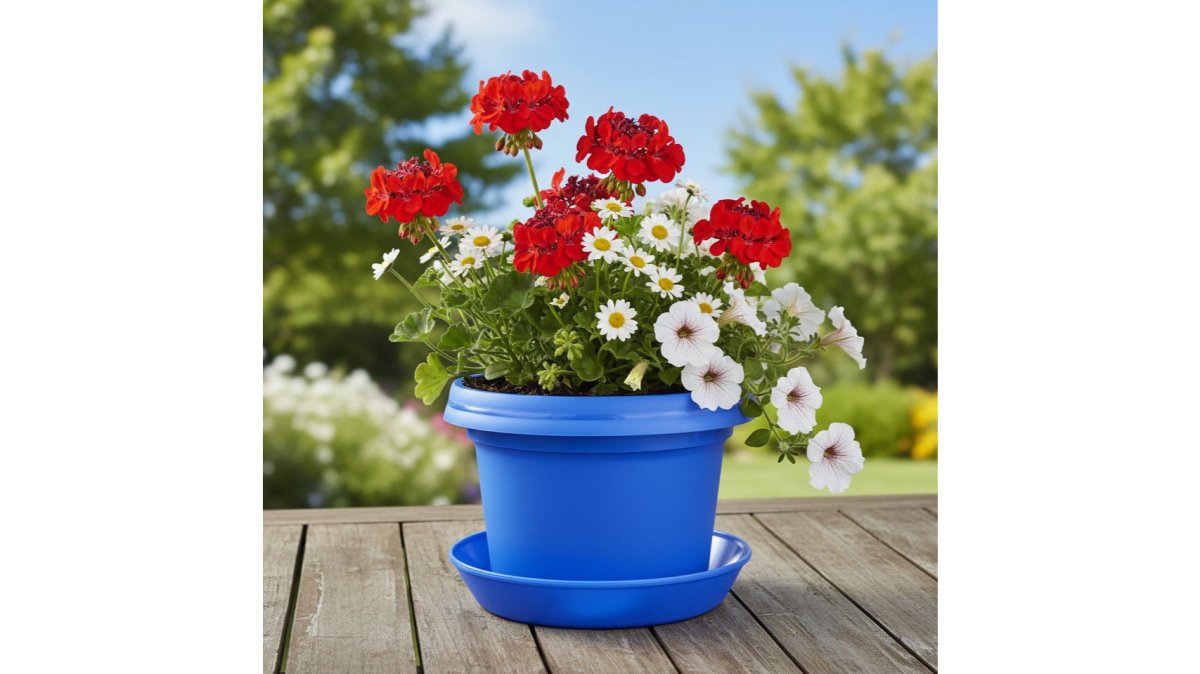
For a bolder statement, red geraniums are extremely heat-tolerant and need less frequent watering than petunias, while red zinnias work in larger containers for a more structured look.
White Blooms for Bright, Clean Contrast
White flowers brighten patriotic arrangements and separate red and blue selections. White petunias are as reliable as their red counterparts, while white calibrachoa provides delicate texture in trailing positions.
White impatiens excel in shade where sun-loving options fail. White begonias offer similar shade tolerance with more substantial foliage, and white verbena cascades beautifully in heat.
Bacopa produces tiny white flowers and trailing growth perfect for hanging baskets, while white alyssum adds fine texture and fragrance. For larger containers, white zinnias or marigolds provide bold, structured blooms.
Blue Flowers for Depth and Visual Interest
Blue flowers complete the patriotic palette and add visual depth. Lobelia produces abundant tiny blue flowers and works well trailing, preferring consistent moisture and part-shade. Blue calibrachoa offers similar cascading growth with better heat tolerance.
Blue petunias come in shades from pale sky blue to deep navy, blooming continuously in full sun. Blue verbena creates a softer appearance, and blue impatiens work in shade.
Bachelor's buttons produce cheerful blue blooms for larger containers, blue salvia creates vertical interest and attracts pollinators, and delphinium offers bold blue flowers but requires careful watering.
Patriotic Flower Pot Combinations and Planting Ideas
Successful red white and blue flower pot designs balance color, height, and growth habit within each container. Most arrangements work best with a 3-to-1 or 4-to-1 ratio of flowers to container size, since more plants create fuller displays faster.
Classic Red, White, and Blue Mix
The traditional approach combines one plant of each color: an upright red petunia in the center, surrounded by white calibrachoa, with trailing blue lobelia around the edges.
Alternatively, use red verbena upright, white alyssum as filler, and blue petunias trailing for different textures. Some gardeners prefer geraniums as the centerpiece for a more formal look.
For larger containers, increase plant quantities proportionally: a 12-inch pot accommodates 3-5 plants, and a 14-inch container handles 5-7. Plants should touch slightly at maturity but not compete for resources immediately after planting.
Monochromatic Single-Color Arrangements
Single-color pots create bold visual impact and simplify maintenance. All-red containers work beautifully grouped with white and blue pots; combine upright petunias with trailing verbena and red begonias for layered interest.
All-white arrangements create elegance and brightness. Pair white petunias with white calibrachoa and white alyssum, and use white impatiens in shade where sun-loving whites struggle.
All-blue containers offer sophistication. Combine blue petunias with blue verbena and blue lobelia, and use blue impatiens in partial shade. The monochromatic approach simplifies watering and feeding since all plants have similar moisture preferences.
Foliage and Filler Plants for Structure
Foliage plants provide structure and extend visual interest beyond flowering periods. Dusty miller offers silvery-gray foliage that complements all three patriotic colors, sweet potato vine creates dramatic trailing effects, and coleus provides bold color in partial shade.
Filler plants like alyssum, bacopa, and ornamental grasses add texture without competing for attention. Licorice plant offers silvery trailing foliage and creeping Jenny creates chartreuse accents, keeping focus on your primary flowers.
Red White and Blue Planter Ideas for Every Space
Location determines pot selection and plant choices: porch displays face different light and wind than patios, and balcony containers must contend with wind and weight limitations.
Porch and Entryway Displays
Porch containers welcome visitors and set the tone for your home. Larger pots make stronger statements than multiple small containers. A single 12-inch red pot with white and blue flowers creates impressive impact at an entryway.
Porch displays typically receive 4-6 hours of direct sun, making petunias and verbena ideal. Wind exposure requires sturdy plants; geraniums and zinnias handle wind better than delicate calibrachoa.
Beloit Plastics LLC's Austin Planter Pots with matching saucers work beautifully for porch displays. The durable resin construction withstands weather exposure, and included saucers protect porch surfaces from water stains.
Patio and Deck Arrangements
Patios typically offer full sun, perfect for heat-loving flowers like petunias, calibrachoa, and verbena. Group containers in odd numbers, three, five, or seven pots create more visual interest than even groupings, and vary pot heights and sizes.
Deck containers require attention to weight distribution. Plastic pots weigh significantly less than ceramic or clay, making them ideal for elevated decks.
Patio displays benefit from repetition: the same pot style in different sizes creates cohesion while providing variety, and mixing solid-color pots with multicolor options adds interest.
Austin Planter Pots with Matching Saucers or Hangers, red white and blue →
Balcony and Small-Space Solutions
Balconies present unique challenges: limited space, wind exposure, and weight restrictions. Hanging baskets and wall-mounted containers maximize vertical space, lighter plastic pots beat heavy ceramic, and wind-tolerant plants like geraniums and zinnias outperform delicate varieties.
Railing planters attach directly to balcony railings, eliminating floor space requirements, and work best with trailing plants like calibrachoa and verbena. Ensure drainage holes point away from neighbors below.
Small balconies work well with a single 10-12 inch pot featuring a bold patriotic mix. Alternatively, cluster multiple small 4-inch containers; Beloit Plastics LLC's 4-inch pots with saucers are lightweight, durable, and affordable enough to use several.

Summer Flower Pot Ideas for Fourth of July and Beyond
Summer heat intensifies watering needs and affects flower performance. Choosing heat-tolerant options ensures your red white and blue flower pots thrive through July, August, and September, since some flowers fade in extreme heat without afternoon shade or consistent moisture.
Heat-Tolerant Plants for Summer Containers
Petunias remain among the most heat-tolerant options, blooming prolifically even in 95-degree heat. Calibrachoa shows similar heat tolerance with a more delicate appearance, and verbena thrives in heat while requiring less frequent watering.
Geraniums handle heat exceptionally well and tolerate dry conditions better than petunias, creating a bold, structured look.
Impatiens perform better in afternoon shade during summer heat; morning sun with afternoon shade prevents wilting. Bacopa tolerates heat well and keeps cascading, and sweet potato vine grows vigorously for dramatic trailing effects.
Seasonal Care: Watering, Feeding, and Deadheading
Summer containers need water more frequently than spring arrangements.
Water early in the morning to minimize evaporation and reduce disease pressure, directing water toward the soil rather than the foliage.
Feed containers every 2-3 weeks with a balanced, water-soluble fertilizer diluted per package directions, since container plants exhaust soil nutrients faster than garden beds.
Deadheading, removing spent flowers, extends blooming by redirecting plant energy toward new flower production rather than seed development.
Container Materials and Sizing for Long-Lasting Displays
Pot selection affects watering frequency, durability, and aesthetic appeal. Understanding material characteristics helps you choose containers that survive multiple seasons.
Choosing the Right Pot Size and Drainage
Pot size determines how frequently you water and how large plants grow.
Drainage holes are non-negotiable. Without proper drainage, excess water accumulates around roots, causing rot. Every pot should have at least one drainage hole, preferably multiple holes.
Pot depth matters as much as width. Shallow pots limit root development and reduce water retention. Deeper containers support larger plants and maintain moisture longer.
Weather-Resistant Materials That Survive Winter
Plastic pots offer excellent durability and weather resistance. High-impact polypropylene withstands freeze-thaw cycles without cracking, stays lightweight for balconies and elevated surfaces, and doesn't absorb water, reducing frost damage risk.
Beloit Plastics LLC manufactures durable plastic pots from recycled polypropylene that resist fading and weather damage. The Austin Planter Pots maintain color brightness through multiple seasons outdoors.
Ceramic and clay pots absorb water, making them vulnerable to freeze-thaw damage in cold climates, where absorbed water expands and cracks pot walls.
Wood containers create rustic appeal but deteriorate as moisture penetrates wood fibers.
Design Tips: Color Balance and Visual Impact
Creating visually appealing arrangements requires understanding color theory and composition. Balance doesn't mean equal distribution, it means visual weight that feels intentional and pleasing.
Dominant colors should occupy roughly 50-60% of your arrangement.
Height variation prevents flat, uninspired arrangements.
Contrast adds interest without chaos. Pairing fine-textured plants like alyssum with bold flowers like zinnias creates visual tension.
| Design Element | Best Practice | Visual Impact |
|---|---|---|
| Dominant color | 50-60% of arrangement | Establishes primary visual focus |
| Secondary color | 25-35% of arrangement | Provides contrast and brightness |
| Accent color | 15-25% of arrangement | Adds depth and sophistication |
| Height variation | Mix upright, mid-height, trailing | Creates dynamic, interesting composition |
| Repetition across containers | Same pots, colors, or plants | Unifies overall display |
| Texture variety | Combine fine and bold foliage | Prevents visual monotony |
Creating stunning red white and blue flower pots transforms outdoor spaces into patriotic celebrations that last all season.
Frequently Asked Questions
What are the best red, white, and blue flowers for containers?
Red flowers like petunias and calibrachoa thrive in pots and bloom all summer. White impatiens and verbena provide clean contrast, while blue lobelia and bachelor's buttons add depth. Choose annuals for continuous blooms, and pair them with green foliage plants like trailing ivy for structure. All these plants do well in containers with proper drainage and regular watering.
How do you arrange flowers in a patriotic planter?
Start with a tall focal plant (like a red petunia) in the center, surround it with medium-height white flowers, and edge the pot with trailing blue lobelia. This creates visual depth and ensures all colors are visible. Use containers with drainage holes and quality potting soil. A 12-inch pot works well for a three-color mix, while smaller 4-inch pots suit single-color displays or small balconies.
How do you keep flowers in outdoor pots healthy through summer?
Water container plants daily or every other day, depending on heat and soil moisture. Check soil by touching it, if the top inch is dry, water thoroughly. Deadhead spent blooms to encourage more flowers. Feed with a balanced fertilizer every two weeks. Place pots in appropriate light (most patriotic flowers need 6+ hours of sun). Use saucers to catch excess water and protect your deck or patio.
What pot sizes and materials work best for red, white, and blue displays?
Four-inch pots suit small spaces or single plants, while 7-inch and 12-inch pots work for mixed arrangements. Choose weather-resistant plastic or resin pots made with recycled materials for durability through freeze-thaw cycles. Ensure pots have drainage holes to prevent root rot. Matching saucers protect your surfaces from water stains and allow airflow underneath, extending pot life and keeping your patio clean.
