How to Start Container Gardening for Beginners
Table of Contents
- What You'll Need to Start Container Gardening
- Choosing the Best Pots for Container Gardening
- Selecting the Best Soil for Container Gardening
- Picking Plants for Container Gardening for Beginners Vegetables
- Step-by-Step Setup: Filling and Planting Your Container
- How Often to Water Container Plants
- Common Beginner Mistakes to Avoid
- Frequently Asked Questions
Last Updated: October 15, 2026
What You'll Need to Start Container Gardening
Learning how to start container gardening for beginners is simpler than you might think. You don't need a yard, special tools, or years of experience. At Beloit Plastics LLC, we've helped thousands of beginners turn small spaces into thriving gardens with just a few essential items.
Here's what you'll actually need to get going:
- A container with drainage holes
- Quality potting mix (not garden soil)
- Plants suited to your space and sunlight
- Water and a way to water regularly
- Optional: plant markers to track what you're growing
The beauty of container gardening for beginners is that you can start with items you already have. An old bucket with holes drilled in the bottom works. A plastic storage container can become a planter. But if you want containers built to last through multiple seasons, durable plastic pots with matching saucers make the job easier and protect your deck or patio from water stains.

Most beginners spend between $30 and $100 to set up their first container garden, depending on how many plants they want to grow. You can start smaller and add more as you gain confidence.
Choosing the Best Pots for Container Gardening
The right pot makes a real difference. Not just in how your garden looks, but in whether your plants thrive or struggle. Container size, material, and drainage all affect plant health directly.
Container Size and Material
Pick a pot size that matches your plant. A tomato needs more space than a basil seedling. As a rule, use a pot at least as deep as the plant's root system will grow. A 5-inch pot works for most herbs. Vegetables and flowers usually need 8 to 12 inches of depth.
Material matters too. Plastic, ceramic, and clay each have trade-offs:
| Material | Best For | Drainage | Durability | Weight |
|---|---|---|---|---|
| Plastic | Beginners, frequent moves | Excellent | Years of use | Very light |
| Ceramic | Decorative appeal | Good | Moderate (can crack) | Heavy |
| Clay | Breathability | Excellent | Moderate (can break) | Heavy |
Plastic containers stay lightweight and won't crack in freeze-thaw cycles, which matters if you live somewhere cold. They're also the most affordable option for starting out. The University of Minnesota Extension Guide on Container Gardening recommends plastic for durability in harsh climates.
At Beloit Plastics LLC, our planters are made from high-impact polypropylene with over 90% recycled plastic. They're engineered to resist fading and cracking through multiple seasons. A 12-piece set costs $19.99 and includes matching saucers, which saves time and protects your surfaces.
Ensuring Drainage Holes
This is non-negotiable. Drainage holes prevent waterlogging, which kills roots faster than anything else. Every pot must have at least one hole in the bottom. If your container doesn't have drainage holes, drill them yourself or use it as a decorative outer pot and nest a draining pot inside.
The saucer matters too. It catches excess water and protects your deck or floor from stains. Look for saucers with a ribbed underside or support grid. These keep the pot slightly elevated so air can flow underneath. Trapped moisture under a pot leads to mold and mildew.
Beloit Plastics LLC saucers feature a ribbed underside and support grid specifically designed to prevent moisture from pooling.
Selecting the Best Soil for Container Gardening
Garden soil belongs in gardens, not containers. It's too dense and holds too much moisture. Container plants need potting mix, which is lighter and drains faster.
Quality potting mix contains peat moss or coconut coir, perlite or vermiculite, and compost. These ingredients create air pockets so roots can breathe and water drains through. A good mix costs $5 to $10 per bag, depending on volume.
Don't skimp here. Cheap potting soil compacts over time and loses its structure. Plants struggle in compacted soil. Buy a reputable brand and plan to refresh the top 2 inches of soil each spring if you're reusing containers.
Some gardeners make their own mix: equal parts peat moss, perlite, and compost. This works well if you're planting multiple containers. For beginners starting with one or two pots, buying a bag of quality potting mix is simpler and often cheaper.
Picking Plants for Container Gardening for Beginners Vegetables
When figuring out how to start container gardening for beginners, the best plants are ones that tolerate some neglect and grow quickly enough to feel rewarding. Vegetables, herbs, and flowers all work. Pick what you actually want to eat or enjoy looking at.
Easy Vegetables to Grow in Containers
Tomatoes, peppers, lettuce, and herbs are the safest bets. They grow fast, produce visibly, and forgive occasional watering lapses.
Tomatoes need at least 10 inches of depth and full sun. Cherry varieties are more forgiving than large slicing types. Plan for one plant per 5-gallon pot.
Peppers are even easier than tomatoes. They need less water and less fussing. A single pepper plant fits in an 8-inch pot.
Lettuce and greens grow in shallow pots (6 inches deep) and mature in 30 to 45 days. You can succession-plant every two weeks for continuous harvests.
Herbs like basil, parsley, and cilantro thrive in containers. They need just 6 to 8 inches of depth and light watering.
Beans produce quickly and look attractive. Bush varieties work better than pole beans in containers. They need 8 to 10 inches of depth.
Avoid vegetables that need deep root systems, like carrots or parsnips, unless you have tall containers. Shallow-rooted plants are your friends when you're starting out.
Selecting by Sunlight and Season
Sun is the biggest limiting factor. Most vegetables need 6 to 8 hours of direct sun daily. Herbs need at least 4 to 6 hours. Leafy greens tolerate partial shade better than fruiting crops.
Before buying plants, observe your space. How many hours of direct sun does your balcony, patio, or porch actually get? Be honest. "Bright" is not the same as "full sun." Afternoon shade helps in hot climates but reduces yields in cooler ones.
Season matters too. Spring and summer are easiest for beginners because days are long and temperatures are warm. If you're starting in fall, choose cool-season crops like lettuce, kale, and spinach. Winter is harder unless you live in a mild climate.
Step-by-Step Setup: Filling and Planting Your Container
Here's how to set up a container correctly the first time.
Sample Pack 12-Piece Flower Pot and Saucer Set, (2"–12") →
Step 1: Prepare the container. Make sure it has drainage holes. Place the saucer underneath. If you're reusing an old pot, rinse it first to remove old soil and any disease spores.
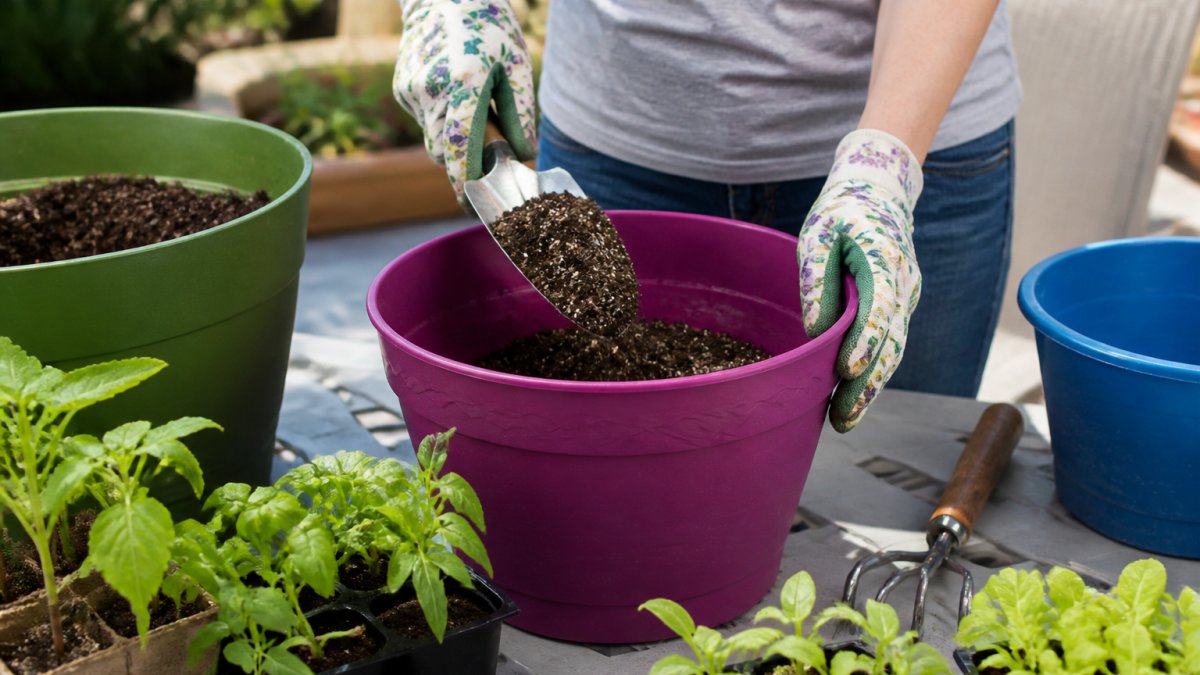
Step 2: Add potting mix. Fill the pot about two-thirds full. Don't pack it down. Potting mix should stay loose so roots can penetrate and water can drain.
Step 3: Position the plant. Remove the plant from its nursery pot. Gently loosen the roots with your fingers.
Step 4: Fill around the plant. Add potting mix around the sides until the pot is full. The soil level should match the soil level from the nursery pot.
Step 5: Water thoroughly. Water until water drains from the bottom holes. This settles the soil and removes air pockets.
Arranging Plants and Using a Feature Plant
A single plant in a pot looks fine. Multiple plants in one container look fuller and more interesting. The trick is balance.
Use a feature plant as the centerpiece. This is usually the tallest or most visually striking plant. A trailing ivy, a tall tomato, or a bright flower works. Then add shorter plants around it.
Space plants so they have room to grow. Crowded containers lead to poor air circulation and disease. As a rule, leave at least 2 inches between the edges of plants at maturity.
A mixed container might look like this: a tall basil plant in the center, smaller oregano plants on the sides, and trailing nasturtium spilling over the edge.
Beloit Plastics LLC's 12-piece graduated set lets you create multiple containers at different heights. Arranging pots of different sizes on a patio creates visual interest and makes watering easier because you can group plants with similar water needs.
How Often to Water Container Plants
Watering is where most beginners struggle. Too much kills plants faster than too little. The key is checking soil, not following a schedule.
Stick your finger into the soil. If the top inch feels dry, water. If it feels moist, wait another day or two. Container soil dries faster than ground soil because it has less mass. In summer heat, you might water daily.
Water until it drains from the bottom. This ensures the entire root zone gets wet. Then let the saucer drain. Never leave a pot sitting in water for more than 30 minutes.
The Cornell University Cooperative Extension's Container Gardening Guide recommends checking soil moisture in the morning. Morning watering is best because plants use water during the day and evening watering can lead to fungal issues.
Overwatering is the top killer of container plants. If leaves turn yellow and soft, or if soil smells sour, you're watering too much. Cut back and let the soil dry out between waterings.
Common Beginner Mistakes to Avoid
These are the stumbles that trip up most first-time container gardeners. Knowing them ahead of time saves frustration.
Using garden soil instead of potting mix. Garden soil compacts in containers and drains poorly. Potting mix is cheaper than replacing dead plants.
Picking pots without drainage holes. Roots rot in waterlogged soil. Drainage holes are not optional.
Crowding too many plants in one pot. Plants compete for water, nutrients, and light. They get weak and disease-prone.
Watering on a schedule instead of checking soil. Every space is different. Your balcony dries faster than a shaded patio. Feel the soil first.
Choosing plants that don't match your sunlight. Shade-loving plants in full sun get stressed. Sun-lovers in shade get leggy and weak.
Forgetting to water on vacation. Container plants dry out fast. Ask a neighbor to water, or set up a drip system before you leave.
Starting with too many plants. One thriving tomato teaches you more than six struggling crops. Start small and add next season.
Container gardening for beginners doesn't require special skills or expensive equipment. Start with our 12-piece flower pot and saucer set, which gives you graduated sizes to match any plant and budget.

Frequently Asked Questions
What size pot should a beginner use for container gardening?
Start with pots between 4 and 12 inches in diameter, depending on what you're growing. Herbs and small flowers need 4- to 6-inch containers, while vegetables like tomatoes or peppers need 8- to 12-inch pots with room for roots to spread. The Sample Pack 12-Piece Flower Pot and Saucer Set offers graduated sizes from 2 to 12 inches, making it ideal for beginners.
What vegetables are easiest to grow in containers?
Tomatoes, peppers, lettuce, spinach, radishes, and herbs like basil and parsley thrive in containers. These vegetables need 6 to 12 inches of soil depth and tolerate the moisture levels typical of container gardening. Tomatoes and peppers perform especially well and produce consistently throughout the season with proper watering and sunlight.
How often should you water plants in containers?
Water container plants when the top inch of soil feels dry to the touch, typically every 1 to 3 days depending on weather, pot size, and plant type. In hot or windy conditions, daily watering may be necessary. Check soil moisture by inserting your finger into the potting mix. Saucers like those included with Beloit Plastics planters catch excess water and help prevent waterlogging.
What kind of soil should you use for container gardening?
Use potting mix specifically formulated for containers, not garden soil. Potting mix is lightweight, drains well, and contains nutrients for plant growth. Look for mixes labeled as potting soil or seed-starting mix that include peat moss, coconut coir, and perlite. Avoid regular garden soil, which compacts in pots and prevents proper drainage and root development.
